


Nursing is an endurance sport. A 12-hour shift requires the same physiological stamina as a marathon. You spend hours on your feet, covering miles across busy hospital wards. It's no surprise that by the end of the day, your legs feel heavy and your ankles are swollen. Finding the right compression socks for nurses uk professionals can trust is the difference between finishing with energy or ending in pain.
We understand that standard hosiery often fails under the pressure of clinical life. It loses elasticity or causes overheating during intense shifts. This 2026 guide shows you how elite-grade 20–30 mmHg compression can eliminate leg fatigue and support your circulation during the most demanding 12-hour shifts. We'll explore the technical specs of professional-grade gear, from moisture-wicking durability to graduated pressure levels. You'll learn how to choose socks that survive frequent high-temperature washes and keep you comfortable until the final handover.
Key Takeaways
- Understand how graduated pressure supports the venous pump to prevent blood pooling and swelling during long shifts.
- Discover why 20–30 mmHg compression is the professional standard for active recovery and long-term vascular health.
- Identify technical features like moisture-wicking fibres and anatomical fits that prevent bunching and discomfort in theatre clogs.
- Learn how to find the ideal compression socks for nurses uk professionals trust by using precise calf measurements for a technical fit.
- Master the "heel-first" application technique to preserve material integrity and ensure consistent support throughout a 12-hour shift.
Understanding Compression for Healthcare: Why Nurses Need Graduated Support
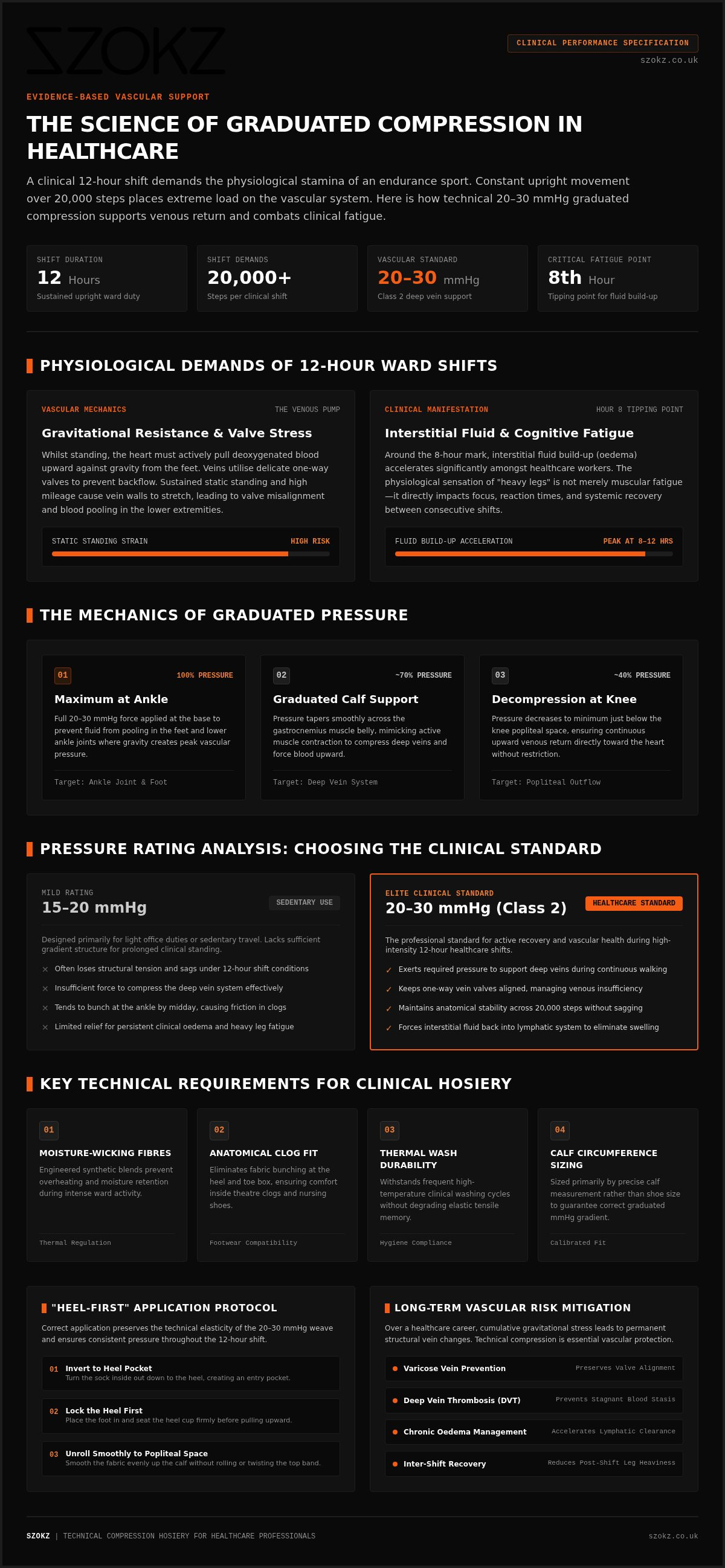
A typical 12-hour shift involves miles of walking and hours of static standing. This physical demand places immense strain on your vascular system. Unlike standard hosiery, professional graduated compression stockings apply maximum pressure at the ankle. This pressure decreases as it moves up the leg. The gradient is essential. It counters the effects of gravity, ensuring blood doesn't pool in the lower extremities.
For healthcare professionals, the distinction between "support socks" and technical gear is vital. Support socks offer uniform pressure. They are often insufficient for the rigours of a clinical environment. Technical compression socks for nurses uk professionals require are engineered to support the "Venous Pump". This is the mechanism where calf muscles squeeze veins to push blood back to the heart. Constant standing inhibits this pump. Without external support, the risk of developing varicose veins or deep vein thrombosis (DVT) increases significantly over a long career.
The Science of Venous Return on the Ward
Gravity is a constant adversary on the ward. Whilst standing, your heart must work harder to pull blood from your feet. Veins contain one-way valves to prevent backflow. However, prolonged pressure causes these valves to stretch and leak. Most nurses feel leg fatigue set in around the eight-hour mark. This is the physiological tipping point where the vascular system begins to struggle. Elite 20-30 mmHg compression provides the external structure needed to keep these valves aligned and blood moving efficiently. It mimics the natural action of the calf muscles, even during periods of standing at a workstation or in theatre.
Combatting Nurses Leg Fatigue and Swelling
Physical exhaustion isn't just about muscles. The sensation of "heavy legs" often leads to decreased cognitive performance and slower reaction times during critical moments. This is due to interstitial fluid build-up, or oedema, amongst healthcare workers who spend the majority of their time upright. Consistent use of high-grade compression socks for nurses uk reduces this swelling by forcing fluid back into the lymphatic system. For NHS staff, this isn't just a matter of comfort. It's a long-term investment in vascular health. It prevents the chronic aching that often persists long after the shift ends, allowing for faster recovery between consecutive long days.
The 20-30 mmHg Difference: Why Elite Performance Matters for Nurses
Pressure is measured in millimetres of mercury (mmHg). This technical unit determines how much force the fabric applies to your limbs. For healthcare workers searching for the best compression socks for nurses uk, the 20-30 mmHg range represents the "sweet spot" for active recovery. It provides the firm support required to combat the physiological toll of a high-intensity clinical environment. This specific pressure level is often categorised as Class 2. It's designed to exert enough force to compress the deep vein system, which is essential when you're standing for hours on end.
While 15-20 mmHg is common, it's often insufficient for those on their feet for 12 hours. Higher compression isn't about restriction. It's about stability. Correct engineering ensures an anatomical fit that remains effective from the start of your shift until the final handover. They don't just feel tight; they feel supportive. This level of pressure acts as a secondary layer of muscle, assisting your body in moving blood upwards against the constant pull of gravity.
Why 15-20 mmHg Often Falls Short
Mild compression (15-20 mmHg) is designed for sedentary use. It works well for long flights or office work where movement is minimal. However, a nursing shift involves constant motion and significant gravitational pressure. Lower-tension socks often lose their structural integrity under these conditions. They tend to sag or bunch at the ankle by midday. This compromises the graduated pressure and can lead to uncomfortable friction within your footwear.
If you experience persistent swelling or deep calf throbbing despite wearing light support, it's time to step up. According to NHS guidance on varicose veins, consistent pressure is a primary tool for managing venous insufficiency. High-grade compression socks for nurses uk ensure the pressure remains constant, even after 20,000 steps on hard hospital floors. This level of support helps maintain the integrity of vein valves, reducing the long-term risk of chronic vascular issues.
From Team GB to the NHS: Professional Standards
Nursing is physically demanding. The strain on your lower limbs mirrors that of an elite athlete during high-level competition. SZOKZ gear is engineered for this level of intensity. We provide the same technical standards to healthcare professionals that we do to Olympic athletes. This is functional pragmatism in action. We understand that your workwear is an essential tool, not just a uniform. It must perform as hard as you do.
Performance takes priority over aesthetic gimmicks. While some brands focus on "cute" patterns that can weaken the fabric's tension, we focus on material durability and precise pressure gradients. This professional-grade approach ensures your gear survives the rigours of the ward and frequent high-temperature washing. You can explore our professional collection to see how elite sports technology translates to daily medical wear. Our goal is to provide the reliable support you need to perform at your best, shift after shift.
Key Features to Look for in Nursing Compression Socks
Selecting the best compression socks for nurses uk requires looking beyond the pressure rating. Material composition is the foundation of performance. Standard cotton absorbs moisture and stays wet. This leads to friction and discomfort during long shifts. Elite gear uses technical synthetic fibre blends designed for active moisture management. Anatomical fit is equally critical. Left and right specific shaping ensures the fabric contours to the foot without bunching. This is particularly important when wearing theatre clogs or professional medical footwear where extra material can cause painful pressure points.
Hospital floors are unforgiving. Reinforced zones in the heel and Achilles provide essential padding to manage impact during miles of walking. Additionally, cuff integrity is a non-negotiable feature. A high-quality sock must stay below the knee without rolling down or constricting circulation. If a cuff is too tight, it creates a tourniquet effect. This is counterproductive to venous health. Following MedlinePlus instructions for wearing compression stockings can help you ensure the cuff is positioned correctly for maximum benefit and comfort.
Moisture Management and Breathability
"Theatre sweat" is a significant challenge for healthcare staff. Moving between air-conditioned wards and high-temperature clinics causes constant thermal fluctuations. Technical fabrics regulate temperature whilst wicking perspiration away from the skin. This prevents the damp environment that leads to blisters and bacterial growth. 2026 standards favour advanced synthetic blends over natural fibres. These materials offer superior breathability and quick-drying properties, ensuring your feet stay dry from handover to the end of the shift.
Durability for the "Wash-Wear-Repeat" Cycle
Healthcare workwear undergoes more frequent, high-temperature washing than almost any other garment. Standard hosiery often fails after a few cycles. The elastic "snaps" or the fabric thins out at the toes. Professional-grade compression socks for nurses uk are engineered to maintain consistent 20-30 mmHg pressure through hundreds of washes. Investing in gear with high-quality elasticity offers a significantly better cost-per-wear. It ensures the socks provide the same level of medical-grade support on day 100 as they did on day one.
How to Size and Wear Your Compression Socks for Maximum Relief
Precision is the difference between relief and restriction. For the compression socks for nurses uk professionals rely on, the correct fit is determined by calf circumference rather than shoe size. A sock that is too loose fails to provide the necessary 20-30 mmHg gradient. Conversely, a sock that is too tight can impede circulation. Measuring correctly ensures the technical knit performs as engineered throughout your entire shift.
Applying high-tension socks requires a specific technique. Avoid pulling from the top cuff. This over-stretches the fibres and leads to premature degradation. Instead, use the "heel-first" method. Turn the sock inside out until only the foot portion remains. Slide your foot in until the heel is perfectly aligned. Gradually unroll the fabric up your leg, smoothing as you go. This maintains the integrity of the graduated pressure zones.
Measuring for Accuracy, Not Just Shoe Size
Calf width is the primary metric for effective compression. Measure your legs at the start of the day before any swelling begins. Use a flexible tape measure at the widest part of your calf. If your measurement falls between sizes, choose the smaller size for a firmer, technical fit. When selecting your gear, consider the height that best suits your footwear and uniform. The Summit length provides full calf coverage for maximum venous support, whilst the Crew length offers a versatile alternative for those who prefer a slightly lower profile.
Daily Care and Maintenance
Technical fabrics require specific maintenance to preserve their 20-30 mmHg rating. Fabric softener is the enemy of compression elasticity. It coats the synthetic fibres, reducing their ability to wick moisture and breaking down the elastane. Wash your socks at 30 or 40 degrees. Avoid high-temperature drying. Tumble dryers expose the technical knit to excessive heat, which causes the fibres to "snap" and lose tension. Air drying is the only way to ensure long-term durability.
Monitor your gear for signs of wear. If the socks become easy to put on or you notice a "sagging" feeling by midday, the compression has likely degraded. Most professional-grade socks require replacement every six months if worn and washed frequently. This ensures you always receive the elite-level support required for clinical environments. If you notice numbness, tingling, or skin discolouration, the fit is likely too restrictive and you should re-evaluate your sizing.
Why SZOKZ is the Professional’s Choice for UK Healthcare Workers
Choosing the right gear is a professional decision. At SZOKZ, we've moved away from the novelty patterns common in the market to focus on technical performance. Our engineering philosophy centres on functional pragmatism. We provide the elite-grade 20–30 mmHg support that professionals need to sustain a long-term career in healthcare. By positioning ourselves as a silent partner, we allow your achievements to take centre stage whilst our gear manages the physiological strain of the ward. This is why we're a leading provider of compression socks for nurses uk professionals trust for daily reliability.
Our commitment to quality is evident in every stitch. We recognise that healthcare environments are demanding. Your clothing must be an asset, not a distraction. By focusing on the technical requirements of circulation and muscle stability, we ensure that our socks provide consistent pressure from the first minute of your shift to the last. This grounded approach to manufacturing ensures that our products are professional-grade and accessible to all NHS and private healthcare staff.
Elite Engineering for Everyday Heroes
Our standards are rooted in elite athletic discipline. SZOKZ products are developed with the same rigour required for Team GB and Olympic athletes. We understand that a 12-hour shift is a feat of endurance that rivals a marathon. Our designs reflect this through "understated confidence". You won't find distracting neon patterns or gimmicks here. Instead, you'll find precise pressure gradients and material durability that stands up to clinical scrutiny. If you're unsure which height fits your uniform requirements, you can find guidance on which SZOKZ grip socks should you choose to match your specific footwear needs.
This athletic heritage ensures that every pair of socks is built for high-intensity use. We use advanced textile engineering to ensure the 20-30 mmHg compression remains effective after repeated high-temperature washes. This focus on durability means your gear remains a reliable tool throughout the year, providing the same level of support on day one hundred as it did on day one. We take pride in being a UK-based innovator that bridges the gap between elite sports performance and the everyday dedication of healthcare workers.
The Practical Choice for Busy Professionals
Efficiency is paramount for busy healthcare workers. We've streamlined the procurement process with UK-based design and national delivery. Ordering a "week of shifts" bundle is simple, and we offer free UK delivery on all orders over £30. To make high-performance gear more accessible, we've integrated modern payment options including Klarna and Apple Pay. This allows you to secure the support you need without delay. You can explore more about the science behind our range in our guide on Understanding Compression Socks for Athletes, which details how recovery technology translates to professional environments.
Investing in your health is an investment in your career. By reducing leg fatigue and preventing long-term vascular issues, you ensure you can perform at your best throughout 2026 and beyond. Our socks act as a facilitator for your success, providing the essential physical support required to navigate the challenges of modern medicine. Choose the professional standard and experience the difference that elite-grade engineering makes to your daily comfort and long-term health.
Sustain Your Excellence on the Ward
Nursing is a career of endurance. You deserve gear that matches your daily dedication. We've explored how elite 20–30 mmHg compression supports your circulation and eliminates the heavy leg sensation common during long hospital shifts. By choosing technical fabrics and accurate sizing, you protect your long-term vascular health whilst maintaining peak performance. Technical gear isn't a luxury; it's a necessary tool for the modern healthcare professional.
SZOKZ provides the professional standard for compression socks for nurses uk staff. Our products use the same engineering trusted by Team GB and Olympic athletes. We've made it simple to equip yourself for a full week of shifts with free UK delivery on orders over £30. You can also manage your budget easily by choosing to pay in three interest-free instalments with Klarna. It's time to stop settling for standard hosiery that fails by midday.
Start your next handover with the confidence that your gear is working as hard as you are. Your health is the foundation of your practice, and we're here to support every step of your journey.
Frequently Asked Questions
Can I wear 20–30 mmHg compression socks for a full 12-hour shift?
Yes, you can wear 20–30 mmHg socks for the duration of a 12-hour shift. These socks are specifically engineered to provide sustained support during high-intensity activity. They help maintain circulation and reduce the physiological strain of prolonged standing. If you find the pressure uncomfortable, check your sizing. Most professionals find that the firm support helps them feel more energetic during the final hours of their clinical duties.
Will these socks help prevent varicose veins caused by nursing?
Yes, consistent use of high-grade compression assists in preventing varicose veins. By applying graduated pressure, the socks help your vein valves close properly and prevent blood from pooling in the lower legs. This reduces the internal pressure on vein walls that leads to permanent stretching. For those seeking the best compression socks for nurses uk professionals recommend, the 20–30 mmHg range offers the medical-grade support needed to combat the risks of a standing-heavy career.
How do I know if my compression socks are the right size?
Your socks are the correct size if they feel firm but not painful. The fabric should lay flat against your skin without any bunching at the ankles or behind the knees. You shouldn't experience any numbness, tingling, or skin discolouration in your toes. If the socks roll down or feel loose by midday, they are likely too large. Always use your calf circumference as the primary measurement for a technical fit rather than shoe size.
Are SZOKZ socks breathable enough for hot hospital environments?
SZOKZ socks are engineered with moisture-wicking synthetic fibres specifically for temperature regulation. Unlike standard cotton, these materials move perspiration away from the skin to keep your feet dry in hot hospital clinics. This technical approach prevents the damp environment that causes blisters and discomfort. The breathable knit allows for consistent airflow, ensuring you stay comfortable whilst moving between cold wards and high-temperature theatre environments throughout your shift.
Do I need a prescription to wear 20–30 mmHg compression socks in the UK?
You don't need a prescription to purchase 20–30 mmHg compression socks in the UK. Whilst higher Class 3 medical stockings often require clinical oversight, 20–30 mmHg is considered a safe and effective level for general professional use and active recovery. You can buy these directly online through our storefront. However, if you have a pre-existing circulatory condition or are pregnant, it's always best to consult your GP or occupational health team before starting a new compression routine.
How many pairs of compression socks should a nurse own?
Most nurses find that owning three to five pairs is ideal. This ensures you have a fresh, clean pair for every shift in a standard working week without needing to wash them daily. Since professional-grade compression socks for nurses uk workers use require air drying to preserve their elasticity, having a rotation allows each pair to dry fully. Investing in a week of shifts bundle also helps you qualify for free UK delivery on orders over £30.
What is the difference between flight socks and nursing compression socks?
The primary difference is the pressure level and intended activity. Flight socks are typically rated at 15–20 mmHg and are designed for sedentary use to prevent DVT during long periods of sitting. Nursing socks require a firmer 20–30 mmHg rating to counter the higher gravitational pressure of standing and walking. SZOKZ gear uses high-intensity sports technology to provide the stability and durability needed for 20,000 steps, which standard flight hosiery cannot match.
Can I machine wash my SZOKZ compression socks?
Yes, you can machine wash SZOKZ socks at 30 or 40 degrees. Avoid using fabric softeners, as these chemicals coat the technical fibres and break down the elastane that provides the compression. To maintain the 20–30 mmHg rating, you must air dry your socks. Never put them in a tumble dryer. The high heat of a dryer can cause the technical knit to snap or lose its tension, significantly reducing the lifespan and effectiveness of your gear.
Comments
No comments yet. Be the first to add one.