


The thickest sock isn’t automatically the most comfortable. Extra cushioning can make boots feel tight if they already fit closely, while too little padding may not give you the feel you want on a long walk. If you’re comparing cushioned trekking socks UK options, start with your boots and how they fit, then consider the padding.
More cushioning isn’t always better. This guide explains how to balance padding with boot fit, and what to compare in sock materials and construction. You’ll find practical ways to assess socks for different routes and walking durations, including how to test a new pair before wearing it for a full day.
We’ll also cover what to look for in product descriptions and how to judge the way a sock sits inside your boot. SZOKZ sells hiking socks alongside other performance and grip socks. Use the fit checks in this guide to decide whether a pair suits your boots and planned walk.
Key Takeaways
- Match cushioning to your boot fit. Extra padding can change the feel of footwear that already fits closely.
- Compare light, moderate and substantial cushioning by where the padding sits and how it feels in your boot.
- Read the material label to see whether a sock uses wool, synthetic fibres or a blend, then consider what suits your walk.
- Take a short test walk to assess fit and comfort before wearing new socks for a full day on the trail.
- Use this cushioned trekking socks uk guide to weigh up route, boot fit and personal preference, including SZOKZ hiking socks.
Why cushioned trekking socks matter on UK trails
Small differences in comfort can become more noticeable over a long day on foot. Socks sit between your feet and boots at every step, so their thickness and fit affect how your footwear feels. A route may take you over firm paths and uneven ground, but the first test is whether the socks feel right in the boots you plan to wear. A pair that feels comfortable at home still needs to work with your walking footwear.
Cushioning is padding built into parts of a sock that contact the foot and boot. Compression applies pressure, while grip refers to traction. Cushioned trekking socks UK shoppers compare can differ in both the amount of padding and where it sits. Extra fabric may soften the feel underfoot, but it also takes up room inside a boot. Treat cushioning as a comfort preference, not a promise that a sock will prevent soreness or blisters.
What does cushioning do inside a trekking boot?
Padded zones add a layer of fabric between your foot and boot, often around the sole, heel or toes. Where that padding sits affects the feel: cushioning underfoot changes the contact between your foot and the boot, while padding at the heel or toe changes the feel in those areas. Sock design and construction both matter. The history and construction of socks offers broader background on how socks are made and used.
A sock isn’t an insole. An insole sits inside the boot beneath your foot; cushioning is part of the sock itself. Neither replaces the boot’s structure. If your boot already feels close around the toes or across the top of your foot, a thicker sock may make it feel more restrictive. Check the fit around your whole foot, not just beneath the sole.
When might cushioned trekking socks suit your walk?
Consider how long you’ll be walking, the ground underfoot and how your boots fit. For a shorter, gentler outing, you might prefer a lighter feel. A longer day or rougher route may prompt you to try more padding, but your boot fit and personal preference still matter. There isn’t one cushioning level that suits every walker or every walk.
Try socks with the boots you intend to wear before a demanding hike. Walk around indoors and check whether your toes can move freely, your heel feels secure and the fabric bunches or rubs anywhere. Notice how the boot closes, too. If extra padding makes the fit tight, that pair may not suit those boots, however appealing the cushioning sounds.
Use comfort as your guide rather than assuming more padding is always better. Your preferred feel may change with the route or footwear, so test the combination you’ll actually use. Judge the socks in context: on your feet, inside your boots and against the demands of the walk ahead.
How cushioning, materials and sock construction affect comfort
Cushioning is only one factor in how a trekking sock feels. Its position, the fibres used and the way the fabric is assembled all affect how it sits against your foot and inside your boot. Two socks described as cushioned may feel quite different. One might have padding across much of the sole, while another has targeted padding in selected areas.
This difference matters in close-fitting footwear. More fabric can change the space around your toes, heel and instep, while a seam or fold may become noticeable under pressure. Read product descriptions for details about composition and construction rather than relying on a cushioning label alone.
Wool or synthetic trekking socks: what should you compare?
Fibre choice can affect a sock’s feel, warmth and drying behaviour. Merino wool is one option; synthetic fibres such as polyester or nylon are another. Some socks combine fibres. The result depends on the specific blend and construction, so a broad material label won’t tell you exactly how a sock will feel on your foot.
General fibre characteristics describe material categories, not the verified composition or performance of any particular sock. Read the product label for the stated fibre percentages, and follow its care instructions when washing. When comparing pairs, note any differences in composition and consider how each feels against your skin. Don’t assume every wool sock or synthetic blend will behave in the same way.
Why padding placement and seams deserve attention
Padding across the sole feels different from targeted cushioning under the heel or forefoot. The first adds fabric along a broader contact area; the second concentrates it in specific zones. Neither layout is automatically better. The right choice depends on your preferred feel and how the sock fits your footwear.
Look at how a sock is shaped and joined. A toe seam may be noticeable if it presses against a close-fitting boot, while excess fabric can fold and create a pressure point. These are fit considerations, not proof that a particular construction will cause discomfort. Try the sock with your walking boots and check for bunching around the toes, heel and instep.
Compare the fibre label, padding layout, seams and boot fit together. That gives you a better basis for choosing than a material name alone. You can explore the hiking socks available from SZOKZ and use the product information to compare them with the features that matter to you.
Compare cushioned trekking socks by thickness, boot fit and terrain
Labels such as light, moderate and substantial cushioning help you compare the general feel of socks, but they aren’t precise measurements. Treat them as a starting point. The amount and placement of padding, the space inside your boots and your personal preference all affect how a sock feels.
Sock thickness takes up space inside a boot. If your footwear already fits closely, extra fabric may reduce room around your toes or increase pressure across the instep. This table outlines likely trade-offs, not universal recommendations for particular routes.
| Cushioning level | Likely feel | Fit consideration |
|---|---|---|
| Light | A closer, less padded feel underfoot. | Usually adds less bulk, but still assess it in your boots. |
| Moderate | A more noticeable layer of padding in selected areas or across the sole. | May change the feel of the boot; check room around the foot. |
| Substantial | A fuller, more padded feel. | Can take up more internal space and may feel restrictive in a close-fitting boot. |
Terrain and walking duration can inform your preference, but they don’t dictate it. A long route over uneven ground may make you consider more padding; a short, gentler walk may suit a lighter feel. Neither is a rule. Compare socks with the boots you’ll wear rather than choosing by terrain description alone. For everyday walks, you can also compare the feel of hiking socks with that of lighter walking socks.
How much cushioning should trekking socks have?
Start with the feel you want, then weigh it against the space in your footwear and the conditions you expect. More padding isn’t automatically more comfortable. If it compresses your toes or makes the boot feel tight, a lighter option may suit you better. The right level is the one that feels comfortable in your actual sock and boot combination.
Will cushioned socks fit your trekking boots?
Put the socks on with your walking trousers and boots, then lace the footwear as you normally would. Check that your toes can move, your heel stays in place and the instep feels free of excess pressure. A short indoor walk can reveal bunching, tightness or heel movement before you take the combination onto a longer route.
Assess the whole fit, not just the feel beneath your feet. If the sock changes how securely the boot holds your heel or creates pressure elsewhere, try a different cushioning level. Make your decision before a demanding walk, while you have time to compare options without trail conditions adding another variable. This fit-led approach helps you assess cushioned trekking socks UK walkers may be considering for their own footwear and routes.
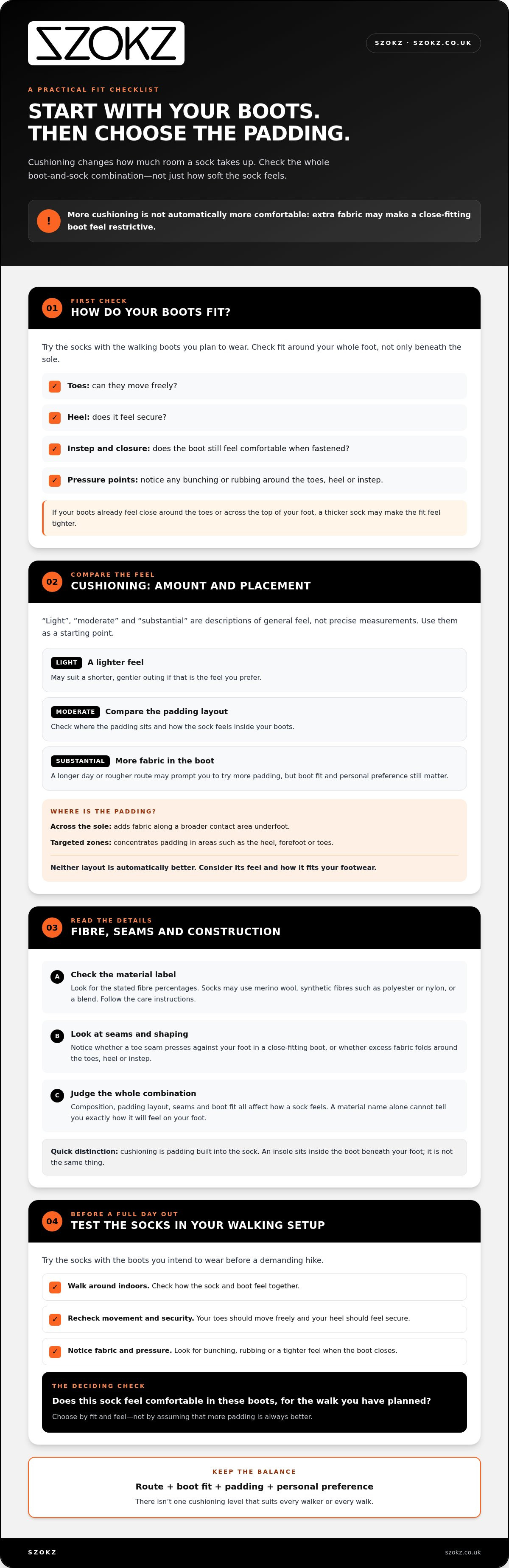
A practical checklist for choosing and testing trekking socks
A product description can narrow your options, but the most useful test is how the socks feel in your own walking kit. Work through this checklist before choosing cushioned trekking socks UK walkers can wear for a planned outing. It keeps the decision focused on your route, the sock and the fit of the footwear you intend to use.
- Consider the route. Think about how long you’ll be walking and the ground you expect. Note whether the outing is short and gentle or a longer day over varied terrain. Use this context to judge how much padding feels right to you.
- Check your boot fit. Put on the boots you’ll use for the walk. Consider how much room they have around your toes and across the instep before trying a different sock.
- Choose your cushioning preference. Decide whether you prefer a lighter feel or more padding underfoot. Treat that as a personal preference to test, not a rule based on distance or terrain.
- Read the material label. Compare the stated fibre composition and care instructions. Labels help distinguish wool, synthetic fibres and blends, but composition alone can’t tell you exactly how a sock will feel.
- Take a short test walk. Wear the socks with your usual boots and insoles on a familiar route. Notice any change in fit before choosing them for a longer outing.
Test sock fit before a full day on the trail
Wear the complete combination you plan to use, including the intended insoles, and lace your boots as usual. Walk long enough to notice whether the socks shift, fold or bunch. Check for pressure across the instep, slipping at the heel and restricted toe movement. A short walk on a familiar route lets you assess the fit before committing to a longer day.
Pay attention as you move, not only while standing still. If you notice a fold, pause and check whether the sock has shifted. If pressure or tightness persists, reconsider the sock and boot combination instead of assuming it will feel different on a longer route. The aim is to make a considered choice before setting out on a demanding walk.
Care for trekking socks according to their label
Follow the individual product’s care label for washing and drying. Instructions can vary, so don’t assume every sock should be washed at the same temperature or dried in the same way. Read the guidance before adding a new pair to your usual kit routine. Following the label gives you a clear, consistent way to care for your walking gear.
Once you’ve checked fit, feel and care guidance, you’ll have a practical basis for deciding whether a pair suits your plans. Keep those checks in mind as you compare hiking socks.
Choosing SZOKZ hiking socks for your next UK trek
Your choice comes down to the match between sock feel, boot fit, route and personal preference. A description can help you compare options, but trying socks with the footwear you plan to wear gives you a practical sense of the fit. Use the checks in this guide rather than choosing by cushioning language alone.
SZOKZ sells hiking socks designed for comfort, as well as performance and grip socks. If you’re comparing cushioned trekking socks UK walkers might wear, use the product information to identify the stated features of each pair. Then assess how the sock fits in your boots and whether its feel suits your plans.
What to look for in a hiking sock product description
Read the product description for stated details on materials, construction, sizing and care. Compare those details with your fit checks: consider how the sock may sit around your toes and instep, and follow the listed size guidance. A stated material or construction feature can help you compare products, but the feel will still depend on your feet and boots.
Look for information that supports a practical comparison. A fibre composition shows whether the sock uses wool, synthetic fibres or a blend; care guidance explains how to wash and dry it. Construction details may describe padding or seams. Consider those features alongside your preferred feel and the room available in your boots. Base your decision on the details provided for the product, rather than assuming that every sock in a category has the same construction.
Browse socks for your next walk
SZOKZ hiking socks are part of a wider sock range. Make your choice with the fit you tested, the route you’ve planned and the feel you prefer in mind. Compare the product information with the checks in this guide, then choose the pair that suits your kit. Free UK delivery applies to orders over £30.
Make your next walk a better fit
Let your route guide your choice, but let your feet make the final call. The best pair is the one that works with your boots and feels right to you, not simply the one with the most padding. If you’re still weighing up cushioned trekking socks UK options, notice what you value when you try them: a closer feel, more padding underfoot or a balance between the two.
A short note after a walk can help with future choices. Record which socks you wore, how your boots felt and whether anything shifted or pressed. Those practical observations can make it easier to choose suitable kit for different days out.
Take time to compare the fit and feel. A considered choice is a useful starting point for the trails ahead.
Explore SZOKZ hiking socks and find a pair to test with your walking boots.
Frequently Asked Questions
Are cushioned trekking socks better for long walks?
They may suit long walks if their cushioning and fit work with your boots and preferred feel. For a full-day route, consider whether the padding feels comfortable after several hours, not just during a quick try-on. If your footwear feels close, extra thickness may feel distracting; a lighter sock might suit you better. Test your preferred pair before wearing it for a longer outing.
Can thick trekking socks make boots feel too tight?
Yes. Thicker socks can make boots feel tighter by taking up more room inside. Put them on with your walking boots and check that your toes can move, the instep doesn’t feel pressed and your heel stays settled as you walk. If tightening the laces makes the forefoot uncomfortable or your heel starts moving, the combination may not fit well. Try a different thickness before your walk.
How should trekking socks fit inside walking boots?
Trekking socks should sit smoothly inside your boots, without folds or excess fabric. Check that your toes aren’t cramped, the sock’s heel stays in place and the fabric doesn’t pull tightly across your instep. Walk around and flex your feet to see whether the sock shifts. A fit that feels even while standing and moving gives you a better basis for deciding whether the pairing suits your planned walk.
Should trekking socks be made from merino wool or synthetic fibres?
Neither fibre type is automatically right for every walker. Merino wool and synthetic fibres can differ in feel, warmth and drying behaviour, and blends combine materials in different proportions. Read the composition on the product label rather than relying on a broad description such as “wool” or “synthetic”. Consider the expected conditions and how each material feels against your skin, then compare care instructions before choosing.
Can I wear cushioned trekking socks in warm weather?
Yes, if the socks feel comfortable with your footwear and the conditions. Temperature is one consideration: padding adds fabric, and the material composition can also affect how a sock feels during a walk. If your boots feel close or your feet feel too warm, consider a lighter option. Try the socks on a shorter outing before wearing them for a longer day.
How do you wash trekking socks?
Follow the care label on the specific pair. Washing and drying instructions can vary with the sock’s material and construction, so don’t assume one temperature or method applies to every pair. Check the label before washing and follow its drying guidance as well. If you’re comparing pairs, check their labels separately rather than applying one pair’s instructions to another.
Do I need a separate liner sock under cushioned trekking socks?
No. A liner sock isn’t essential; wearing one is a personal layering choice. The extra layer changes the overall thickness inside your boot, so try both arrangements with your walking footwear. Walk around and check whether either sock bunches, shifts or makes the boot feel tight. If the layers sit smoothly and feel comfortable, you may prefer them; if they add unwanted bulk, wear a single pair instead.
Comments
No comments yet. Be the first to add one.