


Could the tightest socks be the wrong choice for your flight? Flight pressure socks aren’t one-size-fits-all. Their usefulness depends on the compression level, a proper fit and whether they’re suitable for your health needs.
If you’re unsure what they do or faced with conflicting product claims, that’s understandable. Compression socks apply pressure that’s usually firmest at the ankle and eases up the leg. They may help with leg swelling during travel, but they’re not a guarantee against blood clots, and more compression isn’t automatically better.
This guide explains what flight pressure socks can and can’t do, how to compare compression levels and choose a fit, and when personal medical advice matters. You’ll also learn how to prepare for a flight and wear your socks comfortably. If you have a health condition or a history of blood clots, seek advice from a healthcare professional before choosing a compression level. The aim is to make a practical choice based on fit, pressure and your circumstances, not a one-size-fits-all recommendation.
Key Takeaways
- Compare the mmHg rating and whether compression is graduated. A higher number doesn’t automatically make a sock more suitable.
- For flight pressure socks, use the individual product’s size guidance rather than relying on your usual sock size.
- Try the socks before departure to check fit and comfort, and follow the product’s wearing instructions.
- If you have a health condition or are unsure which compression level is appropriate, seek personalised advice from a healthcare professional.
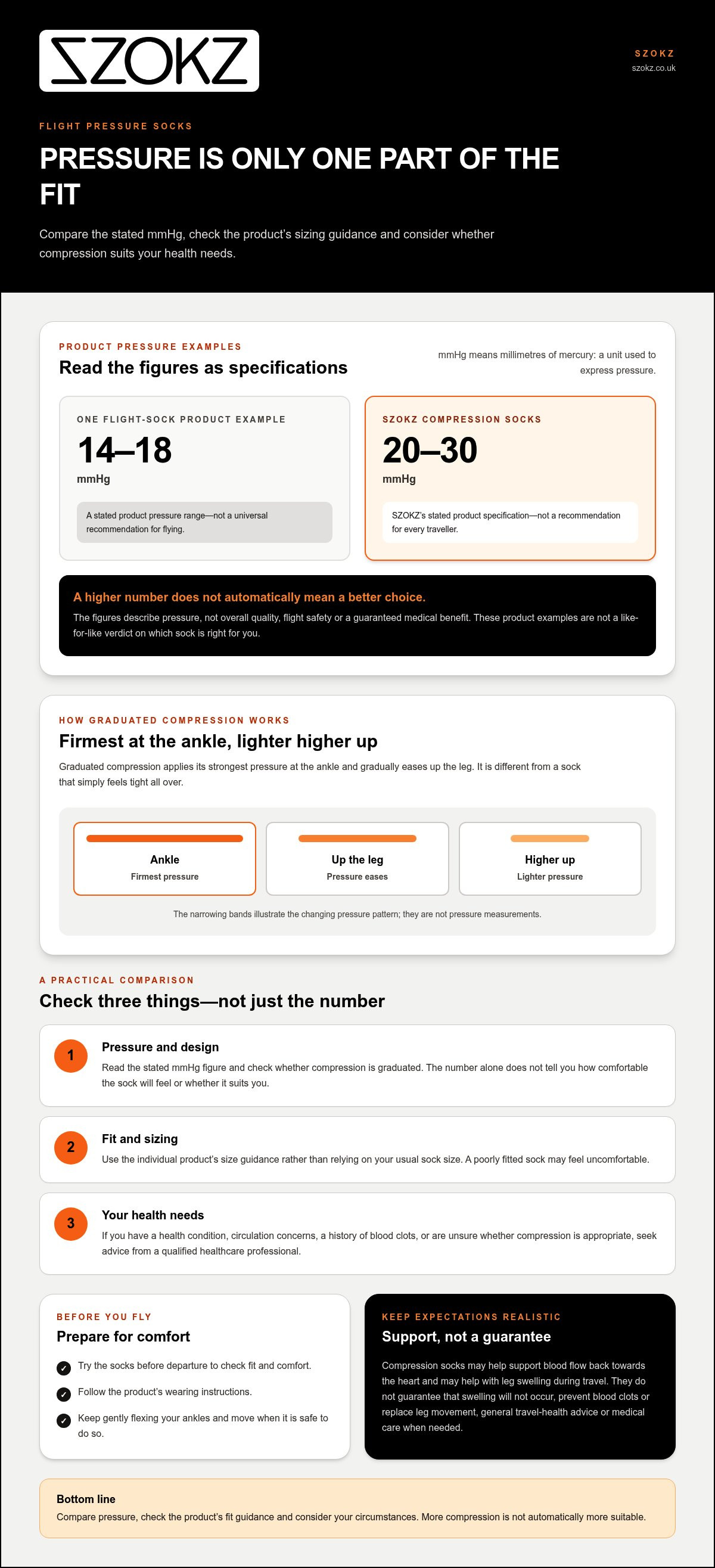
- SZOKZ states its compression socks provide 20-30 mmHg. Treat this as a product specification, not a universal recommendation for flying.
What are flight pressure socks, and what can they realistically do?
Long periods of sitting can leave travellers looking for ways to keep their legs comfortable, especially on a lengthy flight. Flight pressure socks are compression socks worn during air travel. Unlike ordinary socks, they’re designed to apply measured pressure around the lower leg. A regular sock may keep your feet warm or stay in place, but it isn’t necessarily designed to provide compression.
The purpose is support, not a guaranteed medical outcome. Compression may help support blood flow back towards the heart and can feel supportive when you’re sitting for a long time. But socks don’t replace moving your legs, following general travel-health advice or getting medical care when needed. Their effect depends on the sock’s construction, its fit and your individual circumstances.
How do flight pressure socks work?
Graduated compression means the pressure is strongest at the ankle and gradually eases up the leg. Put simply, graduated compression is firmest at the ankle and becomes lighter higher up the leg. This differs from a sock that simply feels tight all over. The changing pressure is intended to support venous return, the movement of blood through the veins towards the heart. It doesn’t make leg movement unnecessary. Gently flexing your ankles and moving when it’s safe to do so remain practical parts of a flight routine.
Compression strength is commonly expressed in millimetres of mercury, written as mmHg. This is a unit for measuring pressure, not a score of overall quality. A higher mmHg figure doesn’t automatically mean a sock is more effective or right for you. For background on the garment type and its uses, see Compression Stockings on Wikipedia.
What flight pressure socks can and cannot promise
Some travellers choose compression socks for a supported feel or to help manage leg discomfort during a journey. These are different claims from preventing deep vein thrombosis (DVT), treating an existing condition or guaranteeing that swelling won’t occur. A product’s travel label doesn’t mean it’s suitable for every traveller or provides a particular clinical benefit.
Suitability and comfort vary. A poorly fitted sock may feel uncomfortable, and a compression level that suits one person may not suit another. If you have a health condition, a history of circulation problems or blood clots, or questions about whether compression is appropriate, speak to a qualified healthcare professional before use. They can advise on your individual needs and whether a particular level or type of compression is suitable.
How graduated compression and mmHg relate to flight socks
A pressure figure helps you compare compression socks, but it’s only one part of the decision. The design, fit and reason for wearing them matter too. Two socks with different ratings shouldn’t be treated as interchangeable just because both are described as suitable for travel.
What does mmHg mean on compression socks?
mmHg stands for millimetres of mercury, a unit used to express pressure. On a compression sock, the figure describes the pressure the garment is designed to apply. Read it as a specification, not a measure of quality or a personal recommendation. mmHg describes compression pressure, not a guarantee of flight safety or medical benefit.
Check what the stated figure refers to and how the sock applies pressure. Graduated compression is designed to be strongest at the ankle and reduce up the leg. A sock that feels uniformly tight may not have that graduated profile. The number alone doesn’t tell you how comfortable a particular pair will feel or whether its pressure pattern suits you.
Is stronger compression always better for flying?
No. A higher pressure rating isn’t automatically the right choice for every traveller. Fit, comfort, health history and intended use all matter. A sock that’s too tight or poorly fitted may be uncomfortable, so choosing a stronger rating without considering personal suitability isn’t a reliable shortcut.
For context, one flight-sock product example lists 14-18 mmHg, while SZOKZ states that its compression socks provide 20-30 mmHg. These are different product specifications, not competing universal recommendations. The figures don’t establish that one range is better for flying or that either is right for you. Compare the stated pressure with the sizing guidance and the sock’s intended use.
Clinical guidance is especially relevant if you have a health condition, a history of blood clots or circulation concerns, or you’re unsure whether compression is suitable. The CDC Guidelines on DVT and Travel discuss compression stockings in the context of travellers with risk factors. That guidance isn’t a reason to select a pressure level without considering your own needs. A qualified healthcare professional can help you understand whether compression is appropriate and what level to consider.
To compare stated specifications, you can view SZOKZ’s sock range. Its 20-30 mmHg figure is a product specification, not a recommendation for every flight or traveller.
How to compare flight pressure socks: pressure, fit and fabric
A useful comparison involves more than the pressure number. For flight pressure socks, check how sizing is determined, how the fabric feels, where the sock finishes and what use the product is intended for. These details help you decide whether a pair is practical to wear for the length of your journey.
| What to compare | What to look for |
|---|---|
| Pressure rating | Read the stated mmHg figure and any information about the compression design. Don’t treat the highest figure as the best choice. |
| Sizing method | Follow the product’s own size chart and measurement instructions. Don’t assume shoe size alone is enough. |
| Fabric feel | Check the material description and consider whether you prefer the feel of cotton or a technical fabric. |
| Length | Confirm where the sock sits on the leg and whether that coverage suits you. |
| Intended use | Read how the product is described. A travel label alone doesn’t establish personal or clinical suitability. |
How should flight pressure socks fit?
A suitable fit should feel secure and even, not painfully tight in one spot. The fabric shouldn’t roll, bunch or pinch. Use the product’s sizing instructions, including any requested measurements, rather than guessing from your usual shoe size. A tighter-feeling sock isn’t necessarily a better-fitting compression sock. Consider the pressure alongside the fit guidance.
If wearing the socks causes persistent discomfort, numbness or other unusual symptoms, remove them and seek appropriate advice. Don’t try to fix a poor fit by pulling the fabric tighter or folding the top down.
Which features matter for a long flight?
Comfort over time matters. Consider whether the fabric feels comfortable against your skin and whether the product description gives useful information about breathability. Cotton and technical fabrics can feel different, but neither is automatically the better option for every traveller. Choose according to your comfort preferences and the product’s stated construction, not a broad claim that one material suits everyone.
Check the seam placement and sock length too. A seam that rubs or coverage that doesn’t feel right may become distracting during extended wear. Compare the stated length with the product description and your own preference. If possible, try the socks on before travel and see how they feel when standing and sitting.
Keep the priorities clear: accurate sizing, lasting comfort and a pressure rating appropriate to your needs. Promotional claims or a higher number shouldn’t outweigh those practical checks. If a health concern makes compression uncertain, get personalised guidance before choosing a pair.
How to prepare and wear flight pressure socks
Preparing in advance makes it easier to spot sizing or comfort problems before you’re on board. Don’t leave your first try until you’re rushing to the airport. Allow time before departure to put the socks on, check how they sit and make sure the fabric feels comfortable when you stand and sit.
Use this checklist in order:
- Check suitability. If you have a health condition or are unsure whether compression is appropriate, seek advice from a qualified healthcare professional before wearing the socks.
- Confirm sizing. Read the product instructions and use its stated measurement method. Don’t guess based on shoe size alone.
- Practise wearing them. Try them on before travel, following the garment’s instructions. Check that they feel even and don’t pinch or bunch.
- Follow product instructions. Use the directions for putting them on and wearing them. Don’t assume every compression sock is used in exactly the same way.
Check suitability, confirm the fit, practise wearing the socks and follow their instructions. This can help you plan a more comfortable routine, but doesn’t guarantee prevention of a medical condition.
What to check before putting them on
Start with the garment’s instructions and sizing guidance. Inspect the sock for damage, twisted fabric or folds that could affect how it sits against your leg. As you pull it on, smooth the material rather than bunching it up. If an existing condition makes compression use uncertain, pause and seek qualified advice instead of relying on a product label to decide.
How to manage comfort during the journey
Once the socks are on, check that the material lies smoothly and the top band hasn’t rolled down. If a fold develops, adjust the fabric without stretching it or folding the band over. Pay attention to how the socks feel as the journey continues. Comfort at the start doesn’t mean you should ignore new or persistent discomfort.
Where practical, change position and move your feet and legs during the journey. Compression socks don’t replace movement, drinking fluids or personalised medical advice. These are separate parts of a travel routine, not guarantees against swelling or blood clots.
If you experience persistent discomfort, numbness or other unusual symptoms, remove the socks and seek appropriate advice. If you’re uncertain whether a symptom needs urgent attention, contact a healthcare professional. Don’t keep wearing a pair that feels wrong simply because you chose it for travel.
Preparation matters more than rushing into a choice. Trying the socks beforehand lets you assess fit and comfort, while keeping expectations realistic about what they can do.
Choosing SZOKZ compression socks for your travel routine
Once you’ve considered fit, comfort and whether compression suits your needs, compare those factors with a product’s stated specification. SZOKZ compression socks provide 20-30 mmHg compression. That figure describes the compression level, not a universal recommendation for air travel or a clinical claim about what the socks will do for you.
SZOKZ also says its socks are worn by Team GB and Olympic athletes. This brand-stated wearer information shouldn’t be read as an endorsement of the socks for flying or as evidence that they’re right for every traveller. Choose flight pressure socks according to your circumstances, not an athlete association or product figure alone.
What SZOKZ states about its compression socks
The 20-30 mmHg range gives you a specific figure to compare with the information provided for other compression socks. It doesn’t tell you by itself how the garment will fit, feel during extended wear or suit your personal health needs. Read the product information alongside its sizing guidance, and consider whether the stated pressure aligns with advice you’ve received. Don’t assume that a compression rating makes a sock specifically designed or clinically indicated for flying.
Keep the comparison practical. A specification is useful when you understand what it describes and weigh it against fit and comfort. Wearer information can provide context about the brand, but it doesn’t replace those checks or establish that a product prevents a medical condition or delivers the same experience for everyone.
A considered next step before you travel
Use a simple decision order: consider personal suitability first, confirm the fit next, then assess comfort and read the product specification. Try the socks before travel, following the garment’s instructions, so you have time to notice fit or comfort issues. A pair that feels uncomfortable during a short trial is unlikely to become a better choice simply because you’re on a flight.
If you have a health condition, a history of circulation problems or blood clots, or uncertainty about compression, seek advice from a qualified healthcare professional before choosing a compression garment. They can help you weigh your individual circumstances rather than relying on a general product description. The aim is an informed choice, not the highest pressure figure or a promise of a particular outcome.
Review the stated compression level and product information as part of your decision, then browse the range if it fits your needs.
Make your next travel choice with confidence
Give yourself time to make a considered decision before your next journey. Rather than choosing flight pressure socks based on a bold claim or the feel of a tight cuff, think about what you need from the garment and whether compression is appropriate for you. If your health or medical history raises questions, speak to a qualified healthcare professional before buying or wearing compression socks.
Use the product information to guide your decision. Read the sizing instructions carefully, consider how the socks feel when you try them on, and make sure the stated compression level fits the advice you’ve received. Preparing in advance can help you make a more informed choice, without expecting socks to replace movement or individual health guidance.
Explore the SZOKZ range and review the available product information as you decide what suits your routine.
Make the choice that feels right for your needs, and enjoy the journey ahead.
Frequently Asked Questions
Can I wear flight pressure socks on a short flight?
Yes, you can wear them on a short flight if they’re comfortable and suitable for you, but a shorter journey doesn’t automatically mean you need them. Consider your health needs and whether you’re choosing them for comfort. If you’re unsure, especially because of a medical condition or previous clot, get personalised advice before travelling rather than basing the decision on flight length alone.
Is it safe to sleep in flight pressure socks?
It depends on the garment and your personal circumstances. Follow the product’s wearing instructions, and don’t assume that guidance for daytime wear also covers sleeping. If the socks cause discomfort or unusual symptoms while you’re resting, remove them and seek appropriate advice. If you have a health condition or have been advised to use compression, ask a qualified healthcare professional whether wearing them whilst asleep is appropriate for you.
What happens if flight pressure socks feel painful or leave marks?
Remove the socks if they feel painful, cause numbness or bring on other unusual symptoms. Check that they weren’t twisted or bunched, but don’t keep wearing them if discomfort persists. A mark alone doesn’t tell you whether the fit is right or wrong, so consider how your skin and leg feel as well. Seek advice from a healthcare professional if symptoms continue or you’re concerned.
Can I wear flight pressure socks with trainers or other shoes?
Usually, if your shoes still fit comfortably over them. Try the combination before travelling: the socks may take up extra room, particularly around the toes, instep or ankle. Trainers with adjustable laces can be loosened if they feel snug, but footwear shouldn’t squeeze your feet. If your usual shoes become uncomfortable, choose roomier footwear rather than forcing the fit for the journey.
How should I wash and care for compression socks after travelling?
Use the care instructions supplied with the socks, as washing and drying guidance can vary by fabric and construction. After washing, check that the material is fully dry before storing it, and inspect the fabric and elastic for visible damage or changes in fit. Avoid guessing at care methods based on another pair. If the socks seem damaged or no longer fit as intended, don’t rely on them for your next trip.
Do flight pressure socks replace moving around during a journey?
No. Socks aren’t a substitute for movement or other sensible travel habits. During a long journey, move your feet and legs while seated, and get up when it’s practical and safe to do so. For example, you might flex your ankles or take a short walk when the cabin conditions allow. If you’ve been given individual medical advice, follow that guidance rather than treating socks as a replacement.
Should I ask a healthcare professional before wearing pressure socks on a flight?
Ask for advice if you have a health condition, a history of blood clots or circulation problems, or you’re uncertain whether compression is suitable. A professional can help you consider your circumstances and the level of compression, rather than relying on general travel advice. If you’ve already been prescribed or advised to use compression garments, follow the instructions you were given and raise any concerns before your trip.
Comments
No comments yet. Be the first to add one.