


The thickest sock in your drawer may be the wrong choice for your next walk. The recommended walking socks for a damp, uneven trail won’t necessarily suit a warm-weather stroll or fit your everyday walking shoes. Thickness alone doesn’t determine comfort: a sock that bunches, slips or stays damp can make a longer route harder than it needs to be.
When comparing sock heights, cushioning and materials, start with how you walk, the conditions you expect and the footwear you already own. A close, secure fit matters too, especially over longer distances. The right pair is the one that works comfortably with your shoes or boots, not simply the thickest or most highly cushioned option.
This guide gives you practical criteria for narrowing down your options. Compare lightweight and cushioned styles, consider how materials behave in different conditions, and match sock height and thickness to your footwear. You’ll also find advice on checking fit, spotting potential sources of discomfort and caring for your socks so they stay useful for more miles.
Key Takeaways
- The recommended walking socks depend on your route, footwear and comfort needs, not a universal ranking.
- Match sock thickness and cushioning to your footwear. A thicker pair can change how boots or shoes fit.
- Use the scenario guide to compare options for everyday walks, longer days, walking boots and lighter shoes.
- Try socks with the footwear you plan to wear. Folds, slipping or pressure points can signal a poor fit.
- Balance warmth with a lighter feel, and follow the care instructions for your pair.
Recommended walking socks: what makes a pair worth considering?
Recommended walking socks are pairs that suit the wearer, their footwear and the walk they plan to do. There isn’t one best option for everyone. A sock that feels comfortable on a short pavement stroll may not suit a full day on uneven ground, while a thicker pair can make a close-fitting boot feel too tight.
Assess fit, fabric, height and thickness together. Fit affects whether the sock stays smooth or shifts inside your shoe. Height should work with the footwear’s collar, and thickness affects the room around your foot. Fabric influences warmth, moisture handling and drying time, so check the stated composition and product details rather than assuming all walking socks behave alike. For a broad overview, learn about the different sock materials and styles.
A suitable walking sock balances a secure fit, appropriate coverage, and fabric and thickness that suit your route and conditions. That’s a more useful test than choosing by a universal ranking or a label such as “ultimate”.
Which walking socks suit different kinds of walks?
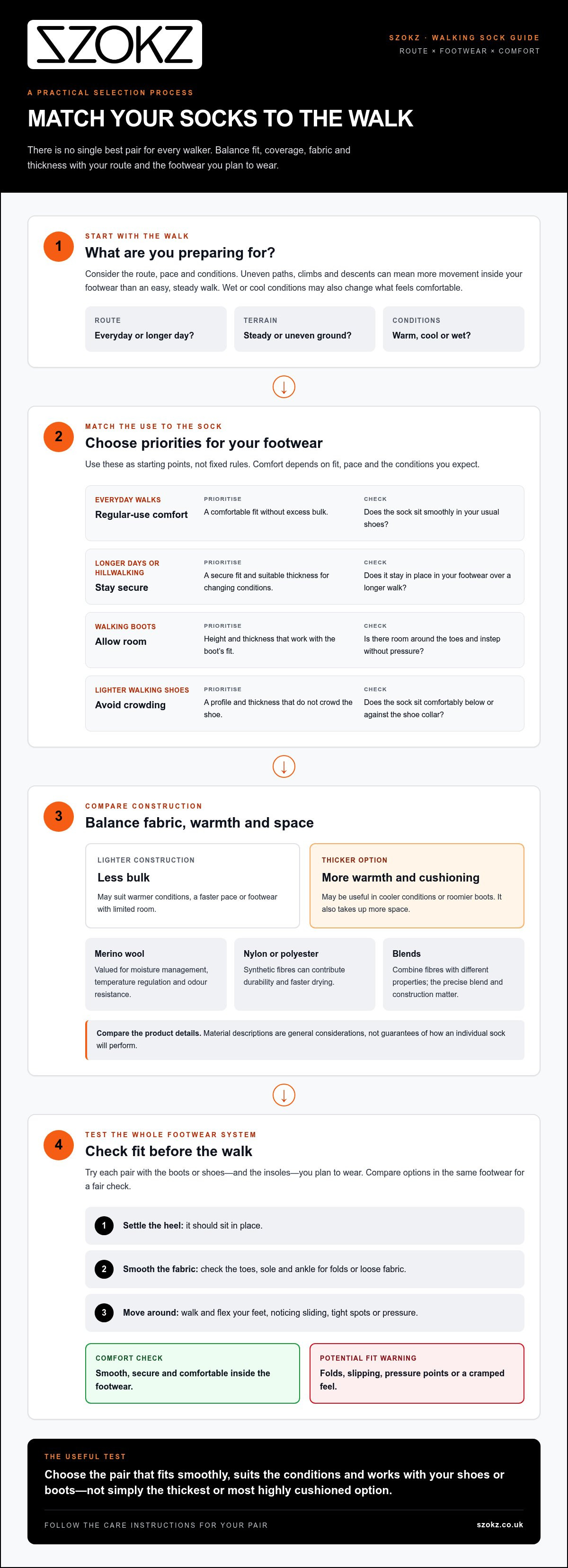
For short everyday walks, prioritise a comfortable fit in the shoes you wear most, without excess bulk. For a longer day on foot, pay closer attention to slipping, pressure points and how the fabric feels as conditions change. Terrain and pace matter too: uneven paths, climbs and descents can mean more movement inside your footwear than an easy, steady walk. Wet or cool conditions may also change what feels comfortable. No single sock type suits every walker or route.
What should a walker look for before buying?
Start with how you plan to use the socks, then compare their size and fit, height, thickness and fabric with your footwear. A boot with limited room may suit a different thickness from a roomier walking shoe. Check where the sock sits against the footwear collar, particularly if a low cut leaves skin exposed to rubbing. Look for specific product details, such as stated fabric composition or cushioning, and compare them with your needs. Treat words such as “best” and “ultimate” as promotional unless the description explains the features behind the claim.
How fit, fabric and thickness affect walking sock comfort
A walking sock is part of your footwear system. If it shifts or gathers, the resulting friction can become distracting. If it presses tightly, your footwear may feel too restrictive. Aim for a smooth fit around the foot and heel, with no loose fabric under the toes or around the ankle. The sock should feel secure without creating uncomfortable pressure.
Assess sock and boot fit together: the right pair should sit smoothly inside your footwear without slipping, bunching or making it feel cramped.
How should walking socks fit inside boots or shoes?
Try socks with the boots or shoes you’ll wear, including the insoles planned for your walk. Check that the heel sits in place and the fabric lies flat across the toes, sole and ankle. Walk around and flex your feet, noticing any folds, sliding or tight spots.
A thicker sock takes up more space. In a close-fitting boot, that extra bulk can change the feel around your toes and instep, even if the sock feels comfortable on its own. To compare options fairly, wear each pair with the same footwear and insoles. For more on footwear compatibility, see this guide to walking boot socks and fit.
Which walking sock materials and thicknesses should you compare?
Compare the material and construction, not just the name on the label. Merino wool is valued for moisture management, temperature regulation and odour resistance. Synthetic fibres such as nylon or polyester can contribute durability and faster drying, while blends combine fibres with different properties. These are general material considerations, not guarantees: the precise blend and construction affect how an individual sock performs.
Thickness is a separate choice. A lighter construction may suit warmer conditions, a faster pace or footwear with limited room. A thicker option can feel warmer and add cushioning, which may be useful in cooler conditions or roomier boots. Neither is automatically better. Consider the season, the length and intensity of your walk, and the space available inside your footwear. Follow the product description for stated materials, thickness and care instructions. For a closer look at fibre properties, read more about hiking sock construction and comfort.
Once you know what balance suits your footwear, browse SZOKZ socks, including hiking socks, as an option for your walks.
Recommended walking socks by route, footwear and use
Use your route and footwear together to narrow down recommended walking socks. The priorities below are starting points rather than fixed rules. Comfort depends on fit, pace and the conditions you expect.
| Walking scenario | Sock priorities | What to check |
|---|---|---|
| Everyday walks | Comfortable fit for regular use | Does the sock sit smoothly in your usual shoes? |
| Longer days or hillwalking | Secure fit and suitable thickness for changing conditions | Does it stay in place in your footwear over a longer walk? |
| Walking boots | Height and thickness that work with the boot’s fit | Is there room around the toes and instep without pressure? |
| Lighter walking shoes | A profile and thickness that don’t crowd the shoe | Does the sock sit comfortably below or against the shoe collar? |
SZOKZ hiking socks are one category to consider as you compare options for your walks. Browse the sock collection and use the product descriptions to assess the details that matter to you.
What socks should you consider for longer walks and hillwalking?
For a longer route, comfort needs to hold up as the terrain and conditions change. Prioritise a sock that stays secure in your existing footwear, then choose a thickness that doesn’t make the fit feel cramped. Take account of the likely pace, the length of the day and the conditions rather than relying on one feature to suit every route. For more route-preparation advice, read the hillwalking socks guide.
What socks work for walking shoes or everyday use?
Lighter walking shoes may leave less room around the foot than boots, so assess sock thickness and height together. Check where the shoe collar sits and whether the sock remains comfortable there as you move. For everyday use, test the pair with the shoes you wear most often. With boots, consider their fit and intended use. Don’t assume a sock’s height or material from its category name alone. Read the product description for those details.
How to test walking sock fit, reduce friction and care for your pair
A fit check before a longer outing can reveal small problems while they’re still easy to address. Try the socks with the footwear and insoles you plan to use, then notice how they feel as you move. Folds, slipping or pressure points may indicate a mismatch between the sock, your foot and your shoes or boots. Socks can support comfort, but no pair can guarantee blister prevention.
How can you check walking socks before a full day out?
Use this short routine to assess your recommended walking socks before relying on them for a longer walk:
- 1. Check the fit. Pull each sock on smoothly. Look for loose fabric around the toes, heel or ankle, and check that the cuff feels comfortable rather than tight.
- 2. Put on your intended footwear. Lace your boots or shoes as you normally would. Check that your heel sits in place, your toes have room and the sock doesn’t make the footwear feel cramped.
- 3. Walk briefly. Try a short walk on familiar ground. Notice any fabric gathering underfoot, movement around the heel, rubbing at the cuff or pressure over the toes.
- 4. Reassess. Take off your footwear and look for shifted fabric or areas that feel irritated. If the sock slips or bunches, try adjusting it. If the same issue persists, reconsider the fit or thickness before a longer outing.
A brief test won’t reproduce every condition on a full day out, but it can help you spot obvious fit issues early. Pay attention to how the sock feels as you move, not only when standing still.
How should you wash and store walking socks?
Care instructions vary with fabric and construction, so follow the garment label for washing temperature, drying and any material-specific directions. Don’t assume that all technical fabrics can be washed or dried in the same way. The label is the practical guide for that particular pair.
After washing, let socks dry fully before putting them away. Store clean pairs together so they’re easy to find before your next walk. If a pair feels different after washing, check its fit and condition before wearing it on a longer route.
Fit, movement and care all matter, but comfort can also depend on footwear, route and individual needs. Use the short-walk test to spot potential friction early, then adjust your choice rather than expecting socks alone to prevent blisters.
Choose recommended walking socks with confidence
The recommended walking socks for you are the ones that work with your actual footwear and usual routes. Make your decision in order: start with the fit of your boots or shoes, consider the type and length of your walk, then compare thickness, material and care requirements. This keeps the focus on practical comfort rather than a broad “best sock” claim.
A quick checklist before you choose walking socks
- Footwear: Check sock height against the shoe or boot collar, and make sure the thickness doesn’t crowd your toes or instep.
- Walk type: Consider whether you’re choosing for everyday use, a longer day out or hillwalking, and think about the conditions you expect.
- Thickness: A lighter-feeling sock may suit warmer conditions or footwear with less room. A thicker option may feel warmer, but can make a close-fitting shoe uncomfortable.
- Material: Compare the stated fibres and choose according to your preferences for warmth, moisture handling and feel.
- Care: Read the product description and garment label for material, construction and washing instructions.
There’s no universally superior balance. A lighter construction can feel less bulky, while added thickness may feel warmer. The best trade-off depends on your footwear, route and what feels comfortable on your feet. If you’re uncertain, wear the socks with your intended footwear on a shorter walk before relying on them for a full day.
When are SZOKZ hiking socks worth considering?
SZOKZ hiking socks are an option if you’re looking for a walking-focused pair. Use the same checklist: compare the product information with your footwear, planned use and preferences rather than assuming features from the category name. SZOKZ says its socks are designed for comfort. Free UK delivery applies to orders over £30.
A considered choice starts with fit, not a ranking. Match the sock to your footwear and walk, then check the details that matter to you before buying.
Make your next walk more comfortable
The recommended walking socks are the ones that suit your footwear, route and comfort preferences. Check that they sit smoothly without slipping or bunching, then match thickness and material to your planned walk and the space inside your shoes or boots. A short test walk can help reveal pressure points before you set out for longer.
There’s no single thickness or fabric that works for everyone. A lighter feel may suit some walks, while added warmth may matter more in cooler conditions. Read the product details and care label, and remember that socks can support comfort but can’t guarantee blister prevention.
SZOKZ offers hiking socks as part of its performance sock range and says its socks are worn by Team GB and Olympic athletes. Free UK delivery applies to orders over £30. Explore the range and compare the product details with your walking needs.
Choose with care, trust how the fit feels on your feet, and set out ready for your next walk.
Frequently Asked Questions
What are the best socks to wear for walking?
The best walking socks are the ones that fit your feet and footwear and suit your route and conditions. The recommended walking socks for a short everyday stroll may differ from those you prefer for a long hill walk. Check that the pair sits smoothly without slipping or creating pressure, then consider thickness, material and height. SZOKZ hiking socks are one option for walkers to explore.
Are merino wool socks good for walking?
Yes, merino wool socks can be a good choice for walking. Merino fibres can help manage moisture and temperature, and are valued for odour resistance. The exact feel and performance depend on the sock’s construction and fibre blend, so read the product description rather than relying on the material name alone. For longer walks, avoid cotton socks, which can stay damp and feel uncomfortable against the skin.
Should walking socks be thick or thin?
Choose thickness according to the conditions, activity and footwear. A lighter sock may feel less bulky in warmer weather or close-fitting shoes, while a thicker pair can feel warmer and more cushioned in cooler conditions or roomier boots. Neither option is right for every walker. Try the socks with the footwear you’ll wear and check that your toes and instep still have comfortable space.
How should walking socks fit?
Walking socks should sit smoothly and securely around your foot and heel, without folds, slipping or excessive pressure. Check that the heel stays in place, your toes aren’t cramped and the cuff feels comfortable. Try them with the boots or shoes and insoles planned for your walk. A short walk can reveal rubbing or bunching that you might not notice when standing still.
Can walking socks prevent blisters?
No sock can guarantee blister prevention. A well-fitting pair may help reduce movement and friction, but blisters can also be affected by footwear fit, dampness, route conditions and individual sensitivity. Check for folds, slipping or pressure before a longer walk, and address discomfort early. If friction persists, review the fit of both your socks and footwear rather than assuming a different sock alone will solve it.
How many pairs of walking socks should I pack?
For a single-day walk, wear a comfortable pair and consider taking a spare if rain, stream crossings or sweaty feet could leave them damp. For a multi-day trip, plan a clean pair for each walking day, then adjust according to your opportunity to wash and dry them. An extra pair can be useful if conditions change or your socks become wet, but consider your route and packing space.
Can I wear hiking socks with everyday walking shoes?
Yes, if the socks fit comfortably inside your everyday shoes. Hiking socks may feel too thick for a close-fitting pair, so check that they don’t crowd your toes or create pressure across the instep. Consider sock height too: it should sit comfortably against the shoe collar without leaving an area that rubs. Test the combination on a short walk before wearing it all day.
How should I wash walking socks?
Follow the care label on each pair. Washing temperature, drying instructions and other guidance can vary with fabric and construction, so don’t assume every technical sock needs the same routine. After washing, let socks dry fully before storing them. Keep clean pairs together so they’re easy to find before a walk, and check their fit and condition before relying on them for a longer outing.
Comments
No comments yet. Be the first to add one.