


The thinnest sock isn’t always the most comfortable choice for a summer walk. A lightweight pair can feel less bulky, but cushioning, fit and how it sits inside your footwear matter too. If you’re comparing summer walking socks UK options, start with the walk you’ll do, not the warm weather alone.
Hot, damp feet can make a longer route uncomfortable, while a sock that bunches or rubs may cause problems whatever its weight. A lighter sock may also offer less cushioning, which is why the right choice depends on your footwear, pace and terrain.
This guide compares common sock materials, cushioning levels, construction and heights to help you choose for your plans. You’ll learn what to look for in the fit, how to balance breathability with cushioning, and when a different style may work better with your walking shoes or boots. The aim is to help you make a considered choice based on practical details.
Key Takeaways
- Choose summer walking socks UK by considering your route, expected conditions and footwear fit, rather than relying on a “summer” label.
- Compare fibre, construction and fit together; the material alone doesn’t determine how a sock feels on a walk.
- Match sock thickness and cushioning to the space inside your shoes or boots and your comfort preference.
- Check for heel movement, toe restriction, creases and pressure points before setting off.
- Use your route and fit needs to guide your choice, then compare them with SZOKZ hiking socks.
Why summer walking socks matter on warm-weather UK walks
Warm feet, damp fabric and repeated rubbing can all make a walk less comfortable over distance. A sock sits between your skin and your footwear, absorbing perspiration and helping reduce direct chafing, as the general overview of Socks explains. Comfort depends on more than the fibre name on a label, though. Thickness, shaping and fit inside your shoes or boots all affect how a sock feels as you move.
There’s no single material that defines a summer walking sock. Think of it as a sock chosen for the conditions and footwear: one that suits the expected warmth, the length and pace of your walk, and the space around your foot. A pair that feels comfortable for a quick stroll may feel different after hours of steady walking. Choose for the outing, not simply the season.
UK summer conditions can shift during the same walk. A bright, warm start may give way to cooler air, showers or damp paths. A practical balance is more useful than choosing the thinnest sock available. Consider the whole route and your footwear rather than assuming every summer walk will be hot and dry.
Warmth management can support comfort, but no sock can promise to prevent blisters. Fit, footwear and movement still matter. Aim for a sock that feels suitable for the conditions and remains comfortable as your walk progresses.
What changes for your feet during a summer walk?
Pace and duration affect how your feet feel inside footwear. A brisk pace or sustained climb means more movement and warmth than an easy, short walk. Longer wear also gives moisture more time to build up. Heat and dampness can happen together, but they aren’t the same: feet may feel warm without being noticeably damp, or clammy when the air itself is cool.
Your footwear changes the equation too. A close-fitting shoe leaves less room for a thicker sock, whilst a roomier boot may feel less secure with a very thin one. Treat sock and footwear as a system: the sock should sit smoothly without adding unwanted pressure or excess space.
Why one sock choice will not suit every summer route
For a short, easy walk, comfort in familiar footwear may be the main consideration. On a longer outing, sustained movement can make small issues such as bunching or tightness more noticeable. Rougher ground can also change how your foot moves inside a shoe or boot, making a secure, smooth fit worth checking before you set off.
Use the route as your guide. A sock that feels right on a gentle path may feel different on a longer walk over uneven ground, particularly if you change footwear. For summer walking socks UK choices, match the sock to the conditions you expect, then consider how its thickness and fit work with the shoes or boots you’ll actually wear.
How sock material and construction affect summer comfort
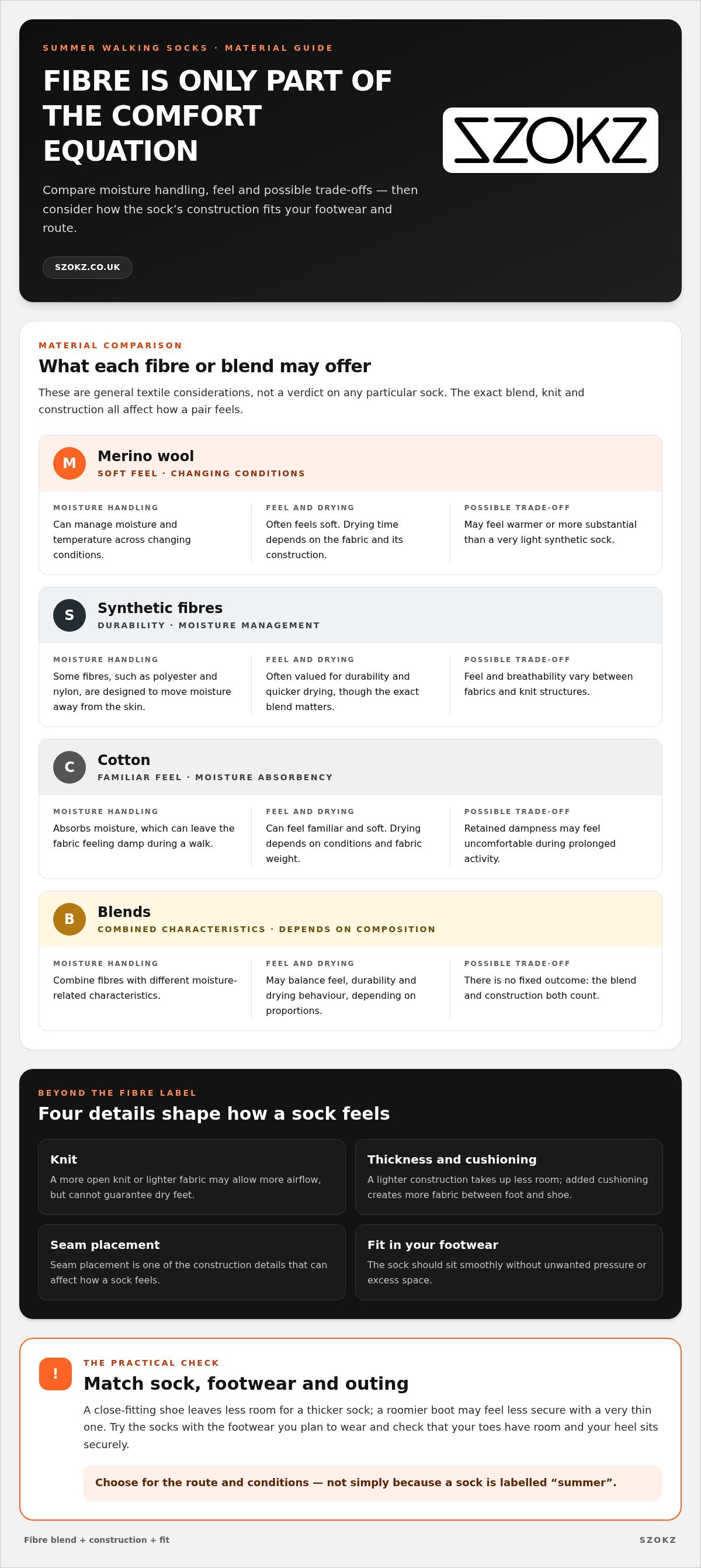
Fibre content is a useful starting point, not a complete verdict. Two socks made with similar materials can feel different because of their knit, thickness, seam placement and fit. Sock performance depends on fibre blend and construction together. Use the comparison below as general textile guidance rather than as a description of a particular product.
| Fibre or blend | Moisture handling | Feel and drying considerations | Possible trade-off |
|---|---|---|---|
| Merino wool | Can manage moisture and temperature across changing conditions. | Often feels soft; drying time depends on the fabric and its construction. | May feel warmer or more substantial than a very light synthetic sock. |
| Synthetic fibres | Some, such as polyester and nylon, are designed to move moisture away from the skin. | Often valued for durability and quicker drying, though the exact blend matters. | Feel and breathability vary between fabrics and knit structures. |
| Cotton | Absorbs moisture, which can leave fabric feeling damp during a walk. | Can feel familiar and soft, but drying depends on conditions and fabric weight. | Retained dampness may feel uncomfortable during prolonged activity. |
| Blends | Combine fibres with different moisture-related characteristics. | May balance feel, durability and drying behaviour, depending on proportions. | No fixed outcome: the blend and construction both count. |
Merino wool, synthetic fibres and blends
Merino wool is often chosen for its softness and ability to help regulate temperature. Synthetic fibres such as polyester or nylon are commonly used for durability and moisture management. A blend may bring together characteristics of both, but the result depends on the specific fibres, their proportions and how the sock is knitted. Read the fibre composition on each product description rather than choosing by a headline material alone.
That detail matters for summer walking socks UK shoppers comparing products for a particular route. A fabric that feels comfortable on a short walk may feel different after hours of movement. For general advice on building walking into your routine, see the NHS guidelines on walking for health. Sock choice is a separate question of fit and construction.
Thickness, cushioning and ventilation
A lighter construction can take up less room inside footwear, whilst added cushioning creates more fabric between the foot and shoe. Extra volume may suit some walkers, but in a close-fitting shoe it can make the fit feel tight. Try socks with the footwear you plan to wear. Check whether your toes still have room and the heel sits securely.
Ventilation is also a construction feature. A more open knit or lighter fabric may allow more airflow, but it can’t guarantee dry feet: pace, weather, footwear and perspiration all play a part. Balance airflow with the level of cushioning that feels comfortable for your route. If you’re comparing practical sock options for walking, explore SZOKZ sock options and compare the product information with your needs.
Compare summer walking socks by route, footwear and walking style
Choose by combining three factors: how long you’ll be walking, what the ground is like and how much room your footwear has. A sock that feels comfortable on a short path may not be your preference for a full day out. There’s no universal best weight or cushioning level. The useful question is whether the sock suits your feet and works with the shoes or boots you’ll wear.
Use route-based guidance as a starting point, not a product specification. Terms such as “lightweight” or “cushioned” can vary between makers. Check the product description for the pair’s details rather than assuming a label guarantees a particular feel.
Match sock weight to footwear and fit
A thicker sock takes up more space. If your walking shoes already feel snug, added cushioning may create pressure across the toes or instep. A thinner sock may leave a roomier shoe feeling less secure. Neither is automatically better; the fit of the whole combination matters.
Try the sock with the footwear planned for your walk. Fasten your shoes as usual, then stand and walk around. Check that the heel stays in place, your toes have room and the fabric lies smoothly. The recommended walking socks guide can also help you think through the fit details that matter when choosing a pair.
Choose for walk length, pace and terrain
Think through the outing before settling on thickness or cushioning:
- Short, easy paths: Prioritise a comfortable fit in your usual footwear. You may prefer a lighter feel if a cushioned sock makes the shoe feel tight.
- Longer walks: More time on your feet can make small fit differences more noticeable. Consider whether the cushioning feels comfortable over sustained movement, rather than judging it only while standing.
- Rough or uneven ground: Your foot may shift differently as the terrain changes. Prioritise a smooth, secure fit inside your footwear, alongside cushioning that feels right for you.
Pace matters too. A steady, sustained walk can feel different from a gentle outing with frequent stops. Consider the likely conditions and your own preference, then test the combination before committing to a longer route. For summer walking socks UK choices, this practical comparison is more useful than selecting by season or material name alone.
Use these points to narrow your options, then compare the details shown for each sock. SZOKZ hiking socks are one category to consider as you assess fit and intended use. Browse the SZOKZ sock range and compare the options with your footwear and walking plans.
How to check fit and prepare summer walking socks
A quick fit check at home can reveal whether a sock works with your walking footwear before you commit to a longer route. Look for a secure feel without folds or tight spots. A well-fitting walking sock stays in place without uncomfortable bunching or pressure. It should feel comfortable alongside the shoe or boot, not just on its own.
A simple at-home fit check
Use the socks and footwear you plan to wear. Fasten your footwear as usual, then follow this short routine:
- 1. Settle the heel. Pull the sock into place and check that its heel sits over your heel, rather than twisting or riding above it.
- 2. Check toe room. Stand and move your toes. The sock shouldn’t crowd them, and the footwear should still feel comfortable at the front.
- 3. Smooth the fabric. Look for folds across the sole, toes or ankle. Adjust the sock and see whether it stays smooth once your shoes are fastened.
- 4. Notice pressure points. Walk indoors briefly. Pay attention to tightness around the toes, heel, ankle or instep, and stop if discomfort develops.
Recheck the fit with the footwear fastened as you’d wear it outdoors. A sock that feels fine while sitting may shift once you stand and walk. If it slips, creases or creates pressure, adjust it and test again before setting off. This is a comfort check, not a guarantee against blisters or other problems.
Use the same approach when comparing recommended walking socks: assess how each pair feels with your own footwear, rather than judging it by thickness or appearance alone. For summer walking socks UK routes, consider the conditions you expect too. A dry, short outing and a longer walk with the chance of showers may call for different preparation.
Care and spare-pair planning
Follow the care instructions on the specific sock label. Fibre and construction can affect how a pair should be washed and dried, so don’t assume the same routine suits every sock. Drying time also varies with the fabric, how the sock is made and the weather. A lightweight pair may still take longer to dry in cool, damp conditions than in warm, breezy weather.
For a longer outing, consider carrying a spare pair. The decision depends on the duration, forecast and whether you’d value a dry change if your socks become damp. Keep the spare somewhere it can stay dry. If you’re planning a route in changeable UK weather, that preparation may be more useful than relying on a particular drying time.
Choosing summer walking socks from SZOKZ
Use your route and footwear to narrow the choice before focusing on a product. Consider how long you’ll be walking, whether your shoes or boots feel close-fitting, and how much cushioning you prefer. Then compare those needs with the details shown for each pair. This keeps the decision practical, without assuming that every hiking sock has the same feel or construction.
SZOKZ offers hiking socks for walks, alongside grip socks, high-intensity sport socks and ankle socks. Compare the product details with your route and footwear to decide what suits your plans. For summer walking socks UK shoppers, the right choice is the one that feels comfortable with the footwear and route, not simply the one labelled for a particular season.
Use the checklist to narrow your choice
Start with the walk you have planned, then use these points to compare options:
- Route: Think about the expected duration, pace and ground underfoot. A short path and a longer day out may lead you to prioritise different levels of cushioning.
- Footwear: Consider how much space your shoes or boots leave around your foot. A sock that adds volume may feel different in close-fitting footwear.
- Preference: Decide whether you like a lighter feel or more cushioning, then assess that preference alongside the fit.
- Product details: Read the information for the specific pair. Don’t assume that every hiking sock uses the same fibres, thickness or construction.
Use the product description for specifications, and your own fit check to judge comfort. Product names and broad labels can help you browse, but they don’t replace comparing the details of each pair.
Browse SZOKZ socks for your next walk
Keep the choice focused. Match the sock to your route, check that it works with your walking footwear, and weigh the cushioning against your own comfort preference. Then compare the product details. It’s a straightforward way to approach hiking socks for summer walks without relying on material or performance claims that aren’t part of the product information.
Browse SZOKZ hiking socks and compare the available options for your next walk.
Make your next summer walk a comfortable one
Before your next outing, use the route and footwear you’ve planned to guide your choice. A sock that works for one pair of shoes may feel different in boots, and comfort is personal. For summer walking socks UK options, compare the details for each pair and consider how it fits your walking plans. A little preparation can help you set off ready for the ground and conditions ahead.
SZOKZ offers hiking socks alongside other performance sock categories. Its socks are worn by Team GB and Olympic athletes. Keep your own needs at the centre of the decision: compare product details with your footwear, preferred cushioning and intended use. Choose based on what suits your walk, rather than assuming every sock will feel the same.
Make your next step a considered one. Find a pair that feels right for your plans, prepare your kit and enjoy getting out on the trail.
Here’s to more comfortable miles and a summer of walks at your own pace.
Frequently Asked Questions
Are cotton socks suitable for summer walking?
Cotton socks can feel soft, but they’re often less suited to long walks because cotton absorbs moisture and can stay damp against the skin. That may feel uncomfortable inside a shoe, particularly if you’re walking for several hours. For summer walking socks UK choices, compare fibre content and consider how long you’ll be wearing them. If you prefer cotton for a short, easy outing, try it with your footwear first.
Is merino wool too warm for summer walking?
Not necessarily. Merino wool is used in socks for its ability to help regulate temperature, so it isn’t automatically too warm for summer. The overall feel also depends on the sock’s thickness, knit and fit, as well as your footwear and walking pace. Check the product’s fibre composition and construction, then try it on a familiar walk before relying on it for a full day out.
How many pairs of socks should I pack for a multi-day summer walk?
Pack enough clean pairs to have a fresh pair available each day, then consider adding a spare if your route is long or wet conditions are likely. Your plans matter: access to laundry, opportunities to dry socks and the length of each day can all affect what you need. Keep at least one pair dry in your pack, stored separately from damp clothing.
Should summer walking socks be higher than the top of my shoes?
Usually, it’s sensible for the sock to cover the shoe’s upper edge, especially if that area rubs against your ankle. The exact height depends on your footwear and personal preference. With low-cut shoes, ankle-height socks may be enough; higher shoes or boots may call for more coverage. Try the combination together and check that the sock doesn’t slip below the collar as you walk.
Can I wear the same walking socks in wet summer weather?
You can keep wearing a pair if it remains comfortable, but socks that are soaked or persistently damp may feel unpleasant inside footwear. A dry spare gives you another option if rain, wet grass or a waterlogged path leaves your socks clammy. Whether a pair dries during a stop depends on its fabric, construction and the conditions, so don’t rely on a quick change in the weather.
How should I wash walking socks after a hot walk?
Follow the care instructions on the sock label, as washing and drying guidance can vary by fibre and construction. After a sweaty walk, don’t leave damp socks bundled in a bag for longer than necessary. Separate them from dry kit and wash them as directed. Check that they’re fully dry before storing or packing them again, so they’re ready for your next outing.
Comments
No comments yet. Be the first to add one.