


The standard light-support socks you're wearing aren't just insufficient. They're likely limiting your potential. If you've ever finished a high-intensity training session only to spend the next three days fighting debilitating muscle soreness, you know the frustration of slow recovery. Finding the right 20-30 mmhg compression socks uk athletes rely on is the first step toward reclaiming your agility. This specific pressure range represents the physiological sweet spot for active maintenance. It's the same grade used by Team GB and Olympic competitors to manage blood flow and reduce muscle oscillation during explosive movements.
We agree that heavy, swollen legs shouldn't be the inevitable cost of a long shift or a hard workout. This guide masters the science of high-pressure compression to accelerate your recovery and enhance your athletic performance. You'll learn how to distinguish between British and European standards, why technical synthetic blends are superior to cotton, and how to measure for a precise anatomical fit. We've compiled the technical specifications and safety protocols you need to choose professional-grade gear with confidence. It's time to move beyond basic elastic support and embrace tools engineered for tangible results.
Key Takeaways
- Understand the physiological benefits of firm-grade compression, including enhanced oxygenation and the efficient clearance of lactic acid after intense exercise.
- Navigate the market by choosing the 20-30 mmhg compression socks uk professionals trust, focusing on technical specifications rather than generic retail labels.
- Ensure maximum durability and performance by selecting synthetic textile blends designed to withstand the rigours of professional-grade athletic use.
- Learn the precise measurements required for an anatomical fit, moving beyond shoe size to use calf circumference for accurate pressure delivery.
- Master the professional application methods and care protocols required to maintain the specialised elastic tension of your high-pressure recovery gear.
What is 20-30 mmHg Compression and Why Does it Matter?
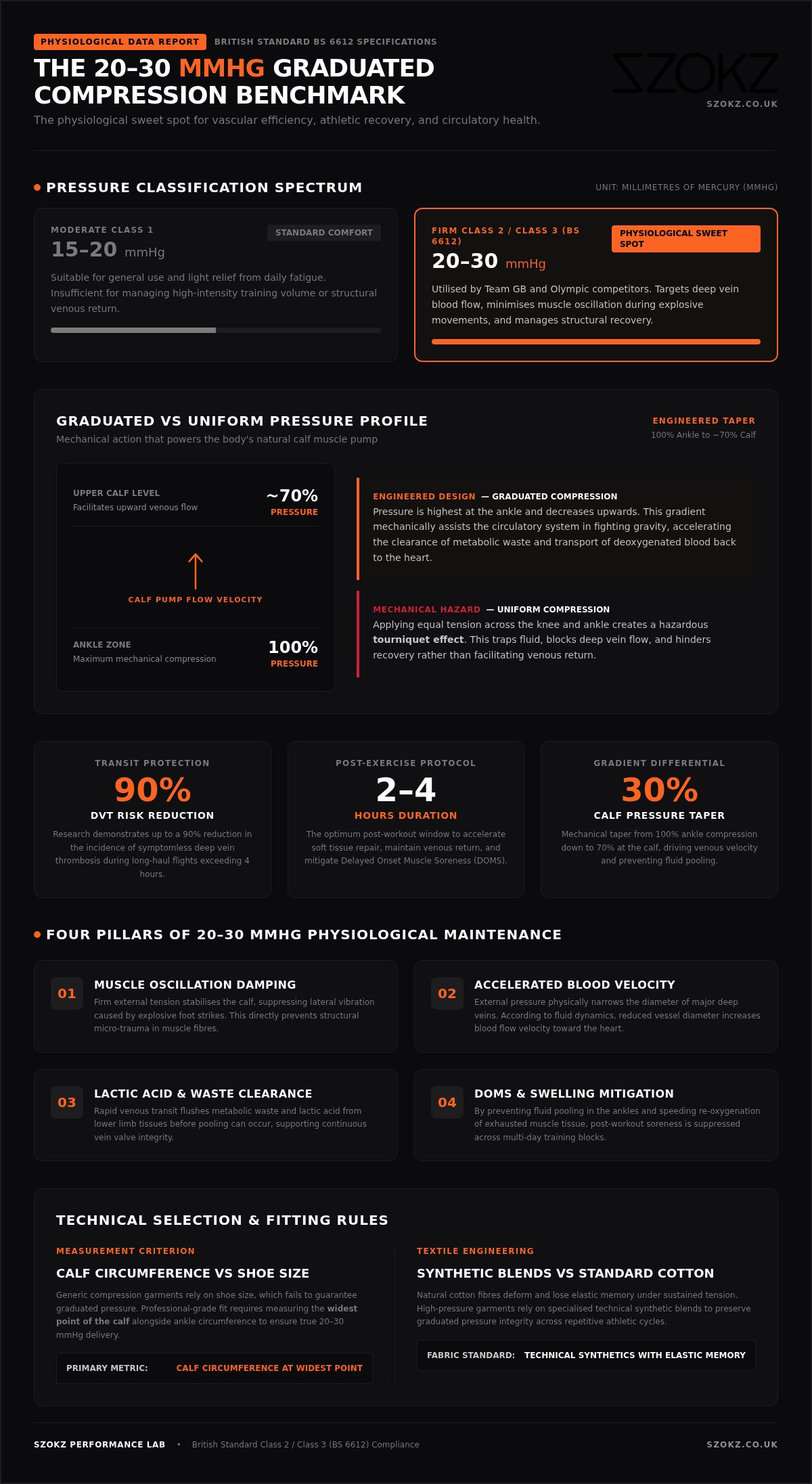
mmHg stands for millimetres of mercury. It's the precise unit for measuring pressure in compression hosiery. The 20-30 mmHg range is widely regarded as "Firm" or "Class 2" support. In the UK market, this range often bridges British Standard (BS 6612) Class 2 and Class 3. Whilst lower ratings provide light relief from daily fatigue, this specific level is a technical requirement for serious physiological maintenance. It's the benchmark for post-marathon recovery and managing circulatory health during long-haul travel.
Choosing 20-30 mmhg compression socks uk athletes trust means moving from comfort-wear to performance-gear. Moderate 15-20 mmHg socks are suitable for general use. However, firm compression provides the structural integrity needed to manage venous return effectively. It's a calculated tool for those who find standard retail socks insufficient for their training volume. Research indicates that wearing these during long-haul flights can reduce symptomless DVT risk by up to 90%.
The Sweet Spot for Performance
Elite athletes, including Team GB competitors, utilise 20-30 mmHg to maintain vascular efficiency. This pressure level targets deep vein blood flow more aggressively than lighter alternatives. It accelerates the transport of deoxygenated blood back to the heart. Beyond circulation, firm compression stabilises the calf muscle. It significantly reduces muscle oscillation, the lateral vibration caused by foot strikes. Minimising this movement prevents micro-trauma in muscle fibres and reduces the onset of DOMS. It's a silent partner in maintaining high-intensity output.
Graduated vs. Uniform Compression
Effective performance gear must utilise a graduated design. This means pressure is highest at the ankle and decreases as the garment moves up the leg. High-quality graduated compression stockings facilitate the "calf pump" effect. This mechanical action assists the body in fighting gravity to move blood upwards. It's the primary mechanism for clearing metabolic waste from the lower limbs.
Uniform pressure is a risk. If a sock applies equal tension at the knee and ankle, it can create a tourniquet effect. This actually hinders circulation rather than helping it. Premium UK brands engineer their 20-30 mmhg compression socks uk range with a 100% pressure profile at the ankle, tapering to approximately 70% at the calf. This specific gradient ensures metabolic waste is flushed efficiently during and after high-intensity sport. It's the difference between professional-grade support and simple elasticated hosiery.
The Science of Graduated Compression Benefits
Graduated compression is more than just a tight fit; it's a mechanical assist for the circulatory system. By applying 20-30 mmHg of pressure, these garments facilitate the rapid removal of metabolic waste. Increased blood flow velocity flushes lactic acid from the lower limbs before it can pool. This process ensures that fresh, oxygen-rich blood reaches fatigued muscle fibres faster. Improved vascular efficiency supports the vein valves, preventing the heavy, aching sensation often felt after prolonged exertion. It's a calculated approach to physiological maintenance.
Sports Recovery and Muscle Repair
Wearing 20-30 mmhg compression socks uk athletes prefer for 2 to 4 hours post-exercise significantly accelerates tissue repair. External pressure reduces the diameter of major veins, increasing blood flow velocity to enhance the return of deoxygenated blood to the heart. This mechanical process is a cornerstone of Team GB recovery protocols. By stabilising the calf and reducing muscle oscillation, these socks mitigate Delayed Onset Muscle Soreness (DOMS). It's why professional-grade gear is essential for back-to-back training days. To maintain these benefits, it's vital to wear and care for compression socks according to technical guidelines to preserve elastic memory.
Travel and DVT Prevention
Long-haul travel presents unique circulatory challenges. On flights exceeding 4 hours, the risk of "Economy Class Syndrome" increases due to immobility and cabin pressure changes. Firm compression counters these effects by maintaining consistent pressure on the lower legs. Research shows that graduated compression can reduce the incidence of symptomless DVT by up to 90% during long-haul transit. This prevents blood pooling in the ankles, a common cause of swelling. You can prevent swelling onboard with our flight socks guide, which details specific strategies for long-distance transit.
Whether you're recovering from a marathon or preparing for a flight, the right pressure profile is essential. For those seeking elite-level support, explore our range of high-intensity sport socks designed for maximum durability and physiological benefit.
Buying Guide: Choosing the Right 20-30 mmHg Socks
Selecting 20-30 mmhg compression socks uk athletes can rely on requires more than choosing a shoe size. Generic "one size fits most" options often fail because they don't provide the precise pressure gradient needed for physiological benefit. To ensure you're getting professional-grade gear, you must evaluate the technical construction and material integrity of the garment. High-performance socks should feel restrictive yet comfortable; if they're easy to put on like a standard dress sock, they aren't providing firm compression.
Material composition is the foundation of consistent tension. Avoid cotton blends. Cotton absorbs moisture and loses its shape quickly, leading to "sagging" that destroys the compression gradient. Instead, look for synthetic blends featuring high-denier Nylon and Elastane (Spandex). These fibres provide the necessary elastic memory to maintain 20-30 mmHg of pressure over a 3 to 6 month lifespan. Synthetic textiles also offer superior moisture-wicking properties, which is essential for maintaining foot health in the damp UK climate.
Sizing accuracy is the most common point of failure for consumers. Shoe size is secondary; calf circumference is everything. You should measure the widest part of your calf and the narrowest part of your ankle before purchasing. This ensures the pressure is distributed correctly, following the clinical guide to compression stockings for graduated fit. A sock that's too tight at the top can actually restrict blood flow, while one that's too loose at the ankle will provide zero circulatory benefit.
Knee-High vs. Ankle Compression
Knee-high socks are the gold standard for the 20-30 mmHg range. This length is required to engage the "calf pump" mechanism, which is the primary driver of venous return. Full-length socks are best for recovery, long-haul travel, and endurance running. However, some athletes prefer the benefits of ankle compression for agility during high-intensity training where calf restriction might feel too limiting. For maximum circulatory health, the knee-high silhouette remains the most effective choice.
Technical Features to Look For
Beyond the pressure rating, technical details separate professional gear from basic hosiery. Look for these specific attributes:
- Seamless Toe Boxes: Hand-linked seams prevent friction and blisters during long-distance movement.
- Padded Footbeds: Targeted cushioning provides impact protection without adding excessive bulk inside your footwear.
- Arch Support Bands: These internal bands keep the sock from shifting or bunching, maintaining the integrity of the compression profile.
- Reinforced Heels: High-wear areas should be double-knitted to ensure the garment doesn't thin out after repeated use.
Durability is a hallmark of quality. Technical socks designed for athletes are engineered to withstand the rigours of high-intensity sport and frequent washing. If a brand doesn't specify its material percentages or provide a detailed sizing chart based on limb measurements, it's likely not providing true firm-grade compression.
How to Wear and Care for High-Pressure Socks
Applying 20-30 mmhg compression socks uk professionals use is a technical skill. These aren't standard gym socks. The high tension makes them difficult to slide over the skin without a specific method. If you struggle to put them on, it's actually a sign that the elastic integrity is still intact. Proper application ensures the graduated pressure is distributed correctly, preventing the fabric from bunching and creating uncomfortable pressure hotspots.
The duration of wear depends on your specific goals. For post-workout recovery, 2 to 4 hours is the standard window for clearing metabolic waste. If you're using them for long shifts or flights, they can be worn for the duration of the activity. Don't wear firm compression whilst sleeping unless specifically advised by a professional. Night-time wear can lead to skin irritation or restricted blood flow when the limbs are at rest and horizontal.
The "Heel-Flip" Application Method
The most efficient way to put on high-pressure socks is the heel-flip technique. Reach inside the sock and firmly grab the heel pocket. Pull the top part of the sock inside out, stopping exactly at the heel. This creates a small pocket for your foot. Slide your foot in until the heel is perfectly aligned. Gradually pull the rest of the fabric up your calf. Ensure the top band sits approximately two fingers below the knee crease. Never fold the top band over; this creates a tourniquet effect that restricts circulation.
Maintenance for Longevity
Heat is the primary enemy of performance compression. To preserve the technical fibres, machine wash your socks at 30°C or 40°C using a mild detergent. Never use fabric conditioners. These products coat the synthetic fibres, reducing their moisture-wicking capabilities and breaking down the Elastane polymers over time. You can find more detailed care instructions in our performance laundry guide for technical socks.
Air drying is mandatory. Tumble drying or placing socks directly on a radiator will destroy the elastic memory of the garment. To maintain the 20-30 mmHg rating, replace your socks every 3 to 6 months. Daily wear and washing cycles eventually degrade the tension. If the socks become easy to slide on or you notice visible thinning in the calf area, the functional benefits have likely diminished. Consistent pressure requires fresh, resilient fibres.
Why SZOKZ 20-30 mmHg Socks are the Athlete’s Choice
Elite performance requires specialised tools. SZOKZ provides the exact 20-30 mmhg compression socks uk athletes use to maintain a competitive edge. Our gear is worn by Team GB and Olympic competitors. This isn't accidental. It's the result of rigorous textile engineering designed to meet the demands of professional sport. We bridge the gap between medical efficacy and athletic utility.
We solve a specific performance problem: the lack of stability in traditional compression hosiery. Standard medical-grade socks are often slick. They cause foot-slip inside technical footwear, which leads to energy loss and skin irritation. SZOKZ integrates graduated compression with high-intensity grip zones. This hybrid design ensures your legs stay fresh whilst your feet remain locked in place. It's essential for agility-focused sports like football, cricket, and trail running where rapid direction changes are frequent.
Cushioning is often misunderstood in the UK market. Whilst soft footbeds provide initial comfort, they don't solve the friction issues that lead to skin damage. You can read more about why cushioning alone doesn’t stop blisters in our technical breakdown. Our 20-30 mmhg compression socks uk range uses moisture-wicking synthetics and seamless construction to manage these risks. We test our durability on professional pitches and rugged outdoor trails to ensure the fabric survives the harshest conditions.
The SZOKZ Performance Advantage
Our "silent partner" philosophy drives every design choice. The gear should support your achievement without distraction. We combine firm 20-30 mmHg pressure with hydrophobic fibres. This blend moves sweat away from the skin instantly. It prevents the heavy, waterlogged feeling common with cotton-based alternatives. Professional-grade materials represent better value for money. They retain their calibrated tension through hundreds of high-intensity sessions and wash cycles. You get consistent physiological support that doesn't thin out or sag.
Shopping with Confidence
We prioritise efficiency in our logistics. We offer free UK delivery on all orders over £30. Flexible payment options, including Klarna and Apple Pay, ensure a streamlined checkout process. Our focus remains on the athlete's needs, providing the tools required for faster recovery and reduced swelling. Whether you're training for a marathon or recovering from a long shift, our engineering delivers tangible results.
Shop the SZOKZ Compression Range
Equip Your Recovery for Peak Performance
Transitioning to firm compression is a deliberate choice for those who prioritise physiological maintenance. You now understand that graduated pressure is the technical standard for flushing metabolic waste and reducing muscle oscillation. Success with 20-30 mmhg compression socks uk relies on precise anatomical sizing and the integrity of synthetic fibres. By avoiding heat and fabric softeners, you preserve the elastic memory required for elite-level support. These small technical details in care ensure your socks remain a functional asset during high-intensity training or long-haul travel.
SZOKZ remains a dedicated facilitator for your goals. Our gear is worn by Team GB athletes and carries a 5-star performance rating. We provide the specialised tools so you can focus on the achievement. Whether you're managing post-workout soreness or preventing swelling on a flight, professional-grade engineering makes the difference. Free UK delivery on orders over £30 ensures your gear arrives ready for the next challenge.
Stay disciplined in your training and your recovery. The right tools are ready when you are.
Frequently Asked Questions
Can I sleep in 20-30 mmHg compression socks?
You shouldn't sleep in firm compression garments unless specifically instructed by a vascular specialist. These socks are engineered to counteract the effects of gravity whilst you're upright. When you're horizontal, your circulatory system doesn't require the same mechanical assistance to return blood to the heart. Wearing them overnight can lead to skin irritation or unnecessarily restricted blood flow. It's best to remove them before bed to allow your limbs to rest.
How do I know if my compression socks are too tight?
Your socks are too tight if you experience numbness, tingling, or a change in the colour of your toes. Whilst they should feel significantly firmer than standard hosiery, they shouldn't cause pain or leave deep, painful indentations in your skin. If the top band feels like a tourniquet or restricts your movement, you likely need a larger size based on your calf circumference. Correct fit is essential for both safety and technical efficacy.
Are 20-30 mmHg socks suitable for varicose veins?
Firm compression is often recommended to manage the symptoms of varicose veins by preventing blood from pooling in the lower legs. The 20-30 mmHg range supports vein walls and valves, which helps reduce the aching and swelling associated with venous insufficiency. However, NICE guidelines suggest that you should have an ABPI test to check your arterial health before using firm pressure. Always consult a professional to ensure this grade is appropriate for your condition.
Can I wear 20-30 mmHg compression socks every day?
You can wear 20-30 mmhg compression socks uk athletes trust every day, provided you have no underlying arterial issues. They're particularly beneficial for those working long shifts on their feet or individuals prone to daily leg fatigue. To maintain hygiene and skin health, you should put on a fresh pair each morning. Ensure you remove them at the end of the day to give your skin and circulatory system a break during rest.
What is the difference between 15-20 mmHg and 20-30 mmHg?
The primary difference is the level of pressure applied to the limb. 15-20 mmHg is considered moderate compression, suitable for general travel and minor swelling. The 20-30 mmHg range is classified as firm or Class 2 compression. This higher grade provides more aggressive support for post-workout recovery and chronic venous issues. It's the technical choice for athletes who require maximum metabolite clearance and muscle stabilisation during or after high-intensity training sessions.
How often should I replace my performance compression socks?
You should replace your performance compression gear every 3 to 6 months. Daily wear and frequent washing cycles inevitably break down the technical Elastane fibres that provide the graduated tension. Once the socks become easy to slide on or the fabric appears thin and translucent, they're no longer delivering the calibrated 20-30 mmHg pressure. Investing in fresh pairs ensures you continue to receive the full physiological benefits of the technical gear.
Do I need a prescription for 20-30 mmHg socks in the UK?
You don't need a prescription to purchase 20-30 mmhg compression socks uk retailers offer. They're available over-the-counter for athletic recovery and general wellness. Whilst they're widely accessible, it's sensible to consult a healthcare provider if you have a history of circulatory problems. This ensures that firm compression is safe for your specific vascular profile. SZOKZ provides professional-grade options directly to consumers without the need for medical paperwork.
Are these socks suitable for gym workouts and weightlifting?
These socks are excellent for gym workouts and weightlifting. The firm pressure stabilises the calf muscles during explosive movements, which can reduce muscle oscillation and the risk of strains. Improved blood flow during your session helps maintain performance levels and prepares your body for a faster recovery phase. Many lifters find that the increased sensory feedback from the compression also helps with proprioception and stability during heavy compound lifts like squats.
Comments
No comments yet. Be the first to add one.