


The difference between a generic athletic sock and professional-grade compression socks for sport isn't the price tag. It's the precise 20–30 mmHg pressure rating. You know the sensation of heavy legs mid-session. You've felt the distraction of fabric bunching in your trainers or boots. It's frustrating when gear fails under pressure. Selecting the right compression sport socks requires a technical approach. It's about how graduated pressure supports your circulatory system and stabilises your muscles during high-intensity movement.
This 2026 guide provides the clarity needed to choose equipment that delivers tangible results. We'll explore how specific compression levels reduce muscle oscillation. We'll explain why a zero-cotton construction is vital for moisture management and blister prevention. You'll learn to navigate mmHg ratings with confidence. Faster post-training recovery. Improved endurance. Superior comfort. We'll help you master the specifications and performance benefits required for your specific discipline.
Key Takeaways
- Identify why the 20–30 mmHg range is the technical standard for maintaining circulation and reducing muscle oscillation during high-intensity activity.
- Understand why professional-grade compression socks for sport require zero-cotton synthetic fibres to maintain moisture control and prevent blisters.
- Distinguish between the support needs of different disciplines, from the stop-start demands of field sports to the lateral stresses of court play.
- Master the sizing process by prioritising calf circumference over shoe size to ensure a precise, graduated fit that avoids excessive restriction.
- Gain insight into the material specifications and arch support features trusted by Team GB and Olympic athletes for elite performance.
The Science of Athletic Compression: Why 20–30 mmHg is the Performance Standard
Athletic performance isn't just about effort. It's about physiology. High-performance compression stockings and pressure ratings dictate how effectively your body manages the stress of high-intensity movement. For athletes, the goal is simple: keep blood moving and muscles stable. Achieving this requires a technical understanding of graduated pressure and its impact on the circulatory system.
Understanding Graduated Pressure
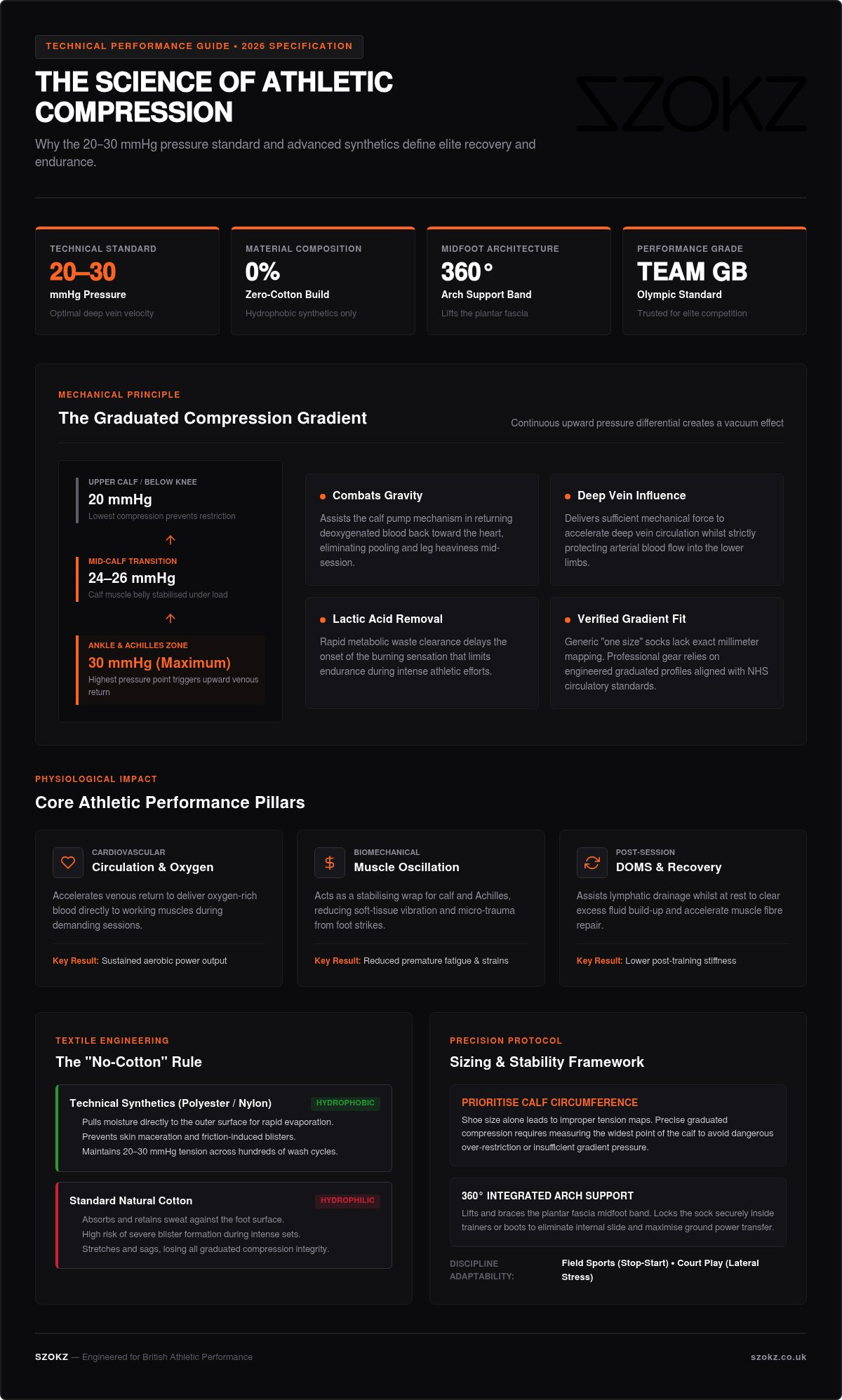
Graduated compression works on a precise mechanical principle. The pressure is tightest at the ankle and decreases as the sock moves up the leg. This gradient creates a vacuum effect. It assists the calf muscles in pumping deoxygenated blood back toward the heart against the force of gravity. Generic "one size fits all" socks often fail because they lack this specific pressure map. Without a verified gradient, blood can pool at the extremities. This leads to heaviness and swelling. Professional-grade compression sport socks are engineered to avoid this by providing a consistent, scientifically backed pressure profile.
Circulation and Oxygen Delivery
Strenuous exercise demands rapid oxygen delivery to working muscles. High-quality compression socks for sport facilitate this by increasing venous return. Faster blood flow means quicker removal of metabolic waste, such as lactic acid. This process prevents the "burning" sensation that often limits endurance during the final stages of a session. The 20–30 mmHg range is the standard for elite athletic support because it provides enough force to influence deep vein blood flow without restricting arterial circulation.
Beyond circulation, compression addresses muscle oscillation. Every foot strike sends vibrations through the soft tissue of the lower leg. This vibration causes micro-trauma and is a primary driver of premature fatigue. Compression garments act as a stabilising wrap for the calf and Achilles. They hold the muscle in place and reduce the energy wasted on counteracting vibration. This stabilisation allows you to maintain power output for longer durations while protecting against strain.
The benefits extend into the post-training environment. Wearing compression during the recovery phase reduces delayed onset muscle soreness (DOMS). It maintains efficient circulation whilst the body is at rest, accelerating the repair of muscle fibres. By supporting the lymphatic system, it also helps clear the fluid build-up that causes post-session stiffness. It's a silent partner that works during and after your most demanding sets.
Essential Features of Professional-Grade Sport Compression Socks
High-performance gear is defined by technical specifications. While casual users might prioritise aesthetics, athletes require functional attributes that withstand the rigours of training. Professional-grade compression socks for sport must balance graduated pressure with advanced textile engineering to be effective. It's not just about the squeeze. It's about how the fabric behaves under load.
Textile Engineering: Moisture Management
The "no-cotton" rule is non-negotiable in elite sport. Cotton is hydrophilic. It absorbs moisture and holds sweat against the skin, which leads to skin maceration and painful blisters. In contrast, synthetic fibres like polyester and nylon are hydrophobic. They pull moisture away from the foot to the outer layer of the fabric where it can evaporate. This moisture-wicking capability is essential for maintaining foot health during long-distance running or intensive field sports. High-performance synthetic blends also ensure the sock maintains its tension. Unlike natural fibres that stretch and sag, technical synthetics retain their 20–30 mmHg rating through hundreds of wash cycles. This durability aligns with NHS guidance on compression therapy, which emphasises the importance of consistent pressure for circulatory health.
Structural Support and Stability
Stability starts at the midfoot. Integrated arch compression provides a 360-degree support band that lifts the plantar fascia. This reduces foot fatigue and prevents the "collapsing" feeling often experienced during high-impact sessions. When combined with Grip Socks For The Gym, this structural support minimises internal foot slide. It keeps the foot locked in place, ensuring every watt of power is transferred to the ground. Small movements inside a shoe lead to energy loss. A secure fit prevents this.
Anatomical padding and breathability zones complete the design. Strategic cushioning in the heel and toe areas absorbs shock without adding unnecessary bulk. Seamless toe construction is equally vital. It eliminates the friction points that cause irritation in tight-fitting trainers or football boots. Breathability zones, often engineered as mesh panels on the bridge of the foot, allow heat to escape. This prevents overheating and keeps the foot dry. These features ensure that compression sport socks deliver more than just pressure; they provide a comprehensive performance environment. If you're looking to upgrade your training kit, explore our range of high-performance athletic socks designed for the most demanding disciplines.
Selecting Your Sport Socks by Discipline: From Pitch to Gym
Every discipline demands a different mechanical response from the lower limbs. Choosing the right compression socks for sport depends on whether your sessions involve linear endurance or multi-directional agility. The physiological requirements of a rower differ vastly from those of a central midfielder. Understanding these nuances ensures your gear supports your specific movement patterns.
High-Intensity Pitch and Court Performance
Football and rugby require explosive acceleration followed by sharp deceleration. These stop-start patterns place immense strain on the calf muscles and Achilles tendon. High-performance compression sport socks enhance proprioception. This is the body's ability to sense its position and movement in space. Improved proprioceptive feedback leads to better balance and more precise foot placement during high-speed turns. For those wearing tight-fitting footwear, the fit is critical. You can read more about optimising your setup in our guide to Grip Socks for Football Boots.
Court sports like netball, tennis, and basketball share these requirements. The constant lateral movements in these disciplines demand a sock that manages shear forces whilst maintaining graduated pressure. This prevents the foot from shifting inside the shoe, which is a common cause of ankle instability and friction-related injuries. A secure, compressed fit provides the confidence needed for aggressive court coverage.
In the gym, the focus shifts to stability and venous return. Heavy compound lifts like squats and deadlifts increase internal pressure and demand total lower-body engagement. Compression helps maintain blood flow whilst the feet are planted. It provides a sensory wrap around the calf that many lifters find beneficial for maintaining tension throughout the movement. This support reduces the risk of light-headedness and assists in clearing metabolic byproducts between heavy sets.
Rowing and Static-Foot Disciplines
Rowing and long-distance cycling present a unique physiological challenge. Athletes remain seated or in a fixed foot position for extended durations. This can lead to blood pooling in the lower legs, especially during low-cadence endurance work. Graduated compression prevents this stagnation. It ensures deoxygenated blood returns to the heart efficiently. As noted in BBC Sport athletics coverage, managing these physiological variables is what separates elite preparation from casual training.
Selecting the right length is vital for these disciplines. Rowers often prefer crew-length options to avoid interference with the boat's slides, whereas field athletes typically opt for knee-high versions to maximise calf coverage. Choosing the correct profile ensures the gear facilitates performance rather than hindering it. Whether you are on the water or the pitch, the goal remains the same: efficient circulation and total muscle stability.
Achieving the Perfect Fit: Sizing and Maintenance Guidance
Precision is the priority. Most athletes select socks based on shoe size. For compression socks for sport, this is a fundamental oversight. The technical focus is on the lower leg's circumference, not the length of the foot. If the garment doesn't fit the calf correctly, the graduated pressure map is compromised. This leads to inconsistent support and reduced performance during high-intensity sessions.
How to Measure for Professional Compression
To find your size, use a flexible tape measure. Wrap it around the widest part of your calf muscle. This centimetre measurement is the most reliable indicator of fit for compression sport socks. Take this measurement in the morning. Your legs are at their most natural state before any exercise-related swelling begins. Incorrect sizing can negate all physiological benefits. A sock that is too loose won't facilitate blood flow, whilst one that is too tight may restrict it.
Use the "Two-Finger Rule" to verify the fit once you've put them on. You should be able to slide two fingers between the fabric and your skin at the top cuff. If the gap is wider, the pressure is too low to be effective. If you can't fit your fingers, the sock is too restrictive. The fabric should feel like a firm second skin, providing support without pinching or digging into the tissue behind the knee.
Longevity and Care for Technical Apparel
Maintaining the 20–30 mmHg rating requires disciplined care. Wash your gear at 30 degrees Celsius. Excessive heat is the primary cause of elastic degradation in high-performance synthetics. Avoid fabric softeners entirely. These chemicals coat the moisture-wicking fibres. This coating prevents the fabric from transporting sweat away from the skin, leading to a damp environment that encourages blisters and skin irritation. Quality gear deserves a technical cleaning routine.
Air-drying is the only way to preserve the "snap-back" of the elastic. Tumble dryers are too aggressive for technical apparel. The high heat and tumbling motion will eventually lead to a permanent loss of tension. Never fold down the top of the sock. Folding creates a double layer of compression that acts as a tourniquet around the upper calf. This disrupts the graduated pressure flow and causes blood to pool at the ankle. Similarly, don't overlap your socks with compression sleeves or tight leggings. Keep the layers clean and the pressure consistent to ensure the gear works as intended.
The SZOKZ Selection: Engineered for British Performance
SZOKZ operates as a specialist facilitator for the British athletic community. We focus on the technical details that larger, generalist manufacturers often overlook. Every pair of compression socks for sport we produce follows a strict performance blueprint. This includes the 20–30 mmHg pressure rating and a total exclusion of cotton. British engineering is defined by reliability. It's about gear that performs exactly as specified, session after session. We prioritise functional pragmatism over aesthetic trends.
Standout Products in the Collection
The High Intensity Sport Socks represent the technical peak of our range. They deliver the full 20–30 mmHg graduated support required for high-stakes competition and intensive field sports. These are the tools for athletes who require maximum venous return and muscle stabilisation. For those seeking versatility in the gym or on the court, the All Sport Ankle Socks provide a lower-profile alternative. These socks feature the same integrated arch compression and moisture-wicking technology in a more compact format. They are the preferred choice for weightlifting and lateral-movement disciplines.
Consistency is a core brand value. Across our entire sport range, we maintain a strict no-cotton construction. We've established that cotton is a liability for the active foot. Our synthetic blends ensure your feet remain dry whilst the fabric maintains its compression profile through repeated use. We don't just sell socks. We provide engineered solutions for foot health and athletic longevity.
Why Elite Athletes Choose SZOKZ
The efficacy of our equipment is proven at the highest levels of global competition. Our compression sport socks are worn by Team GB and Olympic athletes. These individuals compete in environments where a fraction of a percentage point matters. They trust SZOKZ because our specifications are verifiable and our performance claims are grounded in sports science. This elite-level validation confirms that our gear meets the most demanding standards in the world.
We are committed to providing this same professional-grade equipment to the everyday athlete. You don't need an Olympic call-up to benefit from superior circulation and muscle support. Whether you are training for a local half-marathon or playing Sunday league football, your gear should be an asset, not a distraction. We act as your silent partner in performance. We provide the essential tools, whilst the achievement remains entirely yours.
Browse the full Compression Sport Socks collection at SZOKZ
Optimise Your Performance with Technical Support
Selecting the right equipment is a technical decision that directly impacts your physical output. Mastery of the 20–30 mmHg "sweet spot" ensures you aren't just wearing tight socks, but a piece of engineered performance gear. By prioritising synthetic, no-cotton materials and precise calf measurements, you eliminate the distractions of moisture and poor fit. These standards are why professional-grade compression socks for sport are a staple for Team GB and Olympic athletes.
Whether you are managing lateral movements on the court or seeking faster recovery between gym sessions, the right support remains a silent partner to your discipline. Technical 20–30 mmHg graduated compression provides the stability and circulatory efficiency needed for elite performance. With free UK delivery on orders over £30, upgrading your training kit is straightforward and efficient.
Your focus should remain on the next session. Let the technical specifications handle the rest.
Frequently Asked Questions
What is the best compression level for sports socks?
The optimal range for active performance is 20–30 mmHg. This specific pressure level provides enough force to influence deep vein blood flow and return deoxygenated blood to the heart without restricting arterial circulation. Lower ratings often fail to stabilise muscles during high-intensity movement, whilst higher medical grades may be too restrictive for dynamic sports. This technical standard is why compression socks for sport are favoured by elite athletes for both endurance and explosive disciplines.
Can I wear compression sport socks all day?
You can wear them all day, provided the sizing is correct and you don't experience discomfort. Many athletes use them for long periods during travel or office work to prevent blood pooling and reduce post-training swelling. However, you should remove them if you notice numbness, tingling, or skin irritation. It's also vital to ensure the top cuff isn't folded down, as this can create a tourniquet effect that disrupts healthy circulation.
Do compression socks actually improve athletic performance?
They improve performance by reducing muscle oscillation and delaying the onset of fatigue. By holding the calf muscles and Achilles tendon in place, the socks minimise energy waste caused by vibrations during every foot strike. This stabilisation allows for better power maintenance over longer durations. Additionally, the improved venous return helps clear metabolic waste like lactic acid faster, which keeps your legs feeling fresher during the final stages of a session or match.
How often should I replace my sports compression socks?
Replace your socks every four to six months if you train regularly. Over time, technical fibres lose their "snap-back" ability, making the 20–30 mmHg graduated pressure map less accurate. If the socks feel easier to put on than when new, or sag during movement, the elastic integrity is compromised. Following a 30-degree wash routine and air-drying will help extend the lifespan of these high-performance synthetic materials.
Should I choose ankle or knee-high compression socks for the gym?
Choose knee-high socks if your goal is to improve circulation and reduce calf muscle vibration during high-impact work. For gym sessions focused on weightlifting or court agility where calf support is less critical, All Sport Ankle Socks are often sufficient. These provide targeted arch compression and midfoot stability without the full coverage of a traditional sock. The choice depends on whether you require total lower-leg stabilisation or just focused support for the foot.
Why are no-cotton socks better for sport and exercise?
Cotton is a liability during exercise because it is hydrophilic, meaning it absorbs and retains moisture. Damp fabric against the skin leads to skin maceration and painful blisters. Professional-grade compression sport socks utilise synthetic blends that are hydrophobic. These fibres wick sweat away to the outer layer for rapid evaporation. This keeps your feet dry, maintains the sock's structural tension, and prevents the fabric from bunching inside your trainers or boots.
What happens if my compression socks are too tight?
If your socks are too tight, they can restrict arterial blood flow instead of assisting venous return. This often manifests as numbness, tingling, or a cold sensation in the toes. It can also cause skin indentations or painful pinching behind the knee. Always use the "Two-Finger Rule" to check the top cuff. If you cannot slide two fingers under the fabric, you likely need a larger size based on your calf circumference.
How do I know if I need arch compression in my sports socks?
You need arch compression if you experience foot fatigue or a "collapsing" sensation in the midfoot during long sessions. This feature provides a 360-degree support band that lifts the plantar fascia and stabilises the foot during lateral movements. It's particularly beneficial for athletes in field and court sports where constant impact and direction changes place high stress on the foot's structural integrity. Most high-performance athletic socks include this as a standard stability feature.
Comments
No comments yet. Be the first to add one.