


Compression socks can support blood flow, but how they apply pressure matters. Compression socks for blood circulation in the UK work by gently squeezing the legs to help move blood towards the heart. Graduated compression is strongest at the ankle and eases higher up the leg.
If your legs feel tired or uncomfortable after exercise or long periods of standing, it’s understandable to look for practical support. Compression socks may help with leg comfort and circulation, but they aren’t a substitute for medical advice if you have a health condition or concerns about swelling.
This guide explains how compression socks work and what their potential effects on circulation, swelling and leg fatigue may be. You’ll also learn how to put them on, choose a suitable compression level, and wash and care for them so they’re ready for your next day on your feet.
Key Takeaways
- Understand how graduated pressure may support blood flow, and why the fit and compression level matter.
- Learn when compression socks may help with leg discomfort during travel, exercise or long periods of standing.
- Recognise when health advice is important before using compression, particularly if you have swelling or a health condition.
- Use practical steps to put socks on smoothly and avoid folds or wrinkles while wearing them.
- Keep compression socks in good condition with gentle washing and natural drying.
How do compression socks work?
Flight compression socks are often non-medical travel socks, while medical compression stockings are selected for treatment. Both apply pressure, but their intended use and compression levels can differ.
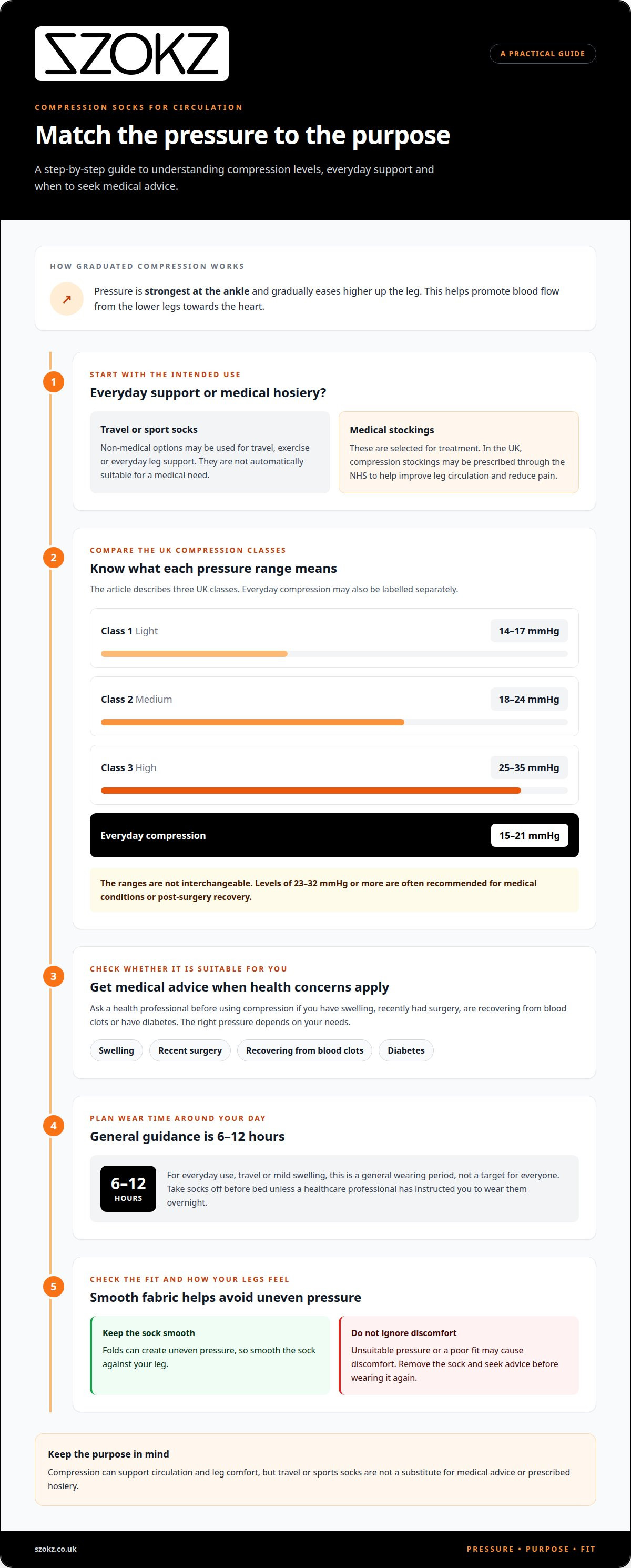
Graduated compression is strongest at the ankle and gradually decreases up the leg. This pressure helps promote blood flow from the lower legs towards the heart. If you’re considering compression socks for blood circulation in the UK, it’s important to distinguish everyday support from prescribed hosiery. Socks designed for travel or sport aren’t automatically suitable for a medical need.
Travel is one reason to wear compression socks, but prolonged sitting at a desk or standing through a shift can also leave your legs tired or uncomfortable. Non-medical compression socks are available for travel and exercise. During a journey, regular movement and breaks from sitting also matter. Compression is one way to manage long periods of inactivity, not a reason to stay still.
For everyday use, travel or mild swelling, compression socks are typically worn for 6-12 hours. This is a general wearing period, not a target that suits everyone. Take them off before bed unless a healthcare professional has instructed you to wear them overnight. If your legs swell, ask a health professional whether the compression level is suitable.
Sport is another use. During exercise, compression socks apply pressure around the lower leg; after exercise, some people wear them for comfort during recovery. They aren’t a substitute for rest or treatment. For example, someone standing through a long event may choose non-medical socks for leg comfort, while someone recovering from surgery should seek medical advice first.
UK compression classes describe different levels: Class 1 is light, at 14-17 mmHg; Class 2 is medium, at 18-24 mmHg; and Class 3 is high, at 25-35 mmHg. Everyday compression may also be described as 15-21 mmHg. Levels of 23-32 mmHg or more are often recommended for medical conditions or post-surgery recovery. These ranges aren’t interchangeable, so consider the intended use.
If you’ve recently had surgery, are recovering from blood clots or have diabetes, seek medical advice before using compression socks. Anyone with swelling should also ask whether compression is suitable. This helps avoid choosing a level that may be too much for your needs.
Risks include discomfort from unsuitable pressure or a poor fit. Folds can create uneven pressure, so smooth the sock against your leg. If it feels uncomfortable, remove it and seek advice before wearing it again.
In the UK, compression stockings may be prescribed through the NHS to help improve circulation in the legs and reduce pain. This differs from buying non-medical travel or sports socks. Choosing compression socks for blood circulation in the UK starts with knowing whether you need everyday support or prescribed hosiery.
Potential benefits for circulation, swelling and leg fatigue
Compression is used to support leg circulation and ease discomfort. Its potential value depends on why you’re wearing it and whether the pressure is suitable.
Circulation and leg fatigue
People who stand for long hours and athletes are among those who may use compression socks to help alleviate leg pain and swelling. For example, a worker standing through a shift may choose them for added leg support, while an athlete may wear them around training. Consider the specific discomfort and activity, rather than treating compression as a fix for every cause of tired legs.
Compression stockings may be prescribed to help improve circulation in the legs and reduce pain. They may also help reduce discomfort associated with varicose veins. These potential uses aren’t a reason to choose a medical compression level without advice. Your health needs and the pressure required are important considerations.
Swelling in feet and ankles
Swelling can appear around the feet and ankles after long periods of standing or sitting. Compression may help manage swelling, but the right pressure matters. If you have swelling, ask a health professional whether compression is suitable and whether it could be too much. This is especially relevant when swelling is linked to a health condition.
For example, if your shoes feel tighter around your ankles by the end of a working day, note when the swelling occurs and discuss it with a health professional. Don’t assume stronger compression will work better. Medical compression is selected according to need, while non-medical socks aren’t a substitute for assessment of persistent swelling.
Compression is also used to help prevent deep vein thrombosis (DVT), a blood clot in a deep vein. This doesn’t mean any pair of sports or travel socks is suitable for DVT prevention. If you’re concerned about clots, seek medical advice about appropriate measures, particularly before travel or after surgery.
For active use, consider how long you’ll be standing or training and what kind of support feels comfortable. Keep the intended activity in view: support for a sports session is different from prescribed hosiery for a medical need. For training, you can browse sport sock options suited to active wear.
Track the results in practical terms. Notice whether leg discomfort eases during a shift or after exercise, and whether swelling changes. Stop using compression if it causes discomfort, and seek advice about a suitable alternative. These observations can help distinguish everyday support from a circulation concern that needs professional assessment.
If you have swelling, ask a health professional whether compression is suitable and whether the pressure is appropriate, including for continued use.
Putting on and removing compression socks
Put compression socks on as early as possible in the morning, before your legs have had time to swell during the day. Make sure your skin is dry, and wait until moisturiser or lotion has been fully absorbed. If your skin is moist, talcum powder may make the fabric easier to put on.
Use a steady approach. Pulling hard at the top can stretch the fabric and make it harder to position smoothly. Work the material over your foot and heel first, then ease it up your leg. Keep the fabric flat as you go.
- Prepare your skin. Sit somewhere stable and dry your legs thoroughly, including around the toes and heel. Let any lotion absorb fully before starting.
- Gather the sock. Turn the sock down towards the heel so the foot section is easy to reach. Avoid pulling it inside out beyond the heel.
- Position the foot. Ease the foot section over your toes and heel. Check that the heel sits in the shaped heel area.
- Ease the fabric up. Work the sock gradually up your leg, smoothing it as you go. Don’t tug from the top or leave folds behind.
- Check the finish. Make sure the fabric lies evenly from ankle upwards, without wrinkles, bunching or a rolled top.
For closed-toe stockings, guide your toes fully into the foot section before settling the heel. Then smooth the fabric up your leg, checking that the toe area doesn’t feel pinched. A twisted foot section can pull against your toes and make wearing the stocking uncomfortable.
Open-toe stockings leave your toes exposed. Position the heel correctly, then smooth the foot section so its edge sits evenly behind your toes. The opening should lie flat rather than cutting across or bunching beneath your foot. Follow the stocking’s design, since open-toe styles can differ in how much of the foot they cover.
While wearing compression, check the sock again after standing or walking. Smooth any fabric that has shifted, and don’t fold the top down. Folds and wrinkles can create uneven pressure. If you can’t get the fabric to sit comfortably, remove it and start again rather than pulling harder.
To remove a pair, sit down and ease the fabric down from the top, turning it gradually towards the heel. Work it over your ankle and heel without yanking at your toes or sharply stretching one section. This controlled removal helps avoid catching your skin and keeps the sock’s shape. If the fabric resists, pause and reposition your hands before continuing.
Washing and caring for compression socks
Put compression socks on in the morning, when your skin is dry and any moisturiser has absorbed. After wearing, wash them by hand or on a delicate machine cycle at 40°C, then dry naturally without squeezing the water out.
Good care keeps the fabric clean and ready for regular wear. Follow a simple routine: wash the socks after use, dry them away from direct heat, and avoid tumble dryers and radiators. These steps also apply to compression stockings.
For the first wash, clean the socks on their own. This prevents colour transfer or contact with other laundry while the fabric is new. Use a washing machine’s delicate cycle at 40°C, or wash by hand at the same temperature. Handle the material gently rather than scrubbing or twisting it.
If you use ointment on your legs, wash compression socks daily. Ointment can remain on the fibres after wearing, so washing helps remove residue before the next use. Let the socks dry fully before putting them back on.
- Wash by hand or machine. Choose hand washing or a delicate cycle at 40°C.
- Wash separately first. Keep the first wash separate from other laundry.
- Dry naturally. Don’t squeeze out water; allow it to drain and dry.
- Avoid direct heat. Don’t use a tumble dryer or place socks on a radiator.
Drying takes patience. After washing, support the socks while they’re wet and let excess water drain naturally. Don’t wring or twist them. A radiator or tumble dryer exposes the fibres to direct heat, so choose a spot away from both and allow the material to dry at its own pace.
Having two pairs makes rotation easier: wear one pair while the other is being washed and dried. This is useful if you wear compression socks regularly, as a clean, dry pair will be ready for the next use. Keep each pair together to avoid mixing up socks with different fits or levels of wear.
Before each wear, check the fabric for visible damage and make sure it hasn’t become stretched or misshapen. Start with dry skin, and let lotions absorb fully before dressing. Gather the sock towards the heel, guide your foot into place, then ease the fabric up smoothly. Avoid pulling sharply at the top.
Once the sock is on, smooth out creases rather than folding the top down. Wrinkles can create uneven pressure. To remove it, ease the sock down gradually from the top and over the heel; don’t yank it off by the toe or cuff. This routine combines careful handling with the washing and drying needed for everyday care.
Potential circulation benefits of compression socks
Compression hosiery has a practical role in circulation care, but its intended benefit depends on why it’s worn. It may be prescribed to help improve circulation in the legs and reduce pain. For everyday wear, consider whether it addresses a specific discomfort, such as tired legs after standing, or forms part of treatment for a medical condition.
Varicose veins are one example. Compression socks may help reduce associated discomfort, including aching or heaviness in the legs. This is symptom support, not a way to remove the veins or diagnose the cause of pain. If symptoms persist, discuss them with a health professional, who can assess the circulation concern and suitable compression.
Deep vein thrombosis, or DVT, is another reason compression hosiery is discussed. Compression socks can help prevent DVT, but this doesn’t mean every non-medical pair is appropriate for every person or journey. If you’re worried about blood clots or have recovered from one, get medical advice on prevention and the type of hosiery to use. The purpose matters: everyday comfort and clinical care are different needs.
For swelling or leg fatigue, consider when your symptoms occur. For example, note whether discomfort follows a long period of standing, exercise or prolonged sitting. This helps you describe the pattern to a health professional. If you have swelling, ask whether the pressure is suitable, since too much compression may not be right for you.
Athletes and people who stand for long hours may use compression socks to help alleviate leg pain and swelling. Their potential benefit is most relevant when the activity causes leg discomfort. They aren’t a general solution for every circulation problem, and sports socks shouldn’t be assumed to meet a medical need. Both the compression level and the reason for wearing them matter.
If you wear prescribed stockings, attend review appointments so the prescription remains appropriate. A health professional considers the condition being treated and the compression needed. If you’re unsure which level is suitable, seek advice before choosing. This is particularly important after surgery, while recovering from blood clots, or if you have diabetes.
The key point: compression can support circulation and ease some leg symptoms, including discomfort linked with varicose veins. It isn’t a substitute for advice about persistent pain, swelling or DVT risk. Identify the problem you want to address, then use compression suited to that purpose.
Compression socks may help reduce discomfort associated with varicose veins and prevent deep vein thrombosis, but their purpose must be clear.
SZOKZ
SZOKZ makes performance socks for active routines, including Grip Socks, High Intensity Sport Socks, All Sport Ankle Socks and Hiking Socks. They’re designed for training, sport and outdoor wear, where comfort and a secure fit matter during movement.
Choose socks for the activity you have in mind, rather than treating sports socks as medical compression hosiery. If you’re managing a circulation condition, persistent swelling or recovery after surgery, follow a healthcare professional’s advice about suitable compression. For everyday movement and training, SZOKZ offers sport-focused options for different activities.
Contact SZOKZ to discuss which sock type suits your routine.
Choose support that fits your next move
Make your next step practical. Think about where you want support in your routine, whether that’s training, a long day on your feet or time outdoors. Choose a pair that suits the activity and feels comfortable as you move.
When choosing compression socks for blood circulation in the UK, keep your purpose clear. Everyday sports socks are designed for active wear, while medical compression is a separate consideration. If your needs relate to a health condition, use professional advice to guide your decision.
SZOKZ offers sports socks for different activities. Browse the range and choose a pair that matches how you plan to move.
Take the next step with confidence and find support that fits your routine.
Frequently Asked Questions
What are compression socks and how do they help blood circulation?
Compression socks apply pressure to the legs to support blood flow towards the heart. Graduated styles apply more pressure at the ankle, easing upwards. SZOKZ socks provide 20-30 mmHg compression around the arch, which is different from graduated medical compression applied along the leg. For example, choose sports socks for activity-related comfort, but seek clinical advice if you need compression for a diagnosed circulation condition.
What compression level is suitable for everyday use in the UK?
Everyday compression is described as 15-21 mmHg, while UK Class 1 hosiery is listed at 14-17 mmHg. These figures use different descriptions, so don’t assume the labels mean exactly the same thing. The suitable level depends on why you want compression. If you’re choosing socks for a medical condition, swelling or recovery after surgery, get advice on the level before buying.
When should you wear compression socks and how long should you wear them?
Wear them during the activity or period when you want leg support, such as a long journey or a workday spent standing. For everyday use, travel or mild swelling, compression socks are typically worn for 6-12 hours. This isn’t a required duration for everyone. Remove them before bed unless a healthcare professional has told you otherwise, and follow any specific medical instructions you’ve received.
How do you measure your legs and choose the right compression sock size?
Use the measurements and size chart provided for the exact sock you’re buying, since sizing methods vary. SZOKZ’s sizing guide uses the distance from heel to longest toe. Its sizes are Medium, UK 4.5-7.5 / EU 38-41, and Large, UK 8-11 / EU 42-45. SZOKZ socks have a loose fit; choose Medium if you prefer a closer fit.
What are the best compression socks available in the UK and how do they compare?
The best choice depends on whether you need sports support or medically selected compression. SZOKZ offers Grip Socks, High Intensity Sport Socks and All Sport Ankle Socks, with 20-30 mmHg arch compression across its ranges. That arch compression is not the same as graduated medical hosiery for a prescribed condition. Compare the intended use and fit, and seek clinical advice if you need compression to manage a health concern.
Comments
No comments yet. Be the first to add one.