


The right fit starts with your UK shoe size: one sizing guide runs from UK 3-5.5 for small to UK 12-14 for extra-large. Compression socks for post workout recovery should feel snug and even, not painfully tight. Fit matters because pressure only feels supportive when the sock sits correctly on your leg.
It’s natural to expect compression socks for post workout recovery to help tired legs, but their effects on circulation and recovery can depend on the activity and the type of compression. This guide explains how to choose a suitable size, what to consider when comparing pressure and breathable materials, and what compression may do for circulation after exercise. You’ll also learn how to weigh possible recovery benefits against comfort, so you can make a practical choice for your training routine.
Key Takeaways
- Start with your UK shoe size when comparing sock sizes, then assess whether the fit feels snug and even.
- Pressure levels vary. The article explains what to consider when choosing compression for exercise and recovery.
- Breathable, sweat-wicking materials can help manage heat and moisture during activity.
- Compression may support circulation, but its effects can vary with exercise intensity and the outcome being measured.
- Learn how to weigh possible recovery benefits against comfort, and where SZOKZ sport socks may fit your routine.
How compression recovery socks are claimed to support post-exercise recovery
Compression socks apply pressure around the lower leg, with the aim of supporting venous blood flow. The proposed benefit of compression socks for post workout recovery is improved comfort after demanding exercise, not a guaranteed change in performance. The potential value is most relevant after long runs, hikes or endurance sessions, when tired or swollen legs can affect how you feel.
Compression and blood flow
Compression is thought to encourage blood to move from the lower leg back towards the heart. This proposed support for circulation may help manage fluid build-up after exercise. It does not mean every workout produces the same response. A review found that compression socks did not seem to influence performance in 10-km runs.
Some findings report less perceived muscle soreness after exercise. A separate study found that marathon runners who wore socks after racing may recover faster and return to training sooner. These findings relate to soreness and recovery, not reliable improvements in race times. Notice how your legs feel during normal movement after a session, but don’t treat comfort alone as proof of a performance change.
Post-exercise wear duration
There is no single wear duration that suits every session. Consider the activity, how your legs feel and whether the socks remain comfortable. The purpose of compression socks for post workout recovery is not to wear them for as long as possible. You can wear them while resting or moving around after training, then remove them if they cause discomfort.
Don’t wear compression socks to bed unless a healthcare professional has instructed you to do so. If you’re preparing for an event, practise wearing them during training first, so you can assess comfort before race day.
Recovery tights cover more of the legs, calf sleeves leave the feet uncovered, and socks cover the feet as well. Choose based on the area you want covered and which option feels comfortable. Compression does not replace rest or a gradual return to training.
Arch and plantar fascia support is different from calf compression. A lower-leg sock does not necessarily provide structured support beneath the arch or along the plantar fascia. If foot support matters to you, assess the sock’s foot construction rather than assuming calf pressure supports the sole.
A poor fit can press unevenly or irritate skin. Remove the socks if they cause pain, numbness or skin changes, and seek medical advice about persistent symptoms. People with circulation problems or diabetes should avoid compression socks or seek medical advice before using them for running. Suspected side effects can be reported through the UK Yellow Card hotline on 0800 731 6789.
Choosing compression levels and breathable materials
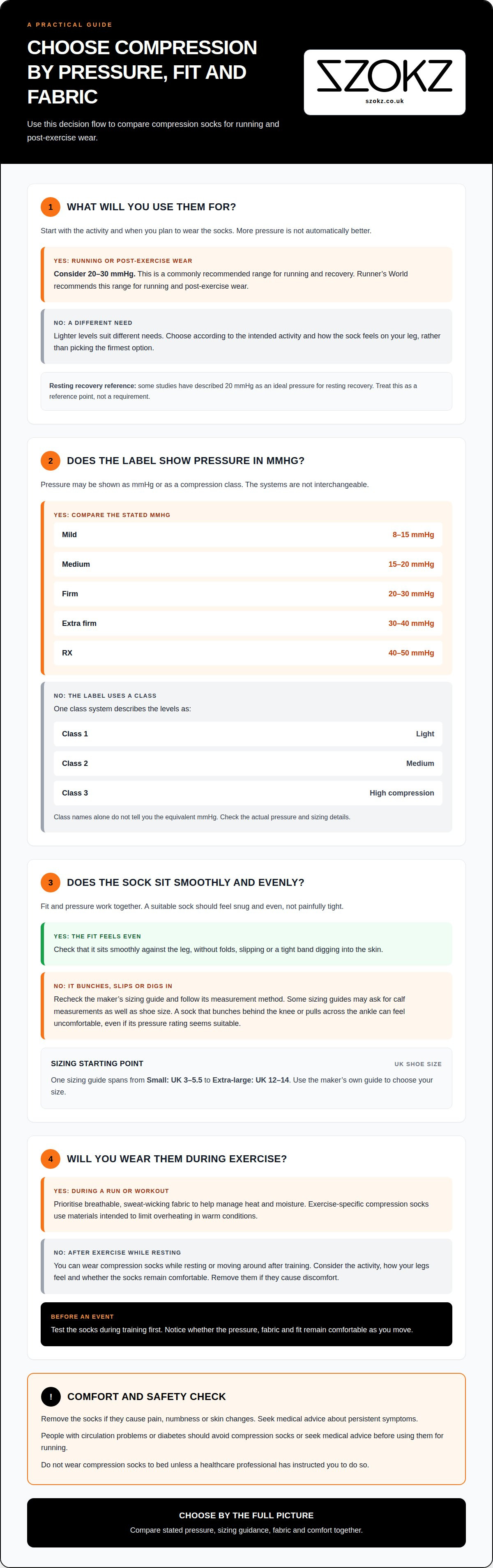
Choose compression by its stated pressure, intended activity and how it feels on your leg. For running and recovery, a commonly recommended range is 20 to 30 mmHg, while lighter levels suit different needs.
Pressure labels can use mmHg or compression classes, so don’t assume the systems are interchangeable. One scale describes mild compression as 8-15 mmHg, medium as 15-20 mmHg, firm as 20-30 mmHg, extra firm as 30-40 mmHg, and RX as 40-50 mmHg. Another system labels Class 1 as light, Class 2 as medium and Class 3 as high compression. Read the actual pressure and sizing details, not just the class name.
For running and post-exercise wear, Runner’s World recommends 20 to 30 mmHg. Some studies have also described 20 mmHg as an ideal pressure for resting recovery. These are reference points, not a reason to select the firmest sock available. Higher pressure can feel restrictive if the fit is wrong, so choose a level you can wear comfortably and evenly.
Fit and pressure work together. A sock should sit smoothly against the leg, without folds, slipping or a tight band that digs into the skin. Check the maker’s sizing guide and follow its measurement method, particularly if sizing depends on calf measurements as well as shoe size. A sock that bunches behind the knee or pulls across the ankle can feel uncomfortable, even if its pressure rating seems suitable.
Material matters during a run. Breathable, sweat-wicking fabrics help moisture and heat escape, reducing the damp, rubbing sensation that can distract you mid-session. Exercise-specific compression socks use materials intended to limit overheating in warm conditions. If your legs tend to feel hot, prioritise moisture management and a comfortable fit alongside the pressure rating.
Compression socks can be worn during exercise or afterwards. Choose them for a workout if you value the feel of support while running; wear them after exercise if your priority is to use them while resting. Test the socks during a training session before an event, and note whether the pressure, fabric and fit remain comfortable as you move.
Pressure figures can vary between products, so compare the stated mmHg, size guidance and material together. This makes it easier to choose a pair suited to your activity, rather than relying on a single label or assuming that more pressure is always better.
Potential effects on oxygen delivery and lactate clearance
Compression is often linked with circulation, but blood flow alone does not establish its effect on oxygen delivery or lactate clearance. Consider these proposed mechanisms separately when judging possible post-exercise benefits.
Oxygen delivery
Oxygen delivery describes how blood carries oxygen to working muscles. Compression socks apply elastic pressure to the lower leg, with the aim of supporting venous blood flow back towards the heart. That proposed effect on circulation does not, by itself, show that more oxygen reaches exercising muscles. For a runner, comfort and perceived leg fatigue are practical observations, not direct measures of oxygen delivery.
During a run, muscles need oxygen to support their work. Socks cannot replace breathing, circulation or the body’s normal response to exercise. Treat claims about improved oxygen delivery as distinct from claims about feeling less heaviness or swelling. Notice whether your legs feel more comfortable after a familiar session, without treating that sensation as proof of increased oxygen supply.
Lactate clearance
Lactate clearance is the body’s use and removal of lactate produced during exercise. Compression is sometimes presented as a way to speed this process, but a proposed improvement in venous flow does not establish faster lactate clearance. These are related ideas, not interchangeable outcomes. A runner should distinguish a change in post-run comfort from a measured change in lactate.
After a hard interval session, recovery also reflects exercise intensity, rest and the body’s own metabolism. Wearing elastic compression does not replace these factors. Without a direct measurement, feeling ready to move sooner cannot show that lactate cleared faster. Consider comfort and training readiness separately, rather than using either as a stand-in for a biochemical result.
When comparing UK options, assess the product price alongside any delivery charge shown before purchase. The total at checkout matters more than the headline price alone. Compare the same sock type and size, then include delivery in your overall budget. Don’t assume that a lower listed price means a lower final cost.
Review delivery and returns information before ordering, especially if fit is central to your choice. Check the stated delivery options, returns window and any conditions for unworn socks. Keep the packaging and order details until you’ve tried the fit indoors, following the seller’s return terms. This helps you assess comfort without confusing purchase logistics with recovery effects.
Compression sock sizing
Start with your UK shoe size and compare it with the sock’s sizing chart. One guide groups sizes into four ranges, from small to extra-large. Use the range as your starting point, then check that the sock sits smoothly on your foot and lower leg. Runners should assess the fit before training, not during an important session.
- Small: UK shoe sizes 3-5.5; EU shoe sizes 35.5-38.5.
- Medium: UK shoe sizes 6-8.5; EU shoe sizes 39-42.5.
- Large: UK shoe sizes 9-11.5; EU shoe sizes 43-46.5.
- Extra-large: UK shoe sizes 12-14; EU shoe sizes 47-49.
Use the UK range if that is the size system you normally wear. For example, a UK size 7.5 falls within the medium range, while a UK size 10 falls within the large range. If you use EU sizing, compare against the corresponding EU range instead. Don’t convert between systems by guessing; the listed ranges give you a direct comparison.
Next, put the sock on and check its position. The heel should sit in the heel section, with the foot fabric lying flat rather than twisting beneath your sole. Smooth the material up the lower leg, removing folds as you go. A rolled edge, bunching around the ankle or a foot section that pulls out of place can make the fit uncomfortable during a run.
Size affects more than comfort. A sock that is too loose may slide or wrinkle during training, while one that feels painfully tight can be difficult to wear. Check for even contact from foot to calf, without pinching or pressure points. If your shoe size is at the edge of a range, assess the fit carefully rather than assuming a tighter size will provide better support.
Length is another detail to assess. A knee-high sock should reach its intended position without being stretched hard at the top or folded down. The sizing figures above identify shoe-size ranges, so check the product’s own length and fit guidance as well. Don’t use a shoe-size match alone to decide how the sock should sit on your calf.
Test the fit during an ordinary training session before relying on it for a race. Walk, jog and move through your usual routine, then notice whether the sock slips or causes rubbing. Wash and dry it according to its care instructions, since fit and feel matter each time you wear it. A stable, smooth fit is the practical goal.
How compression socks may affect circulation
Compression is intended to support blood flow through the lower leg, but the effect can depend on exercise intensity. Research findings on circulation during exercise offer a more specific picture than general claims about sports recovery.
Calf muscles help move blood through veins as they contract and relax during movement. Compression adds pressure around the lower leg, with the aim of supporting venous return. This proposed mechanism explains why athletes consider wearing compression during exercise or afterwards. It does not mean every workout produces the same circulation response.
Findings on calf blood flow during exercise point to intensity as a key factor. Compression socks improved calf blood flow only at low intensities, including walking below 6 km/hour and cycling below 120 W. These findings do not establish the same effect during harder running, faster cycling or every type of sports session.
The distinction matters when choosing when to wear compression. A comfortable walk after training is different from a high-intensity interval session. If your routine includes both, assess how the socks feel during each activity instead of assuming the same result applies to all. Note the exercise and its intensity, then compare your comfort and leg sensations.
Circulation is only one possible outcome. Better calf blood flow during low-intensity movement does not automatically demonstrate faster recovery, improved performance or increased oxygen delivery. Those claims involve different measures. A runner may notice less heaviness after a session, but that feeling alone doesn’t measure blood flow or show what changed physiologically.
For a practical comparison, use the same activity at a similar pace, once without compression and once wearing it. A steady walk below 6 km/hour gives a useful example of the low-intensity activity in the findings. Pay attention to whether the sock stays comfortable and whether your legs feel different afterwards. Keep perceived comfort separate from a clinical measurement of circulation.
The clearest takeaway is specific: evidence of improved calf blood flow relates to low-intensity exercise, including walking below 6 km/hour and cycling below 120 W. Don’t treat that finding as proof of improved circulation at every intensity. For recovery, consider circulation alongside fit, comfort and how your legs respond after training.
SZOKZ: Grip Socks
SZOKZ offers Grip Socks for athletes who want grip-focused footwear for training and sport. They’re a practical choice when traction underfoot matters more than calf compression. For high-intensity sessions, consider High Intensity Sport Socks. All Sport Ankle Socks suit those who prefer an ankle-length style, while Hiking Socks are made for hikes.
Choose according to the activity and the coverage you prefer. Grip Socks are different from compression socks, so use the sizing guidance and pressure information above when assessing compression for recovery. Match your socks to the session, then prioritise a comfortable fit that stays in place as you move.
Explore SZOKZ’s sock range or visit szokz.co.uk.
Make your next session a useful test
Choosing compression socks for post-workout recovery is a practical decision, not a shortcut to better training. Use your next few sessions to assess comfort during movement and rest. Notice whether the socks stay in place and how your legs feel afterwards. These observations can help you decide whether compression belongs in your routine.
Keep the test simple. Choose a familiar activity and a comfortable fit, then compare how you feel without treating sensation as proof of a change in circulation or recovery. If the socks distract you, cause discomfort or don’t suit the activity, choose another option for that session. The right choice is one that works with your training habits.
Explore the range and choose socks that suit the way you move.
Build your recovery routine around what feels comfortable, consistent and right for your next session.
Frequently Asked Questions
How do you measure compression?
Compression strength is expressed in millimetres of mercury, written as mmHg, rather than measured by a sock’s length. To choose a size, use the sizing chart for the specific sock and follow its measurement instructions. One brand may size by shoe size, while another may also use calf measurements. Don’t assume the same letter size fits across brands, as charts and fabric construction can differ.
Do compression socks help with post-workout recovery?
Compression socks may help some people feel less muscle soreness after exercise. Research has also reported that marathon runners wearing compression socks after races may return to training sooner. These are possible recovery effects, not evidence that socks replace rest, adequate fuelling or a gradual return to exercise. Try them after a familiar session and consider comfort separately from changes in performance or recovery.
What evidence supports compression socks for muscle soreness and recovery?
A meta-analysis reported significantly less perceived muscle soreness after people wore running compression socks. A separate study found marathon runners who wore socks after racing may recover faster and return to training sooner. Evidence is not uniform across outcomes: a questionnaire study involved 203 trail runners, while reviews found no apparent performance effect in 5-km runs. Soreness, recovery time and race performance are distinct measures.
What compression level (mmHg) is suitable for post-workout recovery?
A pressure of 20 mmHg has been described as an ideal level for resting recovery, while 20 to 30 mmHg is recommended for running and recovery. These figures offer a starting point for comparing labels, not a reason to choose the highest pressure. Check the product’s stated pressure alongside its fit guidance. If you have circulation problems or diabetes, seek medical advice before using compression for running.
How should compression socks fit, and how do you choose the right size?
Choose your size using the specific brand’s chart, then check that the heel sits in place and the material lies flat. If your shoe size falls between two listed ranges, follow the brand’s fit guidance rather than sizing up automatically. A sock should stay in position during ordinary movement without pinching, slipping or bunching. Check the fit in your usual training shoes before wearing it for a race.
How much do recovery compression socks cost in the UK?
Prices vary by sock design, materials and the level of compression offered. Compare the listed price for the exact style and size you want, then include any delivery charge to understand the total. Check whether the product is sold individually or in a multipair pack, as this affects the overall spend. Don’t assume that a higher price means a better fit or more suitable pressure.
What are the best compression socks for post-workout recovery in the UK?
Choose socks that fit your UK shoe size snugly and evenly, use breathable, sweat-wicking material, and provide a comfortable stated pressure. A commonly recommended range for running and recovery is 20-30 mmHg; compression may help comfort and soreness, but performance benefits are not guaranteed.
Comments
No comments yet. Be the first to add one.