


Can compression socks make a flight safer, or is moving your legs still the more important part of the plan? If you’re wondering whether compression socks on plane journeys are useful, the answer depends on your comfort, fit and personal health needs. Sitting for long periods can leave your legs feeling uncomfortable or swollen, but socks aren’t a substitute for movement or a guarantee against blood clots.
It’s sensible to want clear guidance before you fly. Compression socks may support circulation during a journey, but the right compression level and fit matter, and they’re not suitable for everyone. If you have a history of blood clots or a condition affecting circulation, seek personalised advice from a healthcare professional.
This guide covers when to put flight compression socks on, how to choose and wear them comfortably, and what they can and can’t do. You’ll also find a practical flight routine that includes moving your legs and walking when possible. The aim is to help you make an informed choice without treating socks as your only line of defence.
Key Takeaways
- Compression socks on plane journeys differ from ordinary socks because of their supportive fit, not their warmth or cushioning.
- Learn what mmHg measures and why compression should suit your needs, rather than being treated as a universal recommendation.
- Use a simple before-and-during-flight routine to check the fit, put your socks on correctly and follow their care instructions.
- Know which changes in comfort are a cue to reassess the fit while travelling.
- Understand when your health history or uncertainty makes individual advice from a healthcare professional important.
Compression Socks on a Plane: What They Do and Who Considers Them
Compression socks can be part of a considered flight comfort routine. They’re designed to apply pressure around the lower leg, usually with a closer fit at the ankle. That differs from ordinary travel socks, which may add warmth or cushioning but aren’t necessarily made to apply graduated pressure. For a plain-language overview, see what compression garments are.
People may consider compression socks on longer journeys, particularly if they value a supportive feel or have been advised to wear compression. SZOKZ compression socks offer 20-30 mmHg compression, a measurement of pressure. That level isn’t a universal recommendation for every passenger. Personal health needs and correct fit matter, so seek individual clinical advice if you’re unsure which level is suitable.
Why might someone wear compression socks on a flight?
Graduated compression applies more pressure at the ankle and less further up the leg. This can support venous return, the movement of blood back towards the heart. Some travellers also find a close, supportive fit comfortable. These are potential benefits, not proof that socks will prevent a medical condition. Not every passenger needs compression socks, and they don’t replace regular movement or personalised advice from a healthcare professional.
What changes during a long flight?
Being seated for an extended period can make it harder to stand, stretch and move your legs as often as you might at home. Some passengers notice temporary heaviness or swelling around their feet and ankles. This discomfort can have different causes and doesn’t, on its own, diagnose a health problem.
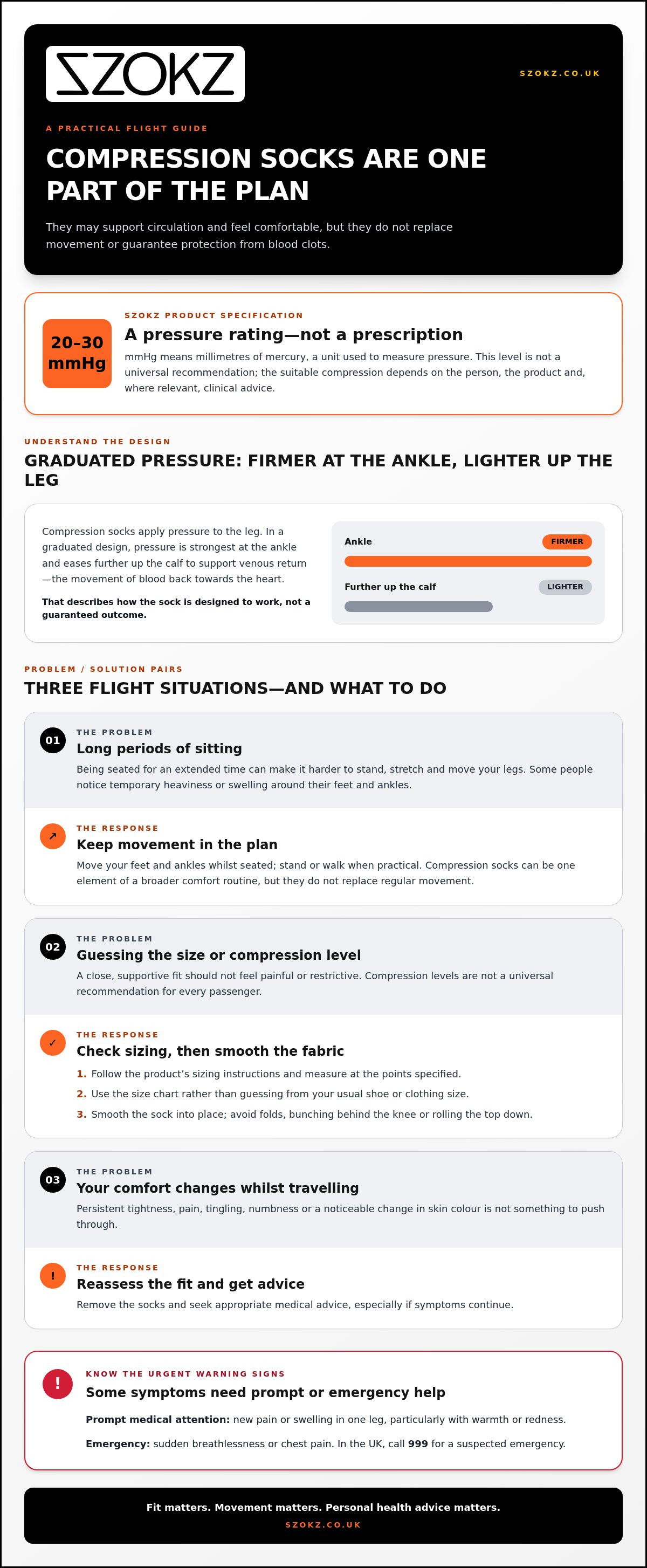
New pain or swelling in one leg, particularly with warmth or redness, needs prompt medical attention. Sudden breathlessness or chest pain requires emergency help. In the UK, call 999 for a suspected emergency.
For routine comfort, use compression socks as one element of a broader flight plan: move your feet and ankles while seated, and stand or walk when practical. If you have a history of blood clots, recent surgery, a condition affecting circulation, or other concerns about your health, speak with a healthcare professional before relying on flight socks. They can advise whether compression is appropriate for you and what level to use.
How Flight Compression Socks Work: Pressure, Fit and Realistic Benefits
Compression socks apply pressure to the leg. In a graduated design, the pressure is strongest at the ankle and eases further up the calf. This pattern is intended to support blood returning towards the heart. In plain terms: graduated compression is firmer at the ankle and gradually lighter up the leg to support venous return.
That describes the design, not a guaranteed outcome. Guidance from the CDC Yellow Book on long-distance travel discusses graduated compression stockings for travellers at increased risk of blood clots. It doesn’t mean every passenger needs them or that socks alone prevent deep vein thrombosis (DVT). Movement and individual medical advice remain important.
What does 20-30 mmHg mean in compression socks?
Millimetres of mercury, written as mmHg, is a unit used to measure pressure. On a compression sock, the figure describes its compression rating. It isn’t a universal flight recommendation: a suitable level depends on the person, the product and, where relevant, clinical advice. The CDC guidance focuses on travellers with increased risk, not one compression level for every passenger.
SZOKZ compression socks offer 20-30 mmHg. That’s a product specification, not a prescription. For more detail on how compression ranges are described, read this 20-30 mmHg compression socks guide.
How should compression socks fit on a flight?
Start with the product’s sizing instructions. Measure your leg at the points specified, then use the size chart rather than guessing from your usual shoe or clothing size. A good fit should feel secure and evenly supportive, not painful or restrictive.
Smooth the fabric into place. Check that it isn’t folded, bunched behind the knee or rolled down at the top, as these can create uncomfortable pressure points. During the flight, pay attention to how your legs and feet feel. Persistent tightness, pain, tingling, numbness or a noticeable change in skin colour isn’t something to push through. Remove the socks and seek appropriate medical advice, especially if symptoms continue.
If you’re considering compression socks on plane journeys, prioritise the right fit and a level suited to your needs. You can browse SZOKZ performance socks to see the available options.
Compression Socks vs Ordinary Socks on a Plane: What Is the Difference?
The label alone doesn’t tell you what a sock will do. Ordinary socks can keep your feet warm; travel-friendly styles may prioritise cushioning or comfort during a long day; compression socks are designed to apply pressure to the leg. These functions can overlap, but warmth or padding doesn’t mean a sock provides compression.
| Sock type | Main purpose | What to expect from the fit |
|---|---|---|
| Ordinary socks | Everyday comfort and warmth | Fit varies by style; not designed to provide graduated compression |
| Travel-friendly socks | Comfort on a journey, sometimes with extra cushioning or breathable fabric | May feel comfortable for extended wear, but the term doesn’t guarantee compression |
| Compression socks | Apply specified pressure, often graduated from ankle to calf | Should feel evenly supportive when correctly sized, not painful or restrictive |
Check what the product is designed to do, how it should fit and whether it suits your circumstances. A comfortable sock can make a journey more pleasant, but it doesn’t necessarily provide the supportive pressure of a compression sock. Equally, compression doesn’t automatically provide warmth or cushioning.
When might ordinary socks be enough?
If your priority is keeping your feet warm or comfortable, ordinary socks may suit that purpose. Choose a pair that sits comfortably inside your shoes and doesn’t pinch or bunch. A flight’s length alone doesn’t determine whether you need compression. If you have no specific concern or clinical recommendation, choose based on comfort and move your legs regularly during the journey.
When might compression socks be worth considering?
Compression socks may be an option if you prefer a supportive fit during prolonged sitting. Evidence discussed by the American Heart Association includes a reduction in symptomless DVT in airline passengers wearing compression stockings. That finding isn’t a guarantee against symptomatic clots or a reason for every passenger to wear them. If you’ve had a blood clot or have a relevant health condition, seek tailored clinical advice. When comparing options, check the compression rating, sizing guidance and wearing instructions.
Whichever socks you choose, they don’t replace movement. Flex your ankles and feet while seated, and stand or walk when practical. Compression socks on plane journeys are one possible part of a routine, not a reason to stay still.
How to Wear Compression Socks on a Plane: Before, During and After
A little preparation makes it easier to check that your compression socks feel right before you’re settled in your seat. Use this simple routine, and follow the product’s wearing and care instructions throughout.
- Check the size and fit. Try the socks before travel and use the product’s sizing guidance. They should feel supportive, not painful or restrictive.
- Put them on smoothly. Follow the instructions for putting them on. Flatten creases and fabric folds, and don’t roll the top down.
- Move regularly. Flex your feet and ankles while seated. Stand or walk around the cabin when it’s safe and permitted.
- Reassess your comfort. Notice any unusual tightness, pain, tingling or numbness. Don’t ignore a change just because you’re wearing compression socks.
What should you do before boarding?
Wear the socks for a short period before your journey to check how they feel and whether the size seems right. Putting them on before you leave for the airport gives you time to correct folds or discomfort without rushing. Some travel guidance suggests wearing compression stockings before swelling develops, but the product’s instructions and any advice from your healthcare professional should guide your routine.
A spare comfortable pair can be useful if you want to change socks during a longer trip. It’s a packing choice, not a medical requirement. Keep the socks clean and dry, and follow the care instructions to maintain the fabric and fit.
How can you stay comfortable during and after the flight?
While seated, make small movements often: point and flex your feet, or circle your ankles if comfortable. When the seatbelt sign is off and it’s safe to move, stand or walk along the aisle. Compression socks on plane journeys don’t make movement unnecessary.
If the socks cause unusual pain or discomfort, adjust them if possible or take them off. Don’t keep wearing a pair that feels painfully tight, causes numbness or leaves concerning skin changes. If discomfort persists, or you notice new or worsening symptoms, seek medical advice rather than trying to treat the problem yourself. After landing, continue moving as you normally would and follow any individual guidance you’ve been given.
Are Compression Socks on a Plane Right for You? Limits and Next Steps
Compression socks can support a flight routine, but they’re not a guarantee against deep vein thrombosis (DVT). They don’t replace movement or individual medical guidance. Whether they’re appropriate depends on your health, the sock’s fit and compression level, and any advice you’ve already received.
SZOKZ compression socks offer 20-30 mmHg compression. That’s a product specification, not a clinical prescription or a claim that this level suits every traveller. If you’re considering compression socks on plane journeys, treat the rating as one factor to discuss if you have questions about your personal needs.
When should you seek personalised advice?
Speak to a healthcare professional before travel if you’ve had a blood clot, have a relevant family history, have recently had surgery, are pregnant, or have limited mobility. Certain conditions, including peripheral arterial disease, severe neuropathy, some lower-leg skin conditions or severe heart failure, can also make compression unsuitable without individual guidance. This isn’t a complete list. If you’re unsure, seek advice rather than choosing a compression level based on the label alone.
Don’t try to diagnose new symptoms yourself. New pain or swelling, particularly in one leg, should be assessed promptly. Sudden breathlessness or chest pain can be an emergency. In the UK, call 999 for urgent help.
What should you remember before your next flight?
Keep the routine practical: choose a comfortable, correctly sized pair, follow its wearing instructions and move your legs regularly. Compression is one possible support, not a substitute for walking when it’s safe or seeking medical advice when it’s needed.
For a focused reminder about swelling and in-flight habits, use this pressure socks for flying checklist. It can help you plan what to do during the journey without treating socks as a stand-alone solution.
Make Your Next Flight Routine More Considered
Compression socks on plane journeys can be one part of a comfortable, sensible routine. The right fit matters, but socks aren’t a guarantee against deep vein thrombosis and don’t replace moving your legs. Stand or walk when practical, and seek individual healthcare advice if you have a relevant medical history or aren’t sure compression is suitable for you.
Choose by function, fit and personal needs, not by the label alone. SZOKZ compression socks offer 20-30 mmHg compression, a product specification rather than a prescription for every traveller. SZOKZ socks are worn by Team GB and Olympic athletes.
Use the guidance in this article to prepare, check your comfort and build a flight routine that works for you.
Travel well, keep moving and make your next journey a little more comfortable.
Frequently Asked Questions
Should I wear compression socks on a plane?
You can consider them as part of your flight routine, but not every passenger needs compression socks on plane journeys. Some travellers value the supportive fit during prolonged sitting, while people with health concerns may need individual guidance on whether compression is appropriate. Choose a correctly sized pair, follow its wearing instructions and move your legs regularly. Socks can support comfort, but they aren’t a substitute for movement or personalised medical advice.
Can compression socks prevent blood clots on a flight?
No. Compression socks aren’t a guarantee against blood clots, including deep vein thrombosis (DVT). Evidence suggests compression stockings can reduce the risk of symptomless DVT in airline passengers on longer flights, but that doesn’t mean they prevent every clot or replace other sensible measures. Move your feet and ankles while seated, and stand or walk when practical. If you have a history of clots or other risk factors, seek individual healthcare advice.
How long should you wear compression socks on a plane?
Follow the product’s wearing instructions and any advice from your healthcare professional. General travel guidance often suggests wearing flight compression socks for the journey and for a few hours after landing, but this may not suit everyone. Don’t extend wear beyond the product guidance or a clinician’s advice. Check how your legs and feet feel during the trip, and respond to unusual pain, numbness or other concerning changes rather than pushing through them.
When should I put compression socks on before a flight?
Put them on before the flight, following the product instructions. Travel guidance commonly suggests wearing them before swelling develops, often in the morning, rather than waiting until you’re already on board. Try the socks before your travel day to check the size and comfort. Smooth out creases and make sure the fabric isn’t bunched or rolled. If a healthcare professional has given you a different routine, follow their individual advice.
What compression level is suitable for flying?
There isn’t one compression level that suits every passenger. The mmHg figure measures pressure, and the right level depends on personal circumstances, fit and any clinical advice you’ve received. SZOKZ compression socks offer 20-30 mmHg, which is a product specification, not a prescription for air travel. If you have a health condition, previous blood clot or uncertainty about the level, ask a healthcare professional before choosing.
Can you wear compression socks on a plane if you have a medical condition?
Possibly, but check with a healthcare professional first if you have a condition that may affect circulation or skin health. This includes peripheral arterial disease, severe neuropathy, certain lower-leg skin conditions or severe heart failure. A history of blood clots, recent surgery, pregnancy or limited mobility can also make personalised travel advice important. Don’t assume compression is suitable for you based only on a product label or another passenger’s experience.
Are compression socks meant to feel tight on a flight?
They should feel supportive and snug, but not painfully tight. A correct fit shouldn’t cause numbness, tingling, significant discomfort or concerning changes in skin colour. Check the product’s sizing instructions, smooth out folds and don’t roll the top down, as this can create pressure points. If unusual symptoms develop, remove the socks if you can and seek appropriate medical advice, particularly if the symptoms continue or worsen.
Comments
No comments yet. Be the first to add one.