


The longer sock isn’t automatically the better choice. Choose calf-length grip socks for lacrosse when you want grip inside your cleats with your team socks visible; choose knee-length socks when you want more coverage or wear shin guards. The priority is keeping your foot stable inside the boot, not simply adding fabric.
Quick changes of direction put your feet to work. If they slide inside your cleats, you may lose steady footing and create friction that can lead to blisters. Grip-zone knit creates targeted traction at the ball and heel to help limit movement inside the shoe, supporting more controlled steps on the pitch.
This guide compares how grip socks work, what to consider when choosing calf or knee length, and how a more secure fit can help reduce boot movement, blisters and fatigue. You’ll also learn how to wear grip socks beneath your game socks, so you can choose a setup that suits your kit and the way you play.
Key Takeaways
- Choose calf-length socks to keep grip pads inside your cleats beneath visible team socks, or knee-length for extra coverage under your kit.
- Learn how grip pads help limit foot movement inside boots during quick changes of direction.
- Use sock fit and boot fit together to reduce rubbing and support steadier movement on the pitch.
- See how to layer grip socks with team socks and what to consider when shin guards are part of your kit.
- Find out what to look for in the World Lacrosse and England Lacrosse rules on socks and playing kit.
Grip sock options and product comparisons
Compare grip socks by how they fit inside your cleats, sit under your kit and work with your boot volume. For lacrosse, aim for a secure fit without extra bulk pressing your foot against the boot.
Sock material composition
Check the product description for the fabric and fit details. SZOKZ compression socks use moisture-wicking fabric designed to help keep feet cool and dry, with a flexible fit and targeted cushioning. These features can help you compare comfort and construction, but don’t assume every sock uses the same materials. Consider how the fabric feels during movement.
Colours and designs
Choose a colour that works with the team sock you plan to wear over the grip sock. If you use the cut sock method, the team sock covers most of the grip sock’s leg, so its visible colour matters more. For example, a dark team sock can keep the exposed kit looking consistent, while a contrasting grip sock is less visible beneath it. Prioritise the fit and layering over a design detail that won’t show during play.
Match thickness to your boots. A thicker sock takes up more space inside a cleat. Try the socks with your lacrosse boots, then stand, walk and make a few controlled changes of direction. Check that your toes can move comfortably and that fabric doesn’t bunch around the heel or forefoot. If the fit feels tight, a thinner option may suit the boot better. If the boot feels loose, don’t rely on extra sock bulk to correct its fit.
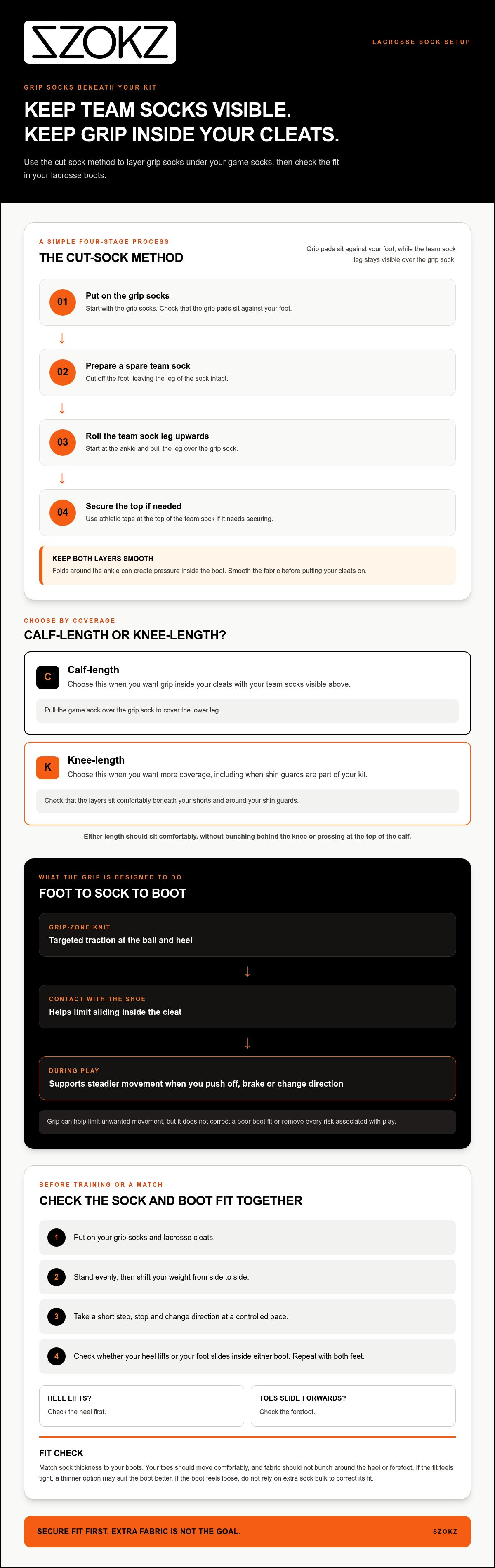
The cut sock method lets players keep team socks visible while wearing grip socks inside their cleats. Follow these steps:
- Put on the grip socks first, with the grip pads sitting against your foot.
- Cut the foot off a spare team sock, leaving its leg intact.
- Roll the team sock leg over the grip sock, starting at the ankle and moving upwards.
- Use athletic tape at the top of the team sock to secure it if needed.
Keep the layers smooth. Folds around the ankle can create pressure inside the boot.
Compare each setup in the boots you’ll wear for lacrosse. Ordinary socks don’t provide grip-zone knit traction between the foot and shoe lining, while grip socks are designed to help limit sliding inside the cleat. A snug fit and targeted cushioning can also affect how a sock feels during play. Check both feet, as a comfortable fit on one side doesn’t guarantee the other feels the same. Test your usual stance and a few quick steps before choosing your match-day combination.
How grip socks reduce movement inside boots
During a lacrosse cut, your foot can shift against the lining of a cleat or turf shoe. Grip-zone knit creates targeted traction at the ball and heel, helping keep the foot steady as you push off, brake or change direction. The aim is to limit unwanted movement inside the boot, not to compensate for a poor fit.
That contact matters during quick transitions. If your foot slides forwards, your toes may press against the front of the boot. If it shifts sideways, your heel may rub against the lining. Grip-zone knit helps limit movement by adding traction where the sock meets the shoe, keeping your foot more stable within the footwear.
On a lacrosse pitch, players accelerate, stop and change direction repeatedly. A secure connection between foot and boot can support controlled movement during these actions. Grip socks can help limit slipping, but they don’t remove every risk associated with play.
Think of the sock and boot as a combination. If your cleat is too roomy, grip can improve traction but won’t correct the boot’s overall fit. If the sock is bunched beneath your arch or heel, the grip zones may not sit smoothly against the shoe lining. Put the sock on carefully, smooth out folds, then lace your cleats as usual.
Use this simple test before training or a match:
- Put on your grip socks and lacrosse cleats.
- Stand evenly, then shift your weight from side to side.
- Take a short step, stop, and change direction at a controlled pace.
- Notice whether your heel lifts or your foot slides inside either boot.
Repeat the test with both feet. A difference between your left and right cleat can reveal where movement occurs. Check the heel first if it lifts, then the forefoot if your toes slide forwards. If the sock has twisted or folded, adjust it before testing again. This helps distinguish a sock-position issue from movement caused by the boot.
For a practical comparison, try the same controlled steps in your usual sports socks and grip socks. Focus on how securely each setup holds your foot inside the cleat, rather than judging by feel alone while standing still. Explore grip sock options as part of choosing a setup for your lacrosse footwear.
Wearing grip socks beneath kit socks
Layering lets you keep the grip zones inside your cleats while wearing standard lacrosse game socks. Calf-length grip socks suit players who want the team sock visible above them. Knee-length pairs provide more coverage beneath the outer sock, including when shin guards are part of the kit. Choose according to the coverage you need and how the layers sit together.
Start by matching sock length to your usual kit. With calf-length socks, pull the game sock over the grip sock to cover the lower leg. With knee-length socks, check that both layers sit comfortably beneath your shorts and around any shin guards. Neither option should bunch behind the knee or press uncomfortably at the top of the calf.
Put the layers on before your cleats. Smooth each sock from the toes upwards, then check the heel and ankle for folds. The grip sock should lie flat against your foot, while the game sock should cover it without twisting. A ridge near the ankle can feel more pronounced once you lace your cleats, so adjust the fabric before tightening them.
Use this dressing sequence for a consistent fit:
- Pull on the grip socks and position the heel correctly.
- Check that the fabric lies flat across the toes and sole.
- Pull the team socks over the grip socks, smoothing the calf.
- Fit shin guards over the layers if your kit uses them.
- Put on your cleats and walk before taking the pitch.
If you wear shin guards, knee-length socks can provide more fabric coverage beneath the outer sock. Check that the guards stay in position and the layers don’t create pressure at the calf. Without shin guards, calf-length grip socks can mean less fabric beneath the game sock. Choose based on your kit arrangement, not simply the sock’s height.
Take a few controlled steps in your full match setup. Try a short lunge and a change of direction, then notice whether either layer has shifted. If the team sock slides down, smooth and reposition it before play. If the grip sock twists inside the cleat, remove the layers and reset the heel. These checks help identify whether the issue is the sock arrangement or how it sits inside the boot.
Keep your visible kit consistent by choosing an outer sock that covers the grip sock’s leg. A calf-length pair can sit beneath a longer team sock, while a knee-length pair may suit a player seeking more coverage around shin guards. Test the complete combination during training before relying on it for a match. A secure, comfortable setup should stay smooth through normal movement.
Blister and fatigue prevention
During a lacrosse match, repeated acceleration and sharp cuts can make feet slide inside boots. That internal movement reduces power and footing, and can increase the risk of ankle rolls and blisters. Grip socks add traction between the foot and cleat lining, helping limit the rubbing and instability caused by slippage.
A blister can start where skin repeatedly rubs against a sock or boot. For example, a heel that lifts with every stride can create friction at the back of the foot. Movement across the forefoot can also leave toes rubbing against the boot. Grip socks can help limit that movement, but the boot must still fit comfortably.
Do a short fit check before training. Put on your usual socks and lacrosse boots, then walk, stop and change direction. Notice whether your heel lifts, your toes press forwards or fabric gathers beneath your foot. Smooth any folds and repeat the movements. If pressure remains, reassess the boot and sock combination rather than tightening the laces until the fit feels uncomfortable.
During play, pay attention to early signs of rubbing. A hot spot at the heel or forefoot can indicate repeated contact. Stop during a break, check for a twisted sock or displaced layer, and adjust it before returning to play. Continuing with a fold beneath the arch, for example, can maintain pressure with every step.
Foot fatigue has several possible causes, including the repeated demands of lacrosse. If your foot shifts inside the boot, you may spend effort correcting your footing instead of pushing off cleanly. Grip socks can support a steadier connection between foot and cleat, potentially limiting the need for those adjustments. They don’t replace suitable footwear, conditioning or rest.
Fabric choice also matters during a long training session. SZOKZ compression socks use moisture-wicking fabric designed to help keep feet cool and dry. A damp sock can feel different against the skin, so check the fabric after practice and let it dry fully before wearing it again.
Care for grip socks according to their instructions. One product-care recommendation is washing them at 30 degrees or below. Avoid leaving a used pair damp inside a kit bag; take them out after training and let them dry. Before the next session, check the heel, toe area and grip pads for wear. A worn or twisted sock may not sit as intended inside your cleat.
These steps can help you spot fit problems early: check boot movement, smooth the sock, notice rubbing and review the fabric after play. Grip socks can help reduce slippage, blisters and the effort spent correcting foot movement, but they work best as part of a comfortable, well-fitting lacrosse setup.
Are grip socks allowed under World Lacrosse and England Lacrosse rules?
Whether grip socks are permitted depends on the rules for your competition. World Lacrosse and England Lacrosse are separate governing bodies, so don’t assume one organisation’s wording applies to every UK match. The relevant competition rules and kit instructions matter more than the sock’s marketing description.
Start with the rules for your fixture. Find out whether it follows World Lacrosse regulations, England Lacrosse guidance or competition-specific instructions. Then look for wording about socks, uniform, footwear and equipment. This helps you assess whether grip socks can be worn as an underlayer beneath the visible game sock.
The practical distinction is visibility. Calf-length grip socks can sit inside cleats, covered by standard team socks. Knee-length grip socks can also be worn beneath team socks, including when shin guards are part of the kit. Neither arrangement alone confirms compliance with a particular competition’s requirements.
Use this pre-match sequence to avoid relying on assumptions:
- Find the current rules for your specific competition.
- Read the sections covering socks, kit and footwear.
- Compare those requirements with your full layered setup.
- Keep the required team sock visible and correctly positioned.
- Raise any unclear wording with the match official before play.
If the instructions specify how visible socks should look, assess the outer team sock rather than focusing only on the concealed layer. If a rule addresses what players may wear beneath team socks, apply that wording directly. Keep the grip sock smooth under the outer sock so folds don’t change how the kit sits or cause discomfort inside your cleats.
England Lacrosse players should follow the requirements for their own competition, rather than assuming all fixtures use identical kit instructions. The same applies when a competition adopts World Lacrosse rules. A club’s usual match-day practice can help explain its kit setup, but the applicable written rules remain the basis for a confident decision.
Pack both sock layers before match day and try them with your cleats and shin guards. This gives you time to adjust the fit and visible kit. If the rules leave the underlayer uncertain, ask the match official before taking the pitch. Another player’s setup doesn’t prove that your competition permits the same arrangement.
Choose your grip sock setup according to the rules and kit requirements for your fixture.
SZOKZ: Grip Socks
SZOKZ Grip Socks are an option for lacrosse players comparing sock choices. Their grip-zone knit creates targeted traction at the ball and heel to help limit movement inside the shoe. Use the fit and layering advice above to assess how they work with your cleats and kit. SZOKZ also offers High Intensity Sport Socks and All Sport Ankle Socks for athletes considering different activities or sock lengths. For lacrosse, start with Grip Socks and explore the range at szokz.co.uk.
Take your next step towards a steadier setup
Make your next training session a practical trial. Notice how your setup feels throughout, then use that experience to guide your choice. The best grip socks for lacrosse suit your footwear, kit and routine, so focus on your comfort and movement rather than copying another player’s arrangement.
SZOKZ offers Grip Socks, High Intensity Sport Socks and All Sport Ankle Socks. Compare them by the activity and coverage you need. A considered choice can help your kit feel more settled, leaving you free to focus on play.
Refine your setup as your training demands change. Small, informed choices can support confident movement on the pitch.
Frequently Asked Questions
Calf or Knee Length for Lacrosse?
Choose calf length for a lower-profile layer beneath your game socks, or knee length for more fabric coverage. Your shin guards and match kit can help you decide. Try both lengths with your full setup and check that the top edge doesn’t pinch or fold. The best fit stays comfortable inside your boots and meets your competition’s visible sock requirements.
Thin vs thick: which to choose?
Choose a thickness that fits your lacrosse boots without crowding your toes or creating pressure. A thinner sock may suit a close-fitting boot, while a thicker one takes up more room. Try each option with your usual lacing, then walk and make controlled movements. If your foot feels squeezed or the sock bunches, change the thickness or reassess the boot fit rather than forcing the combination.
What do grip socks actually do?
Grip socks use textured grip zones to create traction between the sock and shoe lining. This can help reduce sliding inside a lacrosse boot during a push-off or sudden stop. They don’t change the boot’s size or replace a secure fit. For a useful comparison, focus on whether your foot shifts during movement, rather than judging the grip while standing still.
What are grip socks and how do they help lacrosse players?
Grip socks are sports socks with traction features on the foot. In lacrosse, they can help keep the foot more stable inside a cleat during quick transitions. This may support a more consistent connection with the boot while accelerating or changing direction. They’re a sock choice, not protective equipment, and shouldn’t be relied on to prevent every injury.
What grip sock styles and lengths work best for lacrosse boots?
Choose a length that suits your team socks and any shin guards. A shorter cut can work beneath a longer visible sock, while a longer style offers more fabric coverage. For boots, prioritise a smooth fit around the heel, sole and toes. Avoid styles that bunch underfoot or create pressure once the cleats are laced. Test the complete kit combination during training before match day.
What materials and features should you look for in lacrosse grip socks?
Look for a clear description of the grip area, fabric and fit. Moisture-wicking material can help manage sweat, while cushioning may affect comfort inside a close-fitting boot. SZOKZ’s Core Series uses a no-cotton blend of 65% nylon, 15% polyester and 20% spandex. Check the specific product details, as material composition and construction can differ between sock styles.
Do lacrosse grip socks reduce blisters, slipping or foot injuries?
Grip socks can help limit foot slippage, which may reduce rubbing that contributes to blisters. They can also support steadier movement inside a boot, but don’t guarantee blister prevention or remove injury risks. Check for hot spots during training, especially around the heel and toes. A comfortable boot fit, smooth sock fabric and prompt adjustment of rubbing areas all matter.
What are the best grip socks for lacrosse available in the UK?
The best option is one that fits your boots, stays smooth during movement and works beneath your match socks. SZOKZ Grip Socks are a UK option to consider, with grip-zone knit construction for traction inside the shoe. Compare the product’s fit and features with your playing setup, then test the pair during training. This gives you a practical basis for deciding if they suit your needs.
Comments
No comments yet. Be the first to add one.