


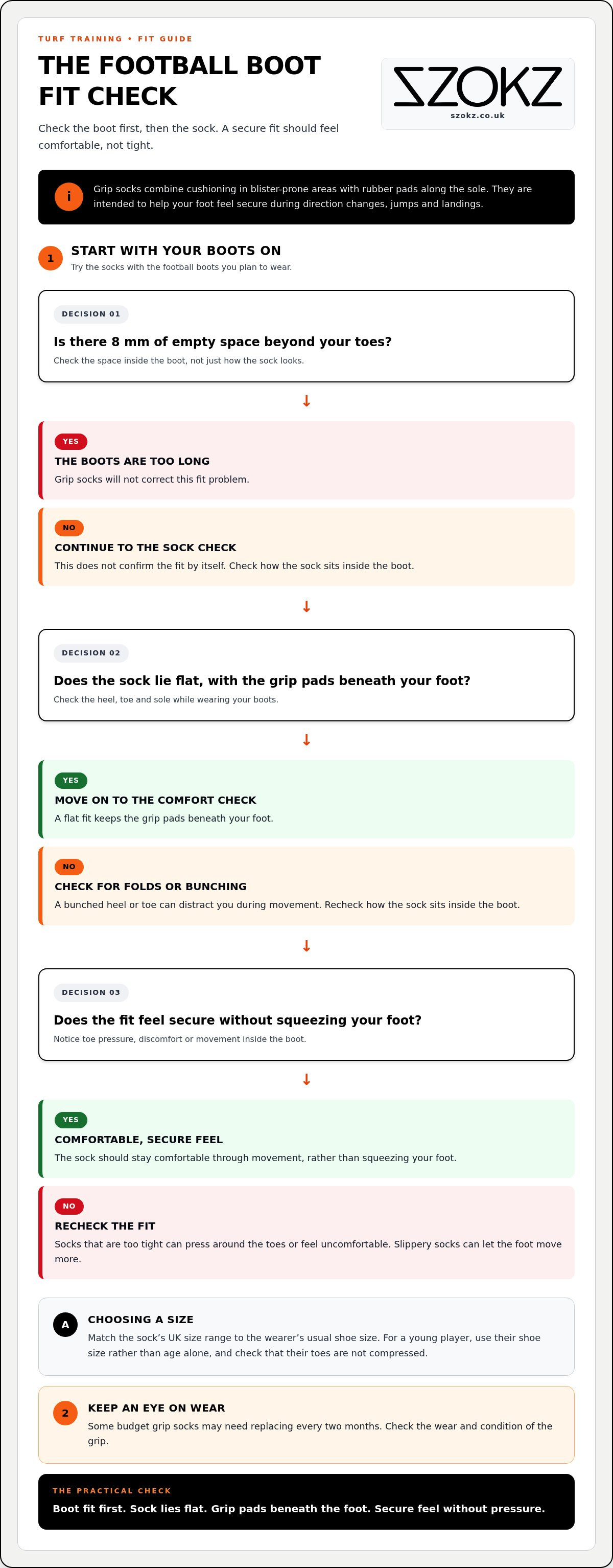
For grip socks for turf training in the UK, choose a thickness that cushions your sole without making your football boots feel tight. Grip socks use thicker material in blister-prone areas and rubber pads along the sole, intended to add control during direction changes, jumps and landings. Boots with 8 mm of empty space beyond the toes are too long, and grip socks won’t correct that fit problem.
Grip socks for turf training in the UK should feel secure without squeezing your foot. Thickness, length and fit all affect comfort, so check that the sock lies flat inside your boot and does not bunch during movement.
This guide explains what grip socks do and how to choose a thickness for turf sessions. You’ll also learn how to compare price and size, care for your socks, and decide when another sock style may suit your training better.
Key Takeaways
- Compare UK size ranges against your usual shoe size, then consider how the sock sits inside your boot.
- Mid-calf, full-length and ankle-length styles suit different coverage preferences. Match the length to your kit and training routine.
- Wash grip socks inside out, skip fabric softener and avoid tumble-drying to care for the grip surface.
- For turf training, prioritise a secure fit that stays comfortable through movement, rather than choosing by grip pattern alone.
- Explore SZOKZ Grip Socks alongside its other sport sock styles to find an option that fits your training needs.
What do grip socks actually do?
Football grip socks combine sole cushioning with rubber grip pads. Their purpose is to reduce movement inside boots and support comfort during training or matches.
Training and match use
The grip sits between your foot and the boot, helping your foot feel more secure during quick changes of direction, jumps and landings. That can be useful in drills with repeated turns or sharp stops.
Thicker material is often placed around the sole and areas prone to blisters. This cushioning can support comfort during sessions, but it won’t correct a poorly fitting boot. Boots with 8 mm of empty space beyond the toes are too long. Grip socks won’t fix that fit problem.
Check how the sock feels inside your football boot before training. The fabric should lie flat, and the grip pads should sit beneath your foot. A bunched heel or toe can distract you during movement. Some budget grip socks may need replacing every two months, so wear and grip condition matter too.
Football and other sports
Football is a natural use for grip socks, which are designed to be worn with boots for training and matches. Check the grip placement and cushioning, and make sure the sock stays comfortable as you move. It should fit closely without folding inside the boot.
Adults and young players can both use grip socks. The key is choosing a size that matches the wearer’s foot, rather than relying only on age or the adult label. For a young player, check the size guide and make sure the toes aren’t compressed. For an adult, check the same fit points inside the boots.
Grip socks are also used in sports where secure foot placement matters, although designs vary by activity. Football boot grip isn’t automatically the right choice for every sport. Match the sock to the footwear and movement involved. A pair used for football should fit the boot, while other sports may call for a different sock shape or coverage.
Rules and fit-related risks
UK football leagues and facilities can set kit requirements, so grip socks must meet the relevant competition or venue rules. In the 2018 World Cup, FIFA fined the FA after England players wore Trusox beneath their kit socks. That example shows why players should follow the rules for their own competition.
Socks that are too tight can press around the toes or feel uncomfortable inside boots. Slippery socks can let the foot move more, reducing the secure feel the grip pads are meant to provide. Try the pair with your football boots and check for pressure, bunching or movement before playing.
Prices vary by product and pack size. Compare construction, grip coverage and whether you are buying an individual pair or a multipack. Mid-calf, full-length and ankle-length styles provide different coverage, so consider how each works with your kit and boots.
Grip sock prices and sizes
Compare grip socks by construction, pack size and fit, not headline price alone. To compare a single pair with a multipack, divide the pack price by its number of pairs. Then consider how often you train and whether the socks suit your boots. This gives you a more useful comparison between different products.
Compare the full purchase
Start with the listed price and check how many pairs it covers. A multipack gives you several pairs, but it makes sense only if you will use them. Divide the total by the number of pairs to compare the cost per pair. Do not compare a pack’s total price directly with the price of one pair.
Next, read the product description for details about construction and intended use. Thickness, grip placement and length can vary, affecting how a sock fits your football boots and suits your training. A lower price does not tell you how it will fit or feel, so compare the product details before deciding.
Read UK size ranges carefully
Grip sock listings use different UK shoe-size brackets. Examples include UK 2-5, 5-8, 7-12 and 8-12. These ranges overlap, so don’t choose by the first number you see. Find your usual UK shoe size in the product’s own size guide, then compare it with that specific sock’s range.
Some listings split sizes more narrowly. One example gives a small option for UK shoe sizes 1-5 and a medium option for UK 6-6.5. Adult options may include UK 6-8 and 9-13. These are examples of listed size brackets, not one universal sizing system. Use the range shown for the pair you’re considering.
Check fit before choosing
Check your UK shoe size against the sock’s stated size range, then try the socks with your football boots. Look for pressure across the toes, loose fabric at the heel or folds underfoot. A comfortable fit should feel secure without pinching. If you are between sizes, use the product’s sizing guidance and check the fit in your boots.
For a young player, use the child’s shoe size rather than relying on age alone. A listing may describe a size as suitable for ages 6-14, but foot size is the useful comparison. For an adult, check the same size range against their usual UK shoe size. In both cases, a try-on inside the intended boots helps reveal tightness or bunching.
Make a practical shortlist
Before buying, record three details: the UK size bracket, the number of pairs included and the sock length. Then compare those details across your options. For example, a UK 5-8 range may suit a different wearer than UK 8-12, even if both products look similar. Match the size first; compare price and pack quantity afterwards.
Grip socks for turf training in the UK should fit your foot and boot combination, not just match a price point. Choose the pair that fits the wearer’s UK size and intended use. For young players, check again as their shoe size changes. For adults, reassess if a new boot fit makes the sock feel tight or loose.
Mid-calf, full-length and ankle-length styles
Grip socks come in different lengths, each offering a different amount of lower-leg coverage. Common options include mid-calf, full-length and ankle-length. Length alone does not determine grip. Compare the cut, how the sock sits inside your boot and whether its coverage works with your football kit.
Mid-calf socks
Mid-calf socks cover the foot and extend partway up the lower leg. They can suit players who want more coverage than an ankle sock without a full-length style. Check where the top edge sits beneath your shin guards and football socks. If the layers bunch or feel restrictive, adjust them before training.
Try mid-calf socks with the boots and kit you will wear for turf sessions. Walk, jog and change direction, noticing whether the top edge rolls down or the fabric gathers around your ankle. The fit should feel smooth from heel to calf. This cut can also be easier to pair with shorts than a longer sock.
Full-length socks
Full-length socks extend higher up the leg than mid-calf styles, providing more coverage. Check how the top edge sits under your kit, especially if you wear them with another football sock. A smooth fit matters more than extra length if fabric folds inside your boot.
Before choosing full-length socks, compare the stated cut with how you wear your match kit. Pull the sock into place without overstretching it, then bend your knees and move through a few football steps. The fabric should feel comfortable around your calf, without distracting pressure at your toes or heel.
Ankle-length socks
Ankle-length socks cover less of the lower leg, with the top edge near the ankle. They may suit players who prefer a lower profile or less fabric above the boot. Check that the edge does not rub against the boot collar. A close fit around the heel helps keep the sock in place as you move.
Choose ankle length for comfort and kit preference, not because a shorter sock automatically offers better grip. The grip surface and fit inside the boot still matter. SZOKZ All Sport Ankle Socks are an option if you are comparing ankle-height sports socks. Consider whether you need a football-specific grip design or a general ankle-sock style.
Match the cut to your routine
Check coverage, layering and boot comfort before deciding. Mid-calf offers a middle option, full-length provides more leg coverage, and ankle-length leaves more of the lower leg uncovered. Try your chosen style with turf boots and your usual kit. A sock that sits flat and feels comfortable is more useful than a cut chosen for appearance alone.
Washing and caring for grip socks
Grip socks need a different routine from ordinary football socks. The rubber pads on the sole provide traction, and fabric softener residue can dull their grip surface. Turn each pair inside out before washing. This lets you clean the inner fabric whilst reducing direct rubbing against the grip pads. Check the care label as well, since washing instructions can differ between pairs.
Use a grip-friendly wash routine
Start by separating worn socks from clean kit. Turn the pair inside out, then check the soles for mud or visible debris. Follow the care label for the washing cycle and detergent. Skip fabric softener, including products marketed for softness, because residue can dull the grip surface. For example, don’t add a softener sheet to the same wash.
If you wash several pairs together, keep them inside out throughout the cycle. That makes the key care step easier to maintain across your training kit. Avoid assuming that a premium pair needs a special product or an unlisted wash setting. The reliable essentials are simple: inside out, no fabric softener, and the instructions on the label.
Dry without heat from a tumble dryer
After washing, don’t tumble-dry grip socks. Remove them from the machine and let them dry without using a tumble dryer. Check that the grip surface is clean and free from softener residue before putting the pair away. Don’t store damp socks in your football bag, where they can remain pressed against boots and other kit.
Keep pairs together after they’re dry. For example, match the left and right socks before packing them for your next turf session. A simple kit routine helps avoid wearing one clean sock with another that still needs washing. Store them away from boot studs and other items that could snag the fabric or press against the grip pads.
Inspect the grip and fabric
Use the next dressing as a quick condition check. Look at the sole pads for peeling, worn areas or debris, then check the heel and toes for thinning fabric. Compare both socks as a pair. If one sole looks noticeably smoother, the grip may feel different between feet. Also check for seams or folds that could distract you inside your boots.
After a turf session, take off the socks and check the soles before putting them in the wash. Remove loose dirt gently, then turn them inside out. Avoid pulling at the grip pads while cleaning. If washing hasn’t removed residue, follow the product’s care instructions rather than adding softener or using a harsher method.
There’s no need to complicate the routine with extra products. For each wash, use the same three checks: inside out, no fabric softener, and no tumble-drying. Then inspect the grip and fabric before training. That consistent care helps keep your socks ready for football sessions without relying on a premium label alone.
Grip socks for training
Turf training puts repeated demands on your boots and socks. A session might move from passing drills to short sprints, turns and small-sided play. Choose grip socks by how they feel through those movements, not by appearance alone. Wear them with your usual boots and notice any slipping, bunching or pressure as the session changes pace.
Test them in a realistic session
Try a new pair during a familiar training session before relying on it for a match. Start with a warm-up, then include the movements you regularly practise, such as close control, sharp turns and short accelerations. This lets you judge comfort under changing demands. Notice whether your foot feels secure inside the boot, and whether the sock stays in place as you move.
Keep your first comparison simple: use the same boots and similar training conditions when testing different pairs. If you change socks and boots together, it is harder to tell what affected the feel. Afterwards, note whether the sock stayed smooth, the sole felt secure and anything distracted you during drills.
Match the sock to the session
A technical session with frequent turns can feel different from steady running or a passing drill. Think about the movements you actually perform. A player practising close control may value a stable fit inside the boot, while longer sessions make comfort important throughout. Choose a pair that suits your footwear and training pattern.
Use these checks before training:
- Wear the socks with the boots you’ll use on the turf.
- Move through your usual warm-up and football drills.
- Check the fit again after changing direction or accelerating.
- Note discomfort or movement, then adjust before the next session.
Build a dependable kit routine
Keep a clean pair ready for each training day. After a session, separate worn socks from clean kit and follow the product’s washing instructions. If you rotate between pairs, inspect each one before packing it. Check for fabric wear or changes to the grip surface that could affect how it feels during turf drills.
If you train and play matches, assess a new pair in practice before match day. A familiar session gives you time to notice how the socks feel in your boots without introducing an unfamiliar change during competition. Repeat the same drills when comparing options to make the results more useful.
For turf training, choose socks that stay comfortable and secure through your usual drills. Test the fit in your boots and notice how it feels during movement. Use that experience to guide your next choice.
SZOKZ: Grip Socks
SZOKZ Grip Socks are designed for players wearing football boots. If your training involves frequent turns and changes of direction, consider how the grip placement and fit work for you. Choose a pair that feels secure and comfortable during your own drills, rather than relying on appearance alone.
For other training needs, SZOKZ also offers High Intensity Sport Socks and All Sport Ankle Socks. The right option depends on your activity and preferred coverage. Compare the product details to choose a style that suits your training.
Visit szokz.co.uk to explore the range or contact SZOKZ with your questions.
Make your next session a useful test
Choosing grip socks for turf training in the UK is easier when you use your next session to compare how they feel. Keep your boots and drills consistent, and pay attention as your training changes pace. Make a brief note afterwards to help decide whether to keep the same setup or try another sock style.
Choose based on how you actually train, rather than chasing a trend. The right fit can make your kit feel more settled, leaving you free to focus on the work ahead.
Take your next session one step at a time. You’re ready to choose with purpose.
Frequently Asked Questions
Thin vs thick: which to choose?
Choose thickness based on boot fit and the feel you want underfoot. Thicker material can add cushioning, which may suit players who notice rubbing during drills. A thinner feel may work better if your boots already fit closely. Try the socks with your usual boots, then move through a warm-up and turns. If extra fabric causes pressure or bunching, it is too much for that boot.
What are grip socks for turf training, and how do they work?
Grip socks are sports socks designed to add traction between your foot and the inside of your shoe. SZOKZ uses grip-zone knit at the ball and heel to help limit foot movement inside the shoe. Check how the grip placement sits beneath your foot and consider the boot fit, since both affect how the socks feel in use.
Which grip socks are best for football and other turf training in the UK?
The best choice is the pair that suits your footwear and the movements in your sport. For football, consider how it feels during close control, turns and acceleration. SZOKZ grip socks are designed for football, five-a-side and astro, as well as other activities. For high-intensity sessions beyond football, compare them with High Intensity Sport Socks. Match the sock type to your activity, not just the surface.
How much do grip socks for turf training cost in the UK?
Compare the number of pairs with how often you train. A pack may suit regular sessions, while an individual pair lets you try a style before choosing more.
Which grip sock sizes and fits are suitable for turf training?
Use the sock’s UK shoe-size range as your starting point. SZOKZ lists Small as UK 3-5, Medium as UK 6-8 and Large as UK 9-11. Its guidance is: “Size up for a relaxed fit, or stay true to size for a performance fit.” If you’re between sizes, decide whether you prefer a closer or more relaxed feel inside your boots.
Do grip socks improve traction or reduce blisters during turf training?
Grip socks are designed to improve traction inside the shoe. SZOKZ’s grip-zone knit targets the ball and heel to help limit foot movement, which may reduce rubbing that contributes to blisters. Socks cannot correct poorly fitting boots, so check the heel, toes and sole during a warm-up. If your boots still slip or create pressure, reassess the boot-and-sock combination.
How should you wash and care for grip socks to maintain their grip?
Follow the product’s care instructions and avoid heat that could affect the fabric or grip. For SZOKZ socks, the instructions are: “Machine wash at 30 °C, inside out to preserve colour and elasticity. Do not tumble dry or iron. Air dry flat.” Keep them separate from rough kit fastenings during washing. Once dry, check the sole and fabric before packing them for your next session.
Comments
No comments yet. Be the first to add one.