


More cushioning isn’t always better for sweaty feet. Choose sweat-wicking gym ankle socks that fit closely without slipping or bunching, and look for breathable, quick-drying fibres such as polyester or nylon rather than pure cotton. The right thickness should suit your training and shoes without adding unwanted bulk.
Comfort matters: socks that shift, hold moisture or feel too warm can distract from your workout. Fit is as important as fabric, and breathable shoes help moisture escape.
This guide explains how moisture-wicking socks work and how to choose thickness, fit and features for strength training, HIIT and running. You’ll also find practical washing and care tips to help manage odour and keep your socks ready for the next session.
Key Takeaways
- Choose a snug fit that stays in place without pinching or bunching to reduce rubbing during training.
- Match sock thickness to your shoes and workout; extra cushioning isn’t automatically more comfortable.
- Look for breathable, quick-drying fibres such as polyester or nylon, and consider how cotton may hold moisture.
- Prioritise airflow and heel stability for fast-moving sessions, while choosing features that suit your activity.
- Wash workout socks after each use and let them dry fully to help manage moisture and odour.
Are Thicker or Thinner Socks Better for Sweaty Feet?
Neither thickness suits every workout. Choose cushioning that fits your shoes and reduces movement without making your feet feel crowded.
Comfort, Chafing and Blister Prevention
A comfortable fit can reduce rubbing when fabric shifts against your skin during exercise. Repeated movement and moisture inside a shoe can increase the chance of chafing and blisters. Moisture-wicking fibres move sweat away from the skin, helping reduce prolonged damp contact. If a sock bunches beneath your toes during a circuit, its fit may matter more than its thickness.
Thickness, Cushioning and Blisters
Thickness affects how a sock sits between your foot and shoe, while cushioning adds padding in areas such as the heel. A thicker pair may feel comfortable in a roomier trainer but create pressure if your shoe already fits closely. That pressure can increase rubbing rather than prevent it. A thinner sock may suit a close-fitting training shoe, provided it stays smooth and your heel doesn’t rub against the shoe.
Secure Fit and Foot Sores
A secure fit keeps fabric in place, reducing folds that can rub and contribute to blisters or sores. A supportive arch band, shaped heel pocket and well-designed cuff can help prevent slipping during movement. Check how the sock sits around your heel and arch before training. If the cuff slides down or material gathers underfoot, address the fit rather than adding cushioning.
Moisture-wicking socks help move sweat away from the skin towards the fabric’s outer surface, where it can evaporate more easily. This can reduce damp contact that contributes to blisters and sores, but socks can’t manage moisture alone. Tight shoes can limit evaporation, while breathable, well-fitting shoes give moisture more opportunity to escape.
For sweaty feet, fabric and fit work together. Polyester and nylon are performance fibres that don’t absorb water in the same way cotton does. Pure cotton can hold moisture against the skin, leaving feet damp during a long session. Choose breathable, quick-drying materials, then make sure your shoes leave enough room for the socks without compressing your toes.
Odour management starts with removing damp socks after exercise. Wash gym socks after each use and turn them inside out so the side that touches your skin is cleaned directly. Let them dry fully before wearing them again. If a pair remains damp or smells after washing, replacing it may make your next session more comfortable.
Sock choices for strength training, HIIT and running
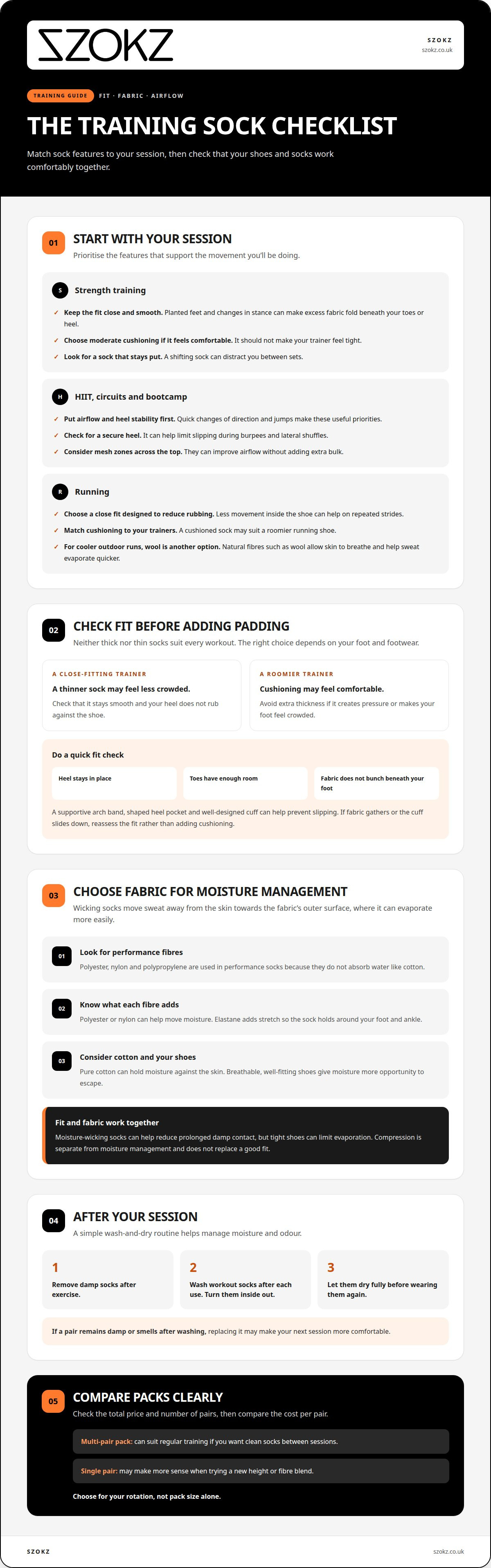
Choose socks for the movement your session demands, then match their height and construction to your trainers. Strength training, a fast HIIT circuit and a steady run place different demands on fit, cushioning and airflow.
Sock Materials for Sweaty Feet
Breathable sock materials help manage sweat, which matters when training leaves feet warm and damp. Polyester, nylon and polypropylene are synthetic fibres commonly used in performance socks because they don’t absorb water like cotton. For cooler outdoor runs, wool offers another option: according to the UK Government, natural fibres such as wool allow skin to breathe, helping sweat evaporate quicker.
Ankle and No-Show Styles
Ankle and no-show socks differ in how much of the ankle they cover, so choose a height that works with your trainers and session. A low-cut style can suit gym trainers when you want less fabric above the shoe. For running, prioritise a close fit and construction designed to reduce rubbing. Check that the heel stays covered and doesn’t slip below the shoe edge as you move.
Performance Fibre Blends
A performance blend combines fibres for moisture management, stretch and shape retention. Polyester or nylon can help move moisture, while elastane adds stretch so the sock holds around your foot and ankle. That combination can matter during lifting, when a shifting sock may distract you between sets. For HIIT, look for breathable construction and a secure heel rather than extra bulk.
Match features to your session. During strength training, a secure fit helps keep fabric smooth as you brace, lift and change position. In HIIT, quick transitions and repeated jumps make heel stability and airflow useful priorities. For running, a close-fitting sock designed to reduce rubbing helps limit movement inside the shoe over repeated strides. Compression is a separate feature from moisture management and doesn’t replace choosing the right fit.
Thickness should work with your trainer, not against it. A cushioned sock may suit a roomier running shoe, while a thinner option can feel less crowded in a close-fitting gym trainer. Try socks with the shoes you’ll wear for training. If your toes feel compressed or your heel lifts, reassess the fit of the combination.
Compare pack size and price together. Check the total price and number of pairs, then compare the cost per pair. A multi-pair pack can suit regular training if you want clean socks between sessions; a single pair may make more sense when trying a new height or fibre blend. Choose based on your rotation, not pack size alone.
Choosing wicking socks for different activities
The best sock depends on the movement, footwear and conditions of each session. A lightweight pair for indoor workouts has different priorities from a cushioned pair for a long hike.
For strength training, look for a close fit that stays smooth inside your training shoes. Lifting involves planted feet and repeated changes in stance, so excess fabric can fold under the toes or heel. Moderate cushioning can add comfort underfoot, but shouldn’t make the shoe feel tight. If your heel lifts or your toes feel compressed, the sock and shoe combination may not suit the session.
HIIT, circuits and bootcamp sessions involve quick changes of direction, jumps and short bursts of effort. Breathability and heel stability are usually more useful than extra bulk. Mesh zones across the top of a sock can improve airflow, while a secure heel helps limit slipping during burpees or lateral shuffles. Choose a thickness that feels comfortable in your trainers throughout the session.
For running, prioritise a close fit and construction designed to reduce rubbing. Repeated strides can make a loose heel or toe seam rub over time. Check that the sock sits flat inside your running shoe, including around the heel and toes. Lightweight fabric may suit a close-fitting trainer, while added cushioning can work with a roomier shoe. The key is avoiding pressure and movement between sock, foot and shoe.
Hiking places different demands on socks because a walk may continue over changing terrain and in shifting temperatures. A cushioned heel and toe can suit longer walks, while reinforcement in those areas helps a sock withstand regular use. Merino wool can help regulate temperature and manage moisture, particularly for outdoor training or cooler-weather walks. Pair the thickness with your walking boots, since a crowded fit can cause pressure on descents.
Material properties matter alongside activity. Polyester and nylon are common performance fibres, while elastane adds stretch to help socks hold their shape around the foot. For a mixed routine, choose a pair that fits your main shoes and training demands rather than assuming one thickness suits every session. A run followed by strength work still calls for a sock that stays secure in both sets of footwear.
Use your shoes as the final test. Try your intended socks with the trainers or boots you’ll wear, then walk, jog or practise a few movements. Check for bunching, heel slippage and pressure across your toes. For hiking, test the pair with your walking boots before a longer route. This simple fit check helps match cushioning and sock weight to the activity.
Odour control and antimicrobial features
Manage odour by controlling dampness and washing socks after training. Both fabric choice and care matter.
Odour and Microbial Growth
Odour can develop when microbes interact with sweat and residue in warm, damp sock fibres. For example, leaving used gym socks bunched inside trainers keeps moisture close to the fabric. Bacteria and fungi can persist in those conditions, so airing socks out and washing them promptly helps keep your kit fresher between workouts.
Odour Control Features
Antimicrobial features are textile treatments intended to limit microbial activity on fabric. They’re one part of odour control, not a replacement for washing or drying. Check the product description for any stated treatment, then consider the sock’s construction and care instructions. Moisture-wicking fabric can move sweat away from the skin, but the moisture still needs to evaporate.
Fibre choice affects how a sock handles moisture. Polyester and nylon are common performance fibres because they don’t absorb water in the same way cotton does. Merino wool can help regulate temperature and manage moisture, particularly during outdoor activity or cooler-weather runs. These properties can support comfort, but no fibre prevents odour if a sock stays damp after exercise.
After a workout, take socks out of your trainers rather than leaving them in a closed gym bag. Wash them on a gentle cycle in cool water, then tumble dry on low heat if using a dryer. Excessive heat can wear down elastic fibres, leaving cuffs loose and reducing support through the arch. Follow the care label for the specific pair.
Rotation helps, too. Wear a fresh pair for each session and let used pairs dry fully before wearing them again. This is useful after back-to-back activities, such as a gym session followed by a run. Compression socks need the same basic attention to washing and drying; compression itself doesn’t remove sweat or odour from the fabric.
Check your socks after repeated training. A lingering smell after washing, fabric that stays damp or a loose fit can signal that a pair needs replacing. Thin areas at the heel or toe also show wear, while flattened cushioning can change how the sock sits in your shoe. Retire worn pairs from hard sessions and keep clean, dry socks ready for your next workout.
Are cushioned or thin ankle socks better for gym workouts?
Neither option suits every gym session. Match your socks to your trainers, workout and preferred feel underfoot. A thin pair can reduce bulk inside a close-fitting shoe, while cushioning adds padding where the foot meets the sole. The right choice keeps your feet comfortable without crowding your toes or allowing the sock to shift.
For strength training, start with the shoe fit. A thin or lightly cushioned sock can suit a close-fitting trainer, especially during controlled lifts and changes of stance. If you feel pressure across your toes, extra fabric may make the shoe feel tighter. When your feet stay planted for squats or deadlifts, a secure heel and smooth fit matter more than thick padding.
HIIT and circuit sessions involve quick footwork, jumps and changes of direction. Breathability and heel stability are usually more useful than extra sock bulk. A thinner construction may feel less restrictive in a snug trainer. Check that the heel stays in place during lateral shuffles. If fabric bunches underfoot, adjust the fit before continuing your session.
For treadmill running or repeated work on a gym floor, choose cushioning to suit your shoes and comfort. A cushioned sole may feel useful if your trainer has room for it. In a close-fitting shoe, a thinner sock can avoid excess pressure. Try both options with your workout footwear, then walk and jog briefly to notice rubbing, heel movement or tightness.
Thickness alone doesn’t determine moisture control. Polyester and nylon are common performance fibres because they don’t absorb water like cotton. Moisture-wicking fabric helps move sweat away from the skin, while breathable shoe uppers give moisture a route to evaporate. For sweaty feet, fabric and shoe ventilation matter more than choosing the thinnest sock available.
Consider where the sock needs cushioning, not just its overall thickness. Reinforcement at the heel and toe can help a gym sock withstand regular use. Mesh zones across the top can improve airflow without adding bulk beneath the foot. A supportive arch band, shaped heel pocket and well-designed cuff can help keep the sock in place during training.
After several sessions, check for thin fabric, a sagging fit or cushioning that has packed down. These changes can affect how the sock sits inside your trainer. Wash workout socks after each use and avoid excessive heat, which can wear down elastic fibres. Choose thin or cushioned ankle socks to suit your shoes, then replace worn pairs before hard training.
SZOKZ: Grip Socks
SZOKZ offers Grip Socks for training where foot placement and stability matter. High Intensity Sport Socks are another option for fast-paced sessions, while All Sport Ankle Socks provide low-cut coverage for workouts. Hiking Socks are designed for outdoor walks and trails.
The range also includes compression socks offering 20-30 mmHg compression to support circulation. SZOKZ socks are worn by Team GB and Olympic athletes. Choose according to your activity, footwear and preferred sock height, rather than assuming one style suits every workout.
Contact SZOKZ to discuss which sock type best fits your training needs.
Make your next training choice count
Use your next training block to notice what your feet need most. After each session, note whether your socks felt secure, too warm or restrictive. These observations can reveal patterns across different workouts and help you choose sweat-wicking gym ankle socks that suit the sessions you do most often.
Keep the decision practical. Comfort during movement matters more than a feature that sounds impressive but doesn’t suit your routine. If your training changes, revisit your choice and consider whether another style better matches your footwear and activity.
Choose carefully, then focus on the work ahead. The right pair should support your routine without distracting from it.
Find your fit and head into your next session with confidence.
Frequently Asked Questions
What Are Breathable Socks?
Breathable socks allow heat and moisture to move away from your feet rather than trapping them inside the fabric. Performance depends on both the knit and your footwear. A breathable sock inside a tightly sealed shoe, for example, may still feel damp after training. Consider how the sock works with your trainers, especially if you wear them for a full gym session.
What features make ankle socks sweat-wicking for gym workouts?
Look for moisture-moving fibres, a fit that stays in place and construction suited to your training shoes. Mesh panels can support airflow over the top of the foot, while a shaped heel helps reduce unwanted movement. If your heel slips during a treadmill warm-up, for example, fit deserves attention alongside the fabric label. A sweat-wicking claim alone doesn’t tell you how a sock will fit.
Which materials are best for breathable, moisture-wicking gym ankle socks?
Polyester and nylon are common performance fibres, while elastane adds stretch. Wool is another option for outdoor sessions and cooler conditions. Read the fibre content, then consider your shoes and workout. A blend can balance stretch and moisture management, but no material choice alone guarantees comfort. For gym use, choose fabric that feels suitable during movement.
How do popular gym ankle socks compare for comfort, durability and grip?
Compare construction rather than relying on labels such as “performance”. Check whether the heel and toe are reinforced, cushioning is placed where you need it, and the sock stays secure in your shoe. SZOKZ compression socks have grip-zone knit construction, reinforced heels and toes, and targeted cushioning. These features support traction, durability and padding, but comfort still depends on fit and footwear.
How much do sweat-wicking gym ankle socks cost in the UK?
Compare the specific listing and pack size before choosing.
Which sweat-wicking ankle socks are best for running, weight training and HIIT?
Choose socks to suit your movement and footwear. For running, prioritise a close fit that stays smooth inside your trainers. For weight training, choose a sock that doesn’t bunch when your stance changes. For HIIT, a secure fit can help during quick movements. SZOKZ offers All Sport Ankle Socks and High Intensity Sport Socks for different training routines.
How should gym ankle socks fit to prevent slipping and blisters?
Choose a size that holds the heel in place without compressing your toes. SZOKZ’s size guide is Small, UK 3-5; Medium, UK 6-8; Large, UK 9-11. It advises: “Size up for a relaxed fit, or stay true to size for a performance fit.” Try the socks with your training shoes and check for heel lift or bunching before a full workout.
How do you wash and care for moisture-wicking sports socks?
For SZOKZ socks, follow the stated care instructions: “Machine wash at 30 °C, inside out to preserve colour and elasticity. Do not tumble dry or iron. Air dry flat.” Turning them inside out helps clean the side that contacts your skin. Air-drying flat avoids the high heat of a tumble dryer. Store them only once fully dry, so they’re ready for your next session.
Comments
No comments yet. Be the first to add one.