


The thickest hillwalking socks aren’t automatically the most comfortable. Extra cushioning can leave less room inside your boots, while a thinner sock may not suit your footwear or the ground ahead. The right choice depends on how your socks and boots work together.
If you’re unsure about thickness, fabric or sock height, start by checking how your current socks feel in your walking boots. A poor fit or damp feet can make a walk uncomfortable, especially when conditions change. It’s worth checking your setup before you set off, rather than waiting until you’re on the route.
This guide explains how to match hillwalking socks to your boots, planned distance and expected conditions. You’ll learn how to compare cushioning and materials, check for slipping, bunching or pressure points, and decide when a dry spare pair could be useful. We’ll also cover sock care and early signs that your socks aren’t working well, so you can make practical adjustments before small fit issues become a distraction.
Key Takeaways
- Start with your route and boot fit, then narrow down the sock features that suit your plans.
- Compare fabric, cushioning and height by how each works with your footwear and expected conditions.
- More cushioning doesn’t automatically mean less rubbing. Check for pressure, wrinkles and movement inside your boots.
- Use a short pre-walk check to spot seams or fit issues before they become a distraction on the trail.
- Use the checklist to compare hillwalking socks, including SZOKZ hiking socks, rather than choosing on thickness alone.
How to choose hillwalking socks for your boots and route
Terrain, footwear and weather can all affect which hillwalking socks feel right. Start with what you’ll wear and where you plan to walk. A walking sock is chosen to suit comfort, boot fit and expected conditions. Thickness matters, but it’s only one part of the decision.
Use this four-step check:
- Identify the walk. Consider its length, terrain, expected conditions and your walking pace.
- Check your boots. Note how they fit and how much room they leave around your toes and across your foot.
- Choose useful features. Compare fabric, cushioning and height in relation to the walk and your footwear.
- Test the fit. Put the socks on with the boots you plan to wear and check for pressure, bunching or movement.
Start with the walk, not a label
A short, familiar route may call for a different balance of comfort and cushioning from a longer day out. Think about your pace, the ground you’ll cover and whether the forecast suggests warm, cool or wet conditions. Your footwear matters too: a sock that feels comfortable in one pair of boots may feel too bulky or loose in another. No single type suits every route or walker, so use product labels as a guide and assess the fit for your plans.
Treat boots and socks as one fit system
A sock takes up space inside a boot and changes how the boot feels around your foot. A thicker pair may add cushioning, but can make the fit feel tighter. A thinner pair may leave more room, but feel less comfortable for your preference or route. Sock height matters as well: the sock should cover the area where the boot edge meets your leg.
For a general overview of the purpose of Boot socks and how they’re worn with footwear, see the linked reference. Then check your own setup. Wear the socks you intend to walk in, fasten your boots as usual, and stand, walk and flex your feet. Check for toe room, heel movement and pressure across the top of your foot. A short test at home can reveal a mismatch before you set off.
Choose socks with your boots on your feet, not by thickness alone. This helps you judge the fit as a complete system instead of relying on how a sock feels in your hand.
Which hillwalking sock features matter: fabric, cushioning and height
Fabric, cushioning and height each affect how a sock feels inside a boot. Compare what each feature does, then consider how they work together. There’s no universally best combination. Choose features that suit your footwear, preferences and the conditions you expect on your route.
How fabric affects comfort on a walk
Fibres differ in feel, warmth and how they handle moisture. Merino wool is one option, and some walkers like its feel and warmth. Synthetic fibres such as polyester or nylon are also used, often in blends. The right choice depends on your preference, the walk and how the sock feels inside your boots.
Moisture management means helping sweat move away from the skin through the fabric, where it can spread and evaporate. It doesn’t guarantee dry feet, particularly in warm weather, during hard efforts or in wet conditions. A sock that feels comfortable at the start may feel different as your feet warm up. Consider how the fabric feels during a test walk and whether it remains comfortable as your activity level changes.
Match cushioning and sock height to your boots
Cushioning changes the feel underfoot and around the toes, heel and ankle. More cushioning may feel comfortable to one walker, but it also takes up more room inside the boot. If your footwear already fits closely, extra thickness could create pressure. A lighter cushion may leave more space, but your preference and the conditions matter too. Check how the sock feels with your boots fastened as you normally wear them.
Check where the boot collar meets your leg. The sock should cover that area comfortably without slipping down or bunching at the ankle. There’s no single height for every boot. Compare the sock with the collar and notice whether the edge rubs as you walk. Try the full combination on a shorter outing before relying on it for a longer day, and reassess if you notice pressure or movement.
Fit and friction matter alongside fabric and cushioning. For related guidance on cushioning and grip, see this hiking socks and grip guide. Pay attention to how your foot moves inside the boot. If a sock bunches or shifts, changing its thickness may not address the underlying fit issue.
Compare stated features, then test the socks with your footwear rather than relying on a label alone. For more detail on the relationship between cushioning and friction, read this guide to hiking sock cushioning.
Do thicker hillwalking socks prevent blisters? Check fit and friction
No. Extra cushioning can change how a boot feels, but it doesn’t automatically stop rubbing or pressure. If a thicker sock makes your footwear feel tight, it may create new pressure points. Comfort depends on how your foot, sock and boot move together as you walk.
Friction can build where fabric folds, a seam presses against the skin or your foot shifts inside the boot. Dampness may also make an area feel more vulnerable to rubbing. A sock that slips down or bunches under the heel can cause trouble, even if it feels soft and well cushioned at first. For more detail, read this guide to sock cushioning and blisters.
Spot sock and boot fit problems early
Before setting off, put on your hillwalking socks and boots as you plan to wear them. Smooth the fabric over your toes and heel, then check that the sock doesn’t fold, twist or slide when you walk. Notice any tight areas or rubbing. If the same spot feels uncomfortable before you leave, don’t assume a thicker pair will solve it. The cause may be the sock, the boot or how they fit together.
Persistent pressure can point to footwear that doesn’t suit your foot shape or isn’t adjusted comfortably. Check the lacing and reassess the combination. Changing sock thickness can alter the space available, so test any adjustment in the actual boots rather than judging the sock on its own.
What to do when rubbing starts
If you notice a hotspot or rubbing on the route, pause somewhere safe when practical. Take off the boot and check for a fold, a damp patch or a sock that has shifted. Smooth the sock, adjust the lacing gently and put the boot back on. If you have a suitable dry spare, changing may help you feel more comfortable. Don’t keep walking through pain in the hope that it will settle.
Use discomfort as an early signal to check your setup, not as a reason to add cushioning without testing the fit. If rubbing returns, or you have a recurring or concerning foot problem, consider seeking suitable professional advice. Small adjustments may help with a local fit issue, but they won’t address every cause of discomfort.
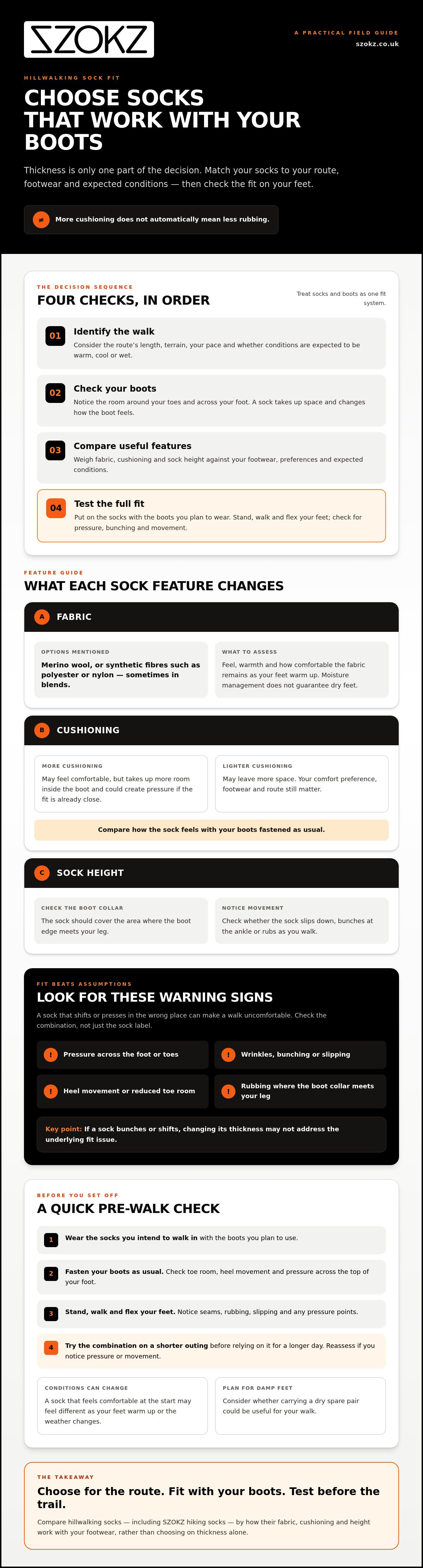
How to prepare and check hillwalking socks before and during a walk
A quick check before setting off can catch worn fabric, loose threads or a poor fit before you’re on the trail. During the walk, pay attention to how your feet feel as conditions and effort change. A spare pair may be useful on some routes, but changing socks won’t make unsuitable boots or inadequate route planning work better.
A simple pre-walk sock and boot check
Use this sequence before you leave:
- Inspect: Look for thinning areas, loose threads, holes or damaged seams. Check inside the sock as well as the outside.
- Put them on smoothly: Straighten the fabric over your toes, heel and ankle. Remove folds before pulling on your boots.
- Test the fit: Walk around in your intended footwear. Notice any slipping, bunching, tightness or pressure.
- Recheck after adjustments: If you change the lacing or reposition a sock, walk around again. A visual check alone won’t tell you how the combination feels in motion.
Persistent pressure may come from the boot as well as the sock. Don’t assume switching to a thicker pair will fix it. Reassess the whole fit, including how your foot sits when the boot is fastened.
Manage comfort as conditions change
During a break, notice whether your feet feel warmer or damper than before, and check for early rubbing. If a sock has shifted or folded, smooth it out before setting off again. A clean, dry spare pair may be worth carrying on a longer route or when your feet are likely to get wet or sweaty. Whether it’s practical depends on the route and your own needs.
Changing socks may make your feet feel more comfortable, but it doesn’t replace suitable footwear, a considered route plan or responding to discomfort. If you’re asking whether compression socks are suitable for a walk, read this guide to compression socks for hiking for information on fit and when to wear them.
After your walk, follow the washing and drying instructions on the garment label. Care needs can vary by fabric, so check the label rather than assuming every pair should be treated the same way.
Choosing SZOKZ hiking socks: a practical next step
Use your route and footwear as the starting point. Consider how long you’ll be walking, the conditions you expect and how much room your boots leave. Then compare fabric preference, cushioning and sock height, and test the fit with the boots you plan to wear. This checklist is more useful than choosing by thickness or product label alone.
SZOKZ offers hiking socks to consider alongside other pairs. The right choice still depends on your needs and how the socks work with your footwear. Check the current product description for details before deciding. Materials, construction and available sizes can vary between products, so don’t assume details that aren’t stated.
Use the checklist when comparing hiking socks
For each pair, look for clear information about materials, construction and available sizes. Match those details to your preferences and the conditions you expect. Then consider the cushioning in relation to the space inside your boots. If a description doesn’t provide a detail you need, check the product information rather than guessing.
Keep your expectations practical. A product description can help you compare features, but it can’t confirm how a sock will feel on your foot or in your boots. Don’t treat any feature as a guarantee of comfort or a promise to prevent blisters or improve circulation. Fit still needs to be checked in use.
Choose the next step that suits your walk
Review the hiking socks available and compare their stated details with your route, boots and personal preferences. Once you’ve chosen a pair, wear it with your intended footwear on a shorter walk before relying on it for a more demanding outing. Notice any slipping, bunching or pressure, and reassess the combination if something feels off.
The aim is a considered match, not a universal answer. Let your feet and footwear guide the choice.
Make your next walk more comfortable with a considered fit
The right hillwalking socks depend on the route, the conditions and the boots you’ll wear. Fabric, cushioning and height all affect comfort, but none should be chosen in isolation. Test the full combination before a longer walk, and pay attention to slipping, folds or pressure before they distract you on the trail.
A quick check before setting off can catch worn areas or a poor fit. During the walk, notice changes in warmth, dampness or rubbing, and adjust when practical. A spare pair may be useful for some routes, but it’s no substitute for suitable footwear and preparation.
SZOKZ offers hiking socks through its UK online shop, alongside grip socks and high-intensity sport socks. Compare the available product details with your boots and walking needs, then try your chosen pair before relying on it for a demanding day out.
Take time to find a setup that feels right, then enjoy the miles ahead.
Frequently Asked Questions
Are hillwalking socks different from ordinary socks?
Hillwalking socks are chosen with walking footwear, comfort and changing conditions in mind. Their fabric, cushioning and height can affect how they feel inside a boot, but there’s no single specification that suits every walker. Start with your boots and route, then wear the socks with your intended footwear. Check for slipping, folds or pressure before relying on a new pair for a longer walk.
How thick should hillwalking socks be?
Choose a thickness that feels comfortable in your boots and suits the space available. A thicker sock may feel more cushioned, but it can make close-fitting footwear feel tight. Try the pair with the boots you plan to wear and walk around in them. Check for pressure across your toes or foot, as well as slipping and bunching. Don’t choose on thickness alone.
Can hillwalking socks prevent blisters?
No sock can guarantee that blisters won’t occur. Socks can influence friction, moisture and fit, but boot movement, pressure and individual sensitivity may also contribute to discomfort. Wear your socks smoothly and check that your footwear feels comfortable. If rubbing starts, stop when it’s safe and look for folds, dampness or movement. Adding a thicker layer without checking the cause may not help.
Should hillwalking socks cover the top of walking boots?
Choose a height that gives comfortable coverage where the boot collar sits against your leg. The sock shouldn’t fold or bunch inside the boot, and it should stay in place as you move. Try the sock and footwear together before your walk. Walk around and check whether the collar rubs, particularly when you bend your ankle. The right height depends on your boots and preference.
Are merino wool socks suitable for hillwalking?
Merino wool can be suitable for hillwalking, but the best choice depends on your preferences, expected conditions and boot fit. Walkers may value its feel and temperature regulation, but socks made with merino can differ in construction and overall feel. Read the product description rather than assuming every pair is the same. Test your chosen socks on a manageable walk before wearing them for a longer outing.
Should I carry spare socks on a hillwalk?
A spare pair may be useful on a longer walk or when wet conditions are possible. Consider the route, forecast, available pack space and your own comfort needs before deciding. Keep spare socks as dry as practical. Changing into a clean, dry pair may help you feel more comfortable, but it doesn’t replace suitable footwear or careful route planning. Check your feet and socks during breaks.
How should I wash hillwalking socks?
Follow the care instructions on the garment label, as washing needs depend on the sock’s materials and construction. Don’t assume every technical or wool sock can be washed in the same way. After washing, check for thinning fabric, loose threads or damaged seams before putting the socks away. Regular inspection helps you judge their condition and whether they’re still suitable for your next walk.
Comments
No comments yet. Be the first to add one.