


The shortest sock isn’t automatically the right one. Sports ankle socks can feel secure in one pair of trainers and slip or rub in another, because fit, footwear and activity matter as much as height. If your socks bunch beneath your foot or your ankles rub against the shoe collar, a thicker pair may not be the answer.
Comfort matters, but softness alone won’t tell you whether a sock will work for your sport. A close fit, suitable fabric and well-placed cushioning can all affect how it feels during movement. This guide explains what to check so you can choose sports ankle socks that suit your activity and footwear.
We’ll compare sock heights, explain how materials and cushioning affect fit, and cover practical checks to help reduce slipping and bunching. You’ll also learn how standard ankle socks differ from compression and grip socks, what to check in product details, and how to care for sports socks. SZOKZ’s All Sport Ankle Socks are one option to consider as you compare your needs.
Key Takeaways
- Choose sports ankle socks by considering your activity, footwear and preferred coverage, rather than sock height alone.
- Try socks with the trainers or sports shoes you’ll wear. Check for heel movement, excess fabric, tightness and pressure points.
- Compare materials and cushioning for the feel and fit you need, and treat compression or grip as separate features to verify.
- Use a simple selection check: identify your activity, assess your footwear, choose coverage, then test the fit.
- Follow the care label and review your sock rotation as your training routine changes, rather than relying on a fixed replacement schedule.
Sports ankle socks: what they are and when the low-cut fit makes sense
Sports ankle socks are athletic socks with a lower cut around the ankle, designed to sit inside sports footwear with less leg coverage than longer socks. There’s no single height measurement that defines the category, so check the product description and images to see where the cuff is likely to sit on your foot.
Height affects coverage and how the sock meets the shoe collar. A low cut may leave more skin exposed above the shoe; a higher cut may cover more of the ankle. Neither determines athletic ability by itself. The practical question is whether the cuff feels comfortable with your footwear and stays in place through the movements you make.
The basic purpose of a sock includes covering the foot inside footwear. For sport, the cut also affects how much fabric sits around the shoe opening. SZOKZ offers All Sport Ankle Socks. Check the product details for construction and fit information rather than assuming features from the name alone.
How do sports ankle socks differ from trainer socks?
Retailers don’t always use “ankle sock” and “trainer sock” in the same way. One label may describe a cuff that reaches the ankle, whilst another may refer to a lower cut that sits mostly below the shoe collar. Compare the product images and stated cut, then try the pair with your own trainers. Walk, jog or change direction and notice whether the heel shifts or the cuff rubs against the collar.
When might a low-cut sports sock suit your activity?
A lower cut may suit a run, gym session or court sport if you prefer less ankle coverage and it works comfortably with your shoes. Consider the footwear collar, the length and intensity of the session, and whether exposed skin feels comfortable. Court shoes, for example, can meet the sock at a different point from running trainers, so test the combination rather than choosing by sport label alone.
- Check the activity: What movements will you repeat?
- Check the footwear: Where does the collar sit against your ankle?
- Check coverage: Do you prefer a low cuff or more fabric above the shoe?
- Check the rules: Confirm any event or team requirements before choosing.
Use comfort and shoe fit as your guide, then factor in any sport-specific rules or uniform requirements. A low-cut option is a practical preference, not a universal upgrade.
Sports ankle sock fit: how to reduce slipping, bunching and shoe friction
A sock can feel fine on its own and still shift inside a trainer. The shoe’s shape, fastening and fit all affect how much room your foot and sock have to move. Assess sports ankle socks with the footwear you actually train in, not just by checking whether the sock feels comfortable when you first put it on.
Folds, movement and pressure can become distracting or cause rubbing during exercise. Socks are recognised as an essential component of footwear, but sock choice alone can’t guarantee blister prevention. Shoe fit, activity and how your foot moves also play a part.
How should sports ankle socks fit inside trainers?
Start with the manufacturer’s size guide and compare it with your foot measurements. Then check how the sock sits inside your usual sports footwear. The fabric should lie smoothly across your foot, without excess material gathering under the toes or sole. It shouldn’t feel so tight that it creates uncomfortable pressure. Try a new pair during familiar training before wearing it for a match, race or other important event.
What should you check around the heel, toe and ankle?
Put on your trainers and move as you would during your activity. Check that the heel section stays in place rather than pulling down, and notice whether toe seams or folds press against your toes. The ankle edge should sit comfortably against the shoe collar, without rubbing or feeling restrictive. If discomfort appears, check both sock and footwear fit before deciding which is responsible.
- Heel: Does it stay positioned during walking, jogging or changes of direction?
- Toe: Is there room to move without fabric bunching or a seam pressing against the skin?
- Ankle: Does the cuff meet the shoe collar comfortably?
- Whole foot: Do you feel tight spots, folds or movement inside the shoe?
A practical fit check is simple: follow the size guide, smooth the fabric, then test the heel, toes and ankle in your sports footwear while moving. If a sock feels secure standing still but shifts during a familiar drill, reassess the fit before relying on it for a longer session. Persistent rubbing may also point to footwear that needs attention; changing socks isn’t always the whole solution.
If you’re comparing options, browse SZOKZ’s sock range and check each product’s details against your fit needs.
Sports ankle sock materials, cushioning and compression: what each feature does
Material, cushioning and added features affect how a sock feels inside your footwear. The right combination depends on your activity, shoe fit and preferences. Check the product composition and description: appearance alone won’t tell you how a pair is made or whether it includes a particular feature.
Which fabric properties matter in sports ankle socks?
Fibre blends can influence stretch, drying time, softness and durability. Synthetic fibres such as polyester or nylon are often used in sports socks, whilst wool blends may appeal for their feel and warmth. Cotton can feel soft, but it tends to hold moisture. No fibre is automatically right for every athlete or session, so consider the conditions and check the stated composition before buying.
Cushioning adds fabric under selected parts of the foot. It can change how a sock feels against the sole and how much room it takes up inside a shoe. More cushioning isn’t always more comfortable if it makes footwear feel tight. Treat it as a comfort and shoe-fit choice, not a guarantee against blisters or injury.
| Feature | What it may affect | What to check |
|---|---|---|
| Fibre blend | Feel, stretch, moisture handling and wear | Composition and care details |
| Cushioning | Underfoot feel and space inside the shoe | Where it sits and whether your footwear still fits comfortably |
| Grip elements | Traction between sock and shoe or floor | Whether grip is specified and where it is placed |
| Compression | A stated level of pressure around the foot or leg | Pressure information and intended use |
Are ankle sports socks the same as grip or compression socks?
No. “Ankle” describes sock height; it doesn’t confirm grip or compression. Grip socks have traction features, whilst compression socks apply a stated pressure level. Check the product details for evidence of either feature instead of assuming it comes with a low-cut design. SZOKZ states that its compression socks offer 20-30 mmHg, but that figure shouldn’t be applied to its All Sport Ankle Socks without product-specific confirmation.
If low-cut support is your main question, read this guide to ankle socks and compression. For any pair, weigh the stated features against your activity and how the sock fits in your footwear.
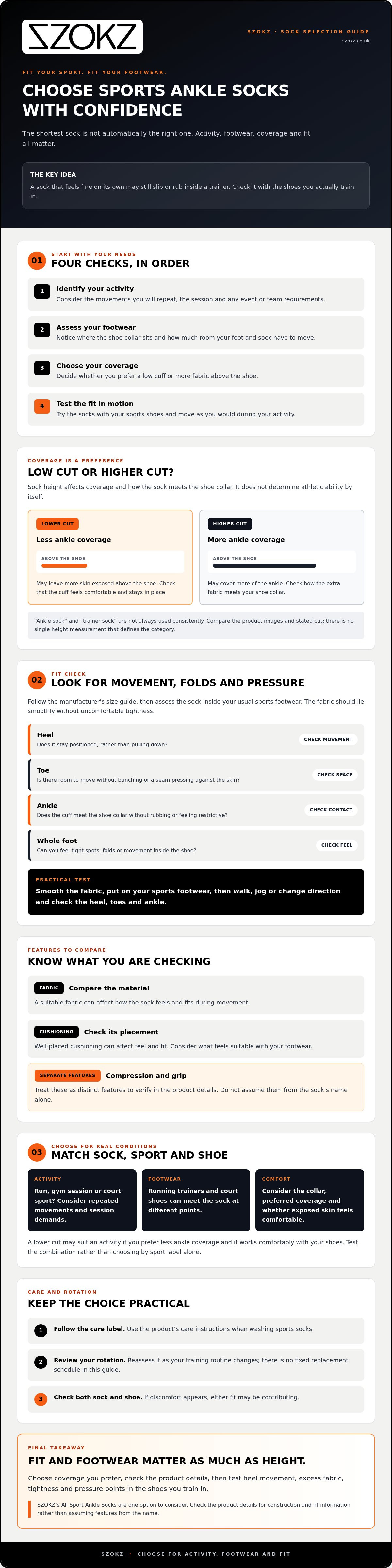
Match ankle socks to your sport, trainers and conditions
Choose socks as part of your kit, not in isolation. The same low cut may feel comfortable in one pair of trainers and rub against the collar of another. Before settling on sports ankle socks, use this four-step check:
- Identify the activity: Think about the movements you’ll repeat and how long you’ll be active.
- Assess your footwear: Consider the shoe’s fit, collar and available room around your foot.
- Choose coverage: Decide how much of your ankle you want covered.
- Test the fit: Wear the socks with those shoes during familiar activity and notice any movement or rubbing.
What should runners and gym-goers prioritise?
For running, consider how the sock feels as the session progresses, whether it shifts in your shoe and whether the shoe still fits comfortably. Distance may affect how long you spend noticing a pressure point, so test a new combination on a familiar run before relying on it for a longer outing. In the gym, think about your footwear and the movements in your session, from lifting to quick changes of direction. Choose ankle coverage that feels comfortable with that shoe and activity.
Court sports can involve repeated starts, stops and changes of direction, but that doesn’t make one sock height right for everyone. Check how the shoe collar meets your ankle, and consider any team or event requirements. A higher cut may feel more comfortable or practical if you prefer extra coverage or need to meet a specific kit rule.
When should you choose a different sock height or feature?
Compare the cuff with your footwear and your preference for coverage. If a low edge rubs against the shoe collar, try a different cut. If your sport or kit calls for more coverage, a higher-cut or sport-specific sock may be a better match. The goal is a comfortable combination, not choosing a height because it’s assumed to improve performance.
Grip and compression are separate features, not automatic parts of an ankle sock. Consider grip if you’re looking for traction, then check the product details to confirm what it offers. SZOKZ has a guide to sports grip socks for readers comparing that feature.
Match your activity, footwear and preferred coverage, then test the complete combination in familiar movement. SZOKZ offers All Sport Ankle Socks; review the product details to see whether they suit your requirements.
Caring for sports ankle socks and choosing a pair that suits your routine
Care and replacement depend on the sock’s materials, construction and how often you wear it. Start with the garment label, then keep an eye on how each pair feels during use. There’s no single lifespan that applies to every sock or training routine.
How should you wash sports ankle socks?
Follow the care label first. Washing and drying guidance can vary with the fibre blend and construction, so don’t assume every pair should be treated the same way. Check the label before choosing a wash temperature, cycle or drying method. Good care helps you follow the manufacturer’s instructions, but no method can preserve a sock’s condition indefinitely.
If you train often, rotating clean pairs means you’re not relying on one pair for every session. Review your socks as you do your kit. Look for changes such as persistent thinning, holes, stretched cuffs or fabric that no longer sits comfortably. Replace a pair when its condition or fit no longer suits your needs, rather than following a fixed timetable.
What should you check before choosing your next pair?
Read the product information before buying. Confirm the size, cut and material composition, then consider whether the sock suits your activity and fits comfortably inside the footwear you plan to wear. Don’t infer features from appearance or the word “sports” alone. Check the details if you’re looking for cushioning, grip or compression.
SZOKZ offers All Sport Ankle Socks, alongside high-intensity sport socks, grip socks and hiking socks. Check each product’s listed details to decide whether it matches your requirements; don’t assume the ankle socks include a feature that hasn’t been confirmed.
- Fit: Does the sock sit smoothly without uncomfortable pressure?
- Footwear: Does it feel comfortable in the shoes you’ll use?
- Fabric: Have you checked the stated composition?
- Care: Can you follow the instructions on the label?
- Activity: Does the cut and any listed feature suit your routine?
A clear product description should help you compare those points without guesswork. Use your regular training and footwear as the test, and reassess your rotation as your routine changes.
For more help comparing features, read SZOKZ’s guides to ankle socks and compression and sports grip socks.
Choose your next pair with confidence
The right sports ankle socks are the ones that work with your activity and footwear, not simply the pair with the lowest cut. Check that the sock sits smoothly, stays in place and feels comfortable inside the shoes you’ll actually wear.
Use the product details to compare fabric composition, cushioning and any stated features. An ankle cut doesn’t automatically mean a sock has grip or compression. Consider how much coverage you prefer, test the fit during familiar movement, and follow the garment’s care label. These practical checks can help you choose without relying on broad performance claims.
SZOKZ offers All Sport Ankle Socks alongside other sports sock categories. Review the information for each pair and compare it with your training routine and fit preferences.
Take time to find a pair that feels right for your sport. A considered choice can help you focus on the session ahead.
Frequently Asked Questions
Are sports ankle socks suitable for running?
They can be, provided the cut and fit work with your running shoes and personal preference. Check that the sock stays in place and doesn’t rub against the shoe collar during movement. Consider the distance and conditions too: a pair that feels comfortable on a short run may need testing during a longer familiar session before you rely on it for an event. Sock height alone doesn’t determine whether it’s suitable.
How should sports ankle socks fit?
Sports ankle socks should sit smoothly against your foot without excess fabric, uncomfortable tightness or loose areas. Check the manufacturer’s size guide against your foot measurements, then try the socks with the trainers you’ll use. The heel should stay in place, and seams or folds shouldn’t press against your toes. Walk, jog or practise familiar movements to check for shifting or rubbing before wearing a new pair for an important session.
What is the difference between ankle socks and trainer socks?
The labels aren’t used consistently by every retailer. Both may describe a low-cut sock, but the cuff can sit at a different height relative to your ankle and shoe collar. Check the product description and images rather than relying on the name alone. Once you have the pair, try it with your trainers and notice whether the cuff rubs, feels restrictive or stays comfortable during your usual movements.
Can sports ankle socks help prevent blisters?
No sock can guarantee blister prevention. A well-fitting pair that stays smooth may reduce rubbing from folds or shifting, but footwear fit, activity and individual foot movement matter too. Check for pressure points around the toes and heel, and assess how the complete sock-and-shoe combination feels during familiar movement. If rubbing persists, consider whether footwear fit or another part of your kit may be contributing.
Are sports ankle socks the same as compression socks?
No. “Ankle” describes a sock’s cut, not its pressure level. Compression socks apply a stated pressure, whilst ordinary ankle socks may simply provide foot coverage without compression. Check the product description for explicit compression details rather than inferring it from a snug fit or low cuff. SZOKZ states that its compression socks offer 20-30 mmHg; don’t assume this specification applies to its All Sport Ankle Socks.
Should sports socks be tight or loose?
They should feel secure without squeezing or restricting your foot. A loose sock can shift or bunch inside footwear; one that feels too tight may create uncomfortable pressure. Check the size guide, smooth the fabric and assess the heel, toes and ankle with your sports shoes on. If the sock moves or presses during familiar activity, review the size and fit rather than assuming tighter is better.
How often should you replace sports ankle socks?
There’s no fixed replacement schedule that suits every wearer. Training frequency, rotation, care and the condition of each pair all affect when it’s time to replace them. Check for holes, thinning areas, stretched cuffs or a fit that has changed. If a sock no longer sits comfortably or stays in place, consider replacing it. Follow its care label, and reassess your rotation as your training routine changes.
Compare SZOKZ’s sock range and product details to find a pair that suits your activity and footwear.
Comments
No comments yet. Be the first to add one.