


What if the socks that feel fine at home become uncomfortable halfway through a walk? The right pair depends on more than softness. If you walk in socks that bunch inside your shoes, stay damp or rub at the heel, even a familiar route can feel less comfortable. Everyday socks may work for a short outing, but on a longer walk you’re more likely to notice how they fit and feel.
Choosing what to wear for a walk can mean weighing up everyday cotton socks against pairs made for active use. Comfort comes from how your socks, footwear and routine work together, not from one feature alone. This guide explains how to choose a pair that suits your shoes and walking pace, and what to check before setting off.
We’ll look at how fabric, thickness, cushioning and fit affect walking comfort, and how to spot signs of slipping or friction. You’ll also find practical checks for trying socks on with your walking shoes and caring for them between walks. Whether you’re heading out for an everyday stroll or a longer hike, use your footwear and personal comfort to guide your choice.
Key Takeaways
- Match sock thickness and cushioning to your footwear so your feet feel supported without making your shoes too tight.
- A secure fit and smooth fabric can help limit bunching and rubbing inside your shoes.
- Choose lighter or more cushioned socks based on the weather, the space in your shoes and your comfort.
- Before setting off, check that the heel stays in place, the fabric lies flat and your toes have room to move.
- SZOKZ offers performance-led socks for active routines, including hiking socks for outdoor walks.
Why the right walking socks matter, even on everyday walks
A short trip to the shops and a longer walk place different demands on your feet, but both involve repeated movement inside your footwear. A sock that slips, folds or stays damp can become noticeable with every step. You don’t need specialist kit for an ordinary outing. The practical aim is to find a comfortable layer that sits well inside the shoes you already wear.
A walking sock is a sock chosen to sit comfortably and securely inside walking footwear. The name describes its intended role, not a requirement to wear specialist kit every time you go out. Socks come in different materials and types for different uses; The Wikipedia article on socks provides a general overview. For a walk, the useful test is whether your pair works with your shoes, the length of your route and how your feet feel.
Are ordinary socks suitable for a walk?
They can be. For a short, easy walk in familiar shoes, everyday socks may feel perfectly comfortable. If they stay in place, feel smooth against your skin and don’t make your footwear feel tight, there may be no reason to change them. Your experience matters more than the label on the sock.
Pay attention if your walk gets longer or your usual pair starts to feel distracting. A heel that slips, fabric that gathers under your toes, or feet that feel uncomfortably warm or damp can be signs that a different fit or construction may suit you better. These are useful cues, not proof that everyday socks are unsuitable for everyone. A casual walk also doesn’t call for the same choices as a demanding hike over uneven ground.
What can make feet uncomfortable while walking?
Movement inside the shoe is one factor. If a sock is too loose, excess fabric can shift and form folds. If it’s too tight or its shape doesn’t suit your foot, it may pull or press in places that become more noticeable as you walk. Shoe fit matters too: footwear with little room can feel tighter with a thicker sock, while a loose shoe can allow more movement.
Friction can build where skin, sock and shoe repeatedly move against one another. Dampness may add to the discomfort, particularly if a sock stays wet against your foot. Neither issue has one universal cause, and no sock can guarantee that rubbing or discomfort won’t occur. Notice when the sensation begins and where it appears. Does it happen in one pair of shoes, after a longer route, or with socks that tend to slip? These details can help you decide what to adjust.
If you walk in socks that feel settled from the first few steps, you’re less likely to be distracted by readjusting your footwear. Start with a pair that feels good on your usual walk. If you notice slipping, bunching or dampness, use that as a practical cue to reassess the fit and feel.
How sock fabric, cushioning and fit affect walking comfort
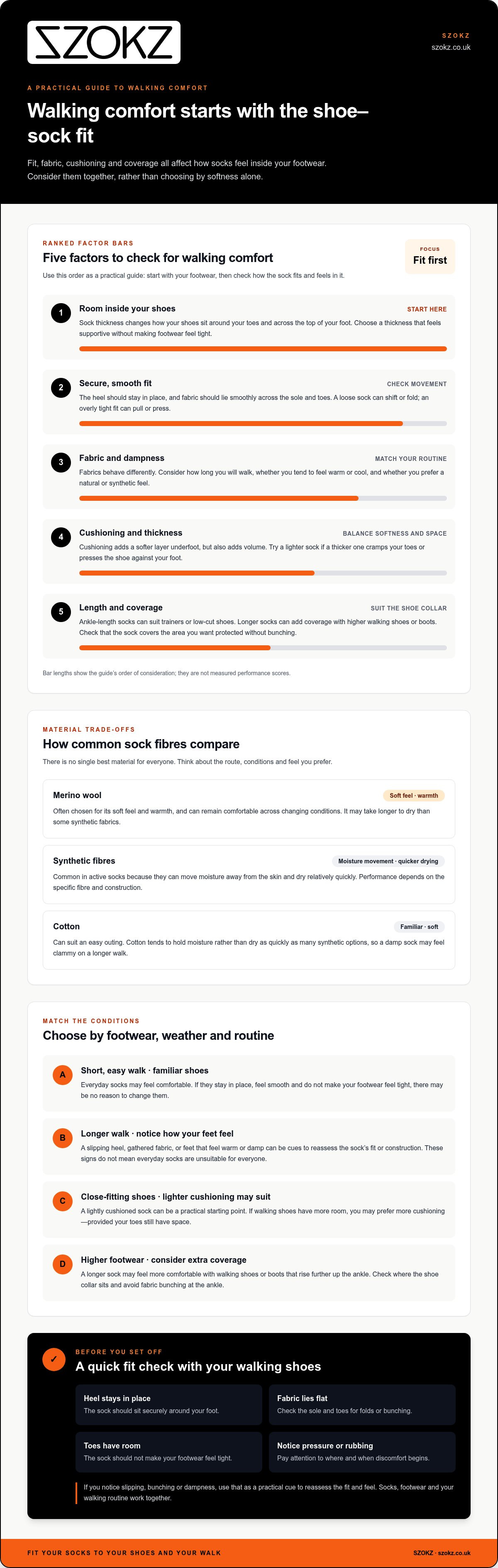
Fabric, thickness and fit work together inside your shoes. A sock that feels soft in your hand may not feel comfortable after repeated steps if it becomes damp, shifts around or takes up too much room. Start with the footwear you plan to wear, then consider the conditions and how long you expect to be out.
Sock thickness should suit the space in your shoe, so extra cushioning doesn’t make the fit feel tight. A sock may feel comfortable on its own but change how your shoes sit around your toes or across the top of your foot. Try the sock and shoes together rather than choosing by thickness alone.
Merino wool, synthetic fibres and cotton: what should walkers know?
Each fibre has trade-offs. Merino wool is often chosen for its soft feel and warmth, and can remain comfortable across changing conditions. It may take longer to dry than some synthetic fabrics. Synthetic fibres are commonly used in active socks because they can move moisture away from the skin and dry relatively quickly, although performance depends on the specific fibre and construction.
Cotton feels familiar and soft, which can suit an easy outing. It tends to hold moisture rather than dry as quickly as many synthetic options, so a damp cotton sock may feel clammy during a longer walk. There isn’t one best material for everyone. Consider whether you usually run warm or cool, how long you’ll be walking and whether you prefer a natural or synthetic feel. These are general material characteristics, not claims about the exact performance of every sock.
How much cushioning and sock length do you need?
Cushioning adds a softer layer underfoot, but also adds volume. A lightly cushioned sock can be a practical starting point for everyday shoes with a close fit. If your walking shoes have more room, you may prefer more cushioning. If a thicker sock makes your toes feel cramped or presses the shoe’s upper against your foot, try a lighter option.
Length is mainly about coverage and preference. An ankle-length sock can suit trainers or low-cut walking shoes. A longer sock may feel more comfortable with walking shoes or boots that rise further up the ankle, adding coverage between the footwear and your leg. Check where the shoe collar sits: the sock should cover the area you want protected from direct contact without bunching at the ankle.
Fit matters as much as fibre. The sock should sit securely around your foot, with the heel in place and the fabric smooth across the sole and toes. Excessive tightness can feel restrictive, while a loose fit can shift inside your shoe. If you walk in socks that bunch or slip, reassess the size and shape before switching to a thicker pair. To compare options for different routines, browse SZOKZ performance socks and consider which type suits your footwear.
Walking socks compared: match your pair to shoes, weather and routine
Your footwear is a useful starting point when choosing socks. A pair that works with roomy walking shoes may feel too thick in close-fitting trainers. The lining matters too: a soft, padded interior may already feel cushioned, while a firmer shoe may leave you wanting more underfoot. Use the comparison below as a guide, then try the sock with the shoes you intend to wear.
| Footwear | What to consider |
|---|---|
| Everyday shoes | A lighter sock may preserve room in a closer-fitting shoe. Check that the heel stays in place. |
| Walking shoes | Compare light and cushioned options against the shoe’s fit and lining. |
| Walking boots | Consider enough sock coverage to sit comfortably beneath the boot’s upper, without folds. |
Which socks work with trainers, walking shoes or boots?
There’s no automatic match between a shoe type and one sock thickness. Start by checking how your footwear fits when fastened as usual. If a thicker sock presses your toes or makes the shoe feel tight across the top, it may be too bulky for that pairing. A thin sock in a roomy shoe, by contrast, may leave the fit feeling less secure.
Coverage also affects comfort. With low-cut trainers, you may prefer a shorter sock. Walking shoes and boots can sit higher on the foot or ankle, so a longer sock may provide a more comfortable layer beneath the edge of the footwear. Try your intended socks on indoors and walk around in the actual shoes. Check for pressure, slipping and exposed areas where the shoe rubs.
Should you choose lightweight or cushioned socks?
Lightweight socks take up less space and can suit close-fitting footwear or milder conditions. Cushioned socks add a softer feel underfoot, but need enough room in the shoe. In cooler weather, extra coverage or thickness may feel welcome; in warmer conditions, you might prefer a lighter construction. Let personal comfort lead. A short errand and a full day out may call for different choices, especially if your feet feel warmer or more tired over time.
- For a short, easy walk: Start with a familiar, comfortable pair that fits your everyday shoes.
- For a longer day out: Consider whether the sock stays comfortable over time and whether your shoes have room for its thickness.
- For changing weather: Choose a weight that feels appropriate without making your footwear constricting.
If you walk in socks that feel comfortable at home but become distracting outdoors, note which shoes you wore, how long you walked and where the sock shifted. This simple comparison can help narrow your next choice. For more guidance on selecting a pair, see the recommended walking socks guide.
How to check walking sock fit before you set off
A quick check at home can show whether your socks and shoes work comfortably together. Put on the pair you plan to wear for the walk rather than judging the socks on their own. A good walking-sock fit sits smoothly on the foot, with the heel in place and toes able to move comfortably.
A quick sock-and-shoe fit check
Use this simple sequence before heading out. Fasten your footwear as you normally would, then assess how the full combination feels.
- Position the heel. Pull the sock on fully and check that its heel section sits against your heel, not above or underneath it.
- Smooth the fabric. Run your hand over the toes, sole and ankle. Flatten any folds that could gather inside the shoe.
- Check toe room. Stand and gently move your toes. They should feel comfortable, not compressed by the sock or shoe.
- Notice pressure. Check for tightness around the toes, heel, top of the foot and ankle. A sock that feels uncomfortably snug before you set off may not be the right match.
- Walk indoors briefly. Take a few laps around the room. Notice whether the sock slips, the heel moves or any area rubs against the footwear.
If something feels off, take off the shoe and adjust the sock before trying again. Persistent tightness may mean the sock is too thick for that shoe or the fit doesn’t suit your foot. If the footwear itself rubs, changing the sock’s position may not resolve the issue. Reassess the shoe-and-sock combination rather than walking in socks that feel uncomfortable from the start.
How to care for walking socks between wears
Follow the care label for washing and drying. Instructions can differ by fabric and construction, so don’t rely on one routine for every pair. Let socks dry fully before putting them away, and keep pairs together so you can compare how they feel from one wear to the next.
Before putting them on, check the heel, toe and sole for thinning, holes or rough areas. Look at the shape too: stretched cuffs or fabric that no longer sits smoothly may affect how the sock stays in place. Wear can happen gradually, so comparing a frequently worn pair with a less-used one can make changes easier to spot. If the fit or fabric has altered, choose a different pair for your walk.
A brief check of the sock-and-shoe combination gives you a clearer sense of fit before you leave. Keep it simple: heel settled, fabric smooth, toes comfortable and no unusual pressure during a short indoor walk.
Choosing SZOKZ socks for an active everyday routine
Once you’ve considered how your socks sit inside your footwear, match the type of sock to your activity. SZOKZ designs and sells performance socks for athletes and everyday wear, with options for hiking, high-intensity sport and everyday use. Start with the activity and footwear, then consider the length of your walk and the feel you prefer.
Which SZOKZ sock category may suit your routine?
SZOKZ hiking socks are an option for outdoor walks. All Sport Ankle Socks suit those who prefer a shorter style with appropriate footwear, while High Intensity Sport Socks are designed for more vigorous activity. These categories offer useful starting points, not a rule that every walk needs a specialist sock.
Use your routine to narrow the choice:
- Regular, easy outings: Consider the footwear you wear most often and whether you prefer a shorter sock or more coverage.
- More outdoor-focused walks: Explore hiking socks for an outdoor walking context.
- Higher-intensity activity: High Intensity Sport Socks are a relevant option for vigorous sessions rather than a relaxed stroll.
Category names describe the activity each type is intended for, but they don’t mean every sock will feel the same or that every style is specifically designed for walking. Review the information for the pair you’re considering, then think about how your footwear feels with different sock thicknesses and lengths.
Browse socks with your footwear and routine in mind
Before choosing, revisit three practical details: the shoes you’ll wear, how long you expect to be out and whether you prefer a lighter or more cushioned feel. A short walk in everyday shoes may call for a different sock than a longer outdoor route in walking footwear. If you’re unsure which feels better, use the fit checks from the previous section to assess the sock-and-shoe combination at home.
Use category names as a guide, then choose around your routine. A sock suited to vigorous sport won’t automatically be the best fit for a gentle walk, just as hiking socks aren’t essential for every everyday outing. Focus on the activity the category describes and how the sock feels with your footwear. SZOKZ socks are worn by Team GB and Olympic athletes, and the range also includes options for everyday wear.
Keep comfort and fit at the centre of your decision, and choose with the walk in mind.
Choose your next pair with confidence
Your next walk is a practical way to test your choice. Wear the socks with your usual footwear and notice how they feel once you’re moving, not just while standing at home. If you walk in socks that feel comfortable at first but become distracting later, note the conditions and what you noticed. That gives you a useful starting point next time.
Keep the trial simple. Change one thing at a time, such as sock thickness or length, so you can tell which difference matters to you. You don’t need one ideal pair for every outing. Your routine may include different shoes, routes and weather, so choosing with the day in mind is a sensible way to find what works.
A considered choice can make getting ready straightforward. Use what you learn on each walk, trust your own comfort and adjust when your routine changes.
Explore the SZOKZ range and choose a pair for your next walk.
Frequently Asked Questions
Can I wear normal socks for walking?
Yes. Everyday socks can be suitable for a short, easy walk if they feel comfortable with your shoes. A quick trip in well-fitting trainers, for example, may not call for a specialist pair. For longer outings, pay attention to how your feet feel over time. Damp fabric, a sock that shifts or folds underfoot, or rubbing against your footwear can make the walk less comfortable. If these issues recur, try a different pair.
What are the best socks to wear for walking?
The best choice depends on your footwear, walk length, the weather and how much cushioning you like. A smooth-fitting, lighter sock may suit close-fitting trainers, while a more cushioned pair may feel better in roomier walking shoes. Consider how warm your feet tend to feel and whether you prefer wool or synthetic fibres. Socks that work well for one route may not suit every shoe or outing.
Should walking socks be thick or thin?
Neither thickness is right for everyone. Thicker socks add cushioning but take up space and can make a close-fitting shoe feel cramped. Thinner socks leave more room and may suit footwear that already feels snug. Try both with the shoes you plan to wear, fasten them as usual and check that your toes still have comfortable space. The fit of the complete combination matters more than thickness on its own.
Are cotton socks suitable for walking?
Cotton socks can suit a short, easy walk, particularly if you like their familiar, soft feel and your feet stay comfortable. During longer or more active outings, cotton may hold moisture and feel damp against the skin. How noticeable this is depends on the conditions, your pace and your footwear. If your feet feel clammy, you could try a sock made with fibres designed to manage moisture on a future walk.
How should walking socks fit?
Walking socks should feel smooth and secure, without slipping, folds or uncomfortable pressure. Put them on with the footwear you intend to wear. Check that the heel section sits in place and your toes can move without feeling squeezed. Then walk around indoors and notice whether the sock shifts or creates a pressure point. A comfortable fit can support a better-feeling setup, but it can’t guarantee that rubbing or blisters won’t occur.
Do walking socks help prevent blisters?
Socks can influence comfort, but they can’t guarantee blister prevention. Blister risk is affected by several factors, including friction, dampness and footwear fit. For example, a sock that gathers inside a shoe may increase rubbing in one area, while a shoe that moves around can also contribute. Treat socks as one part of the setup. If rubbing starts during a walk, stop and address the discomfort rather than pushing on.
How often should you replace walking socks?
There’s no fixed replacement timetable that suits every pair or routine. Check socks regularly for thinning at the heel or toe, holes, rough areas or cuffs that no longer hold their shape. Notice whether a pair that used to feel secure now slips or causes persistent discomfort. Frequent use and washing can affect a sock’s condition over time. Let its wear and feel guide your decision rather than following a set number of months.
Comments
No comments yet. Be the first to add one.