


Could compression socks for hiking make a long day on the trail more comfortable, or leave your legs feeling hot and restricted? It’s a fair question. Compression may help some hikers manage swelling or muscle fatigue, but benefits aren’t guaranteed. A tight sock isn’t automatically the right choice for every route or person.
Fit matters as much as the compression level. A pair that pinches, slips or feels too warm can distract from your walk. Hiking socks and compression socks also serve different purposes, so it helps to know what each is designed to do before choosing.
This guide explains what the evidence can and can’t tell you, when compression might fit into your hiking routine, and how to check sizing and comfort. You’ll also learn when to ask a healthcare professional for advice before wearing compression, especially if you have a health condition that may affect circulation or sensation.
Key Takeaways
- Decide whether compression socks for hiking suit your comfort needs. Don’t expect a guaranteed performance boost.
- Check the compression rating and seek professional advice if a health condition could affect whether compression is suitable for you.
- Compare compression socks with hiking socks by purpose, cushioning and how each feels inside your boots.
- Measure as directed, follow the manufacturer’s sizing chart and test the fit indoors before heading out.
- SZOKZ offers hiking and compression sock categories separately, so match your choice to the support and trail comfort you’re looking for.
What do hiking compression socks do and who needs them?
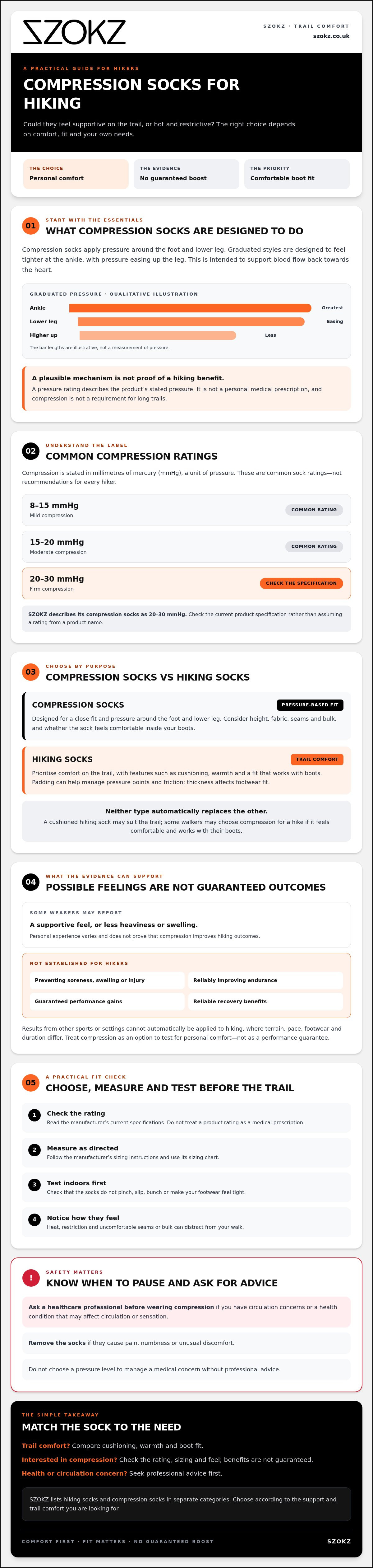
Compression socks apply pressure around the foot and lower leg. Graduated styles are designed to feel tighter at the ankle, with pressure easing up the leg. This design is intended to support upward blood flow, but it doesn’t guarantee better hiking performance or comfort for every wearer. Choosing compression socks for hiking is a personal comfort decision, not a requirement for covering long trails.
Compression is measured in millimetres of mercury (mmHg), a unit of pressure. Common sock ratings include 8-15 mmHg for mild, 15-20 mmHg for moderate and 20-30 mmHg for firm compression. A product’s rating describes its stated pressure, not a personal medical prescription. Check the manufacturer’s current specifications rather than assuming a rating from the product name.
How are compression socks different from ordinary hiking socks?
Compression socks are designed for a close, pressure-based fit. Hiking socks prioritise comfort on the trail, with features such as cushioning, warmth and a fit that works with boots. Padding can help manage pressure points and friction, while sock thickness affects how footwear fits. Neither type automatically replaces the other.
Some walkers may prefer a cushioned hiking sock on the trail and a compression sock at another time. Others may choose a compression style for a hike if it feels comfortable and works with their boots. Not every compression sock is designed for outdoor use, so consider its height, fabric, seams and bulk. Check that it doesn’t bunch or make your footwear feel tight. For a broader overview of sport-focused options, see this guide to compression socks for sport.
When might a hiker consider wearing compression socks?
A long day on foot may prompt you to consider whether compression feels supportive or comfortable, particularly if you’ve worn it before and know how it feels. Some people report feeling less heaviness or swelling, but personal experience is not proof that compression improves hiking outcomes. The information here doesn’t establish a guaranteed effect on fatigue, endurance or recovery for hikers.
Compression is intended to influence blood flow in the legs. You can read a general explanation of how compression works. That mechanism alone doesn’t show that a particular sock will improve your experience on a specific route. If you have circulation concerns or a relevant medical condition, ask a healthcare professional before wearing compression. Comfort matters too: remove the socks if they cause pain, numbness or unusual discomfort.
How compression works on a hike, and what the evidence can support
Graduated compression applies the greatest pressure around the ankle, with pressure easing higher up the leg. The intended effect is to support blood moving back towards the heart. The National Cancer Institute describes compression garments as being used to improve blood flow, but that general mechanism doesn’t establish a specific benefit on the trail.
A plausible mechanism is not proof of a hiking benefit. Compression may feel supportive to some walkers, but comfort, swelling and performance outcomes can vary between individuals. A sock’s pressure rating is a product specification, not a universal recommendation or a clinical prescription for your needs.
What does a 20-30 mmHg rating mean?
Millimetres of mercury (mmHg) is a unit used to state pressure. A 20-30 mmHg rating indicates the pressure level stated for a sock; it doesn’t mean that level is suitable for every hiker. Fit, pressure distribution and how the sock feels all matter. SZOKZ describes its compression socks as 20-30 mmHg, but check the current product specification before relying on that rating. Don’t choose a pressure level to manage a medical concern without professional advice.
Can compression improve comfort or recovery on the trail?
Some wearers may prefer the close, supportive feel or feel more comfortable in compression after a long day. That experience is subjective. It isn’t the same as a measured improvement in walking performance or recovery.
Claims about exercise or recovery also need careful interpretation. Findings from other sports or settings can’t automatically be applied to hiking, where terrain, pace, footwear and duration differ. The evidence discussed here doesn’t establish that compression socks for hiking prevent soreness, swelling or injury, or reliably improve endurance or recovery. Treat them as an option to test for personal comfort, not as a performance guarantee.
If you’re comparing pressure ratings, use the manufacturer’s current details and sizing guidance. SZOKZ’s guide to 20-30 mmHg compression socks offers further context on that rating. If you have circulation concerns or a relevant medical condition, ask a healthcare professional before wearing compression.
If you’re weighing up sock options, you can also browse the SZOKZ sock range and compare categories against your needs.
Compression socks versus hiking socks: which matters more on the trail?
They serve different purposes. A hiking sock is chosen mainly for comfort inside footwear, while a compression sock is designed to apply pressure to the foot and lower leg. Neither is automatically the better option. Let terrain, boot fit, walk duration and your own comfort guide your choice.
| Consideration | Hiking socks | Compression socks |
|---|---|---|
| Intended function | Trail comfort and a suitable fit inside walking footwear. | A close fit that applies stated pressure to the lower leg. |
| Fit | Should sit smoothly in the boot without bunching or slipping. | Should feel evenly snug, not painfully tight or restrictive. |
| Cushioning | May include padding suited to your footwear and preferred feel. | May not provide the cushioning you want for long walks. |
| Priority | Boot comfort, cushioning and a sock that works for the route. | Trying compression for a considered personal comfort preference. |
Whichever type you choose, cushioning and boot fit still matter. A thick sock can change how snug a boot feels, while a thin one may feel different over a long walk. Check the fit with your intended socks before setting off. For another trail-sock feature to weigh up, read about hiking socks with grip.
When is a standard hiking sock the simpler choice?
If your main priority is a secure, comfortable boot fit, start with a hiking sock that provides the cushioning you prefer and feels suitable for the conditions. Compression isn’t essential equipment for every walk. As Harvard Health explains, compression socks have a distinct pressure-based purpose, but that doesn’t make them a substitute for trail-sock comfort. Choose the simpler option if it meets your needs.
What trade-offs should hikers consider with compression?
Compression can feel snug, may feel warmer than you prefer and can take more effort to put on. Check the fit in your boots and reassess during a short test walk. Pain, numbness, tingling or excessive tightness are reasons to remove the socks rather than push through. For pressure-rating context, see this 20-30 mmHg compression socks buying guide.
The practical choice is the sock that works with your footwear, route and comfort preferences. Some walkers may use different socks for different activities or occasions. There’s no need to force one pair to meet every need.
How to choose and test compression socks for hiking
A careful fit check is more useful than guessing from your usual shoe size. Follow this sequence before taking compression socks for hiking on a demanding route:
- Check health considerations. If you have circulation concerns or a relevant medical condition, ask a healthcare professional whether compression is appropriate before trying it.
- Measure as directed. Use the measurement points specified by the sock manufacturer. These may include the ankle and calf, so have a tape measure ready.
- Use the exact sizing chart. Match your measurements to the current chart for that specific product. Don’t choose a size from shoe size alone or assume sizing is consistent between brands.
- Test the fit indoors. Put the socks on as instructed and wear them with the boots you plan to hike in. Check how they feel when standing and walking.
- Reassess during a short, familiar walk. Notice any change in comfort before committing to a longer or more demanding hike.
How should hikers check compression-sock fit?
A suitable fit should feel supportive, not painful. The fabric should sit smoothly, without folds or a band that digs in. Check that your toes and ankles can move comfortably and that your boots don’t feel unexpectedly tight. If you notice pain, numbness, tingling or restricted movement, remove the socks. Stop using them and seek appropriate professional guidance if symptoms persist or concern you.
How can you test socks before a long walk?
Use your intended boots for the trial, since footwear can change how a sock feels. Start indoors, then take a short walk on familiar ground. Pay attention to seams, rubbing, bunching, slipping, pressure points and excess heat. Recheck comfort afterwards, and consider whether the socks still feel suitable if conditions or your activity level change. Broader activity-specific considerations are covered in this compression socks for sport guide.
- Before setting off: Are the socks smooth, correctly positioned and comfortable in your boots?
- During the test: Do they stay in place without rubbing, bunching or creating pressure points?
- As you walk: Are warmth and comfort still manageable?
A short trial won’t guarantee how the socks will feel on every route, but it can reveal obvious fit issues before a longer walk.
Choosing SZOKZ socks for hiking: match the product category to your needs
Choose by function rather than assuming one sock will provide every feature. SZOKZ offers hiking socks and compression socks as separate categories. The available product information doesn’t confirm a specific sock that combines trail-specific hiking features with compression, so check each item’s details before deciding.
Which SZOKZ sock category should a hiker explore?
If your priority is comfort inside hiking footwear, start with the hiking sock category. Consider its stated intended use and how its cushioning and fit may work with your boots. If you have a considered reason to try compression, compare the separate compression sock category and assess its stated pressure and sizing. Compression isn’t a substitute for a suitable hiking-sock fit, and it isn’t essential for every walk.
SZOKZ describes its compression socks as offering 20-30 mmHg. Check the current specifications for the particular pair before relying on that rating. It describes pressure, not whether compression suits your needs or a specific route.
What should you check before choosing a pair?
Read the product information before you buy. Check the intended activity and current sizing instructions. For compression styles, check the stated compression level too. Then consider how the sock feels in your hiking boots. A pair that feels comfortable at home may feel different after walking, so try it with your intended footwear before committing to a long hike.
- For trail comfort: compare the hiking socks’ stated features with your boot fit and cushioning preference.
- For compression: confirm the current pressure specification and follow the product’s sizing guidance. Don’t select a pressure level to address a medical concern without professional advice.
- For either category: consider your own comfort and intended use. If a sock feels painful or restrictive, don’t push through.
The right choice depends on what you want the sock to do. Compare the separate categories and current product details rather than assuming compression guarantees better comfort or hiking performance.
Choose the sock that suits your next trail
The right choice depends on what you need from your socks. Hiking socks focus on comfort and fit inside your boots. Compression socks apply pressure and may suit a personal comfort preference, but they don’t guarantee better performance on the trail. Check sizing carefully, test the fit with your intended footwear and ask a healthcare professional for advice if you have circulation concerns or a relevant medical condition.
SZOKZ offers hiking and compression socks as separate categories. Its compression socks are described as providing 20-30 mmHg, but check current product details before relying on the stated level. There’s no confirmed combined hiking-and-compression model, so compare each category with your needs rather than assuming one pair does both.
Take time to find a comfortable fit, then focus on the route ahead. A well-considered choice can help you feel prepared for your next walk.
Frequently Asked Questions
Are compression socks good for hiking?
They may suit hikers who find the snug feel comfortable, but they aren’t essential for every walk. Compression socks for hiking aren’t shown here to guarantee better endurance, prevent soreness or improve trail performance. Think of them as a personal comfort choice, not a substitute for well-fitting boots and suitable hiking socks. Try them on a short walk first and judge how they feel for yourself.
Can you wear compression socks under hiking socks?
You can layer them if both pairs fit comfortably inside your boots, but extra layers may make footwear feel tight, increase warmth or bunch during a walk. Check the manufacturers’ guidance and try the combination indoors, then on a short walk in your intended boots. If the socks shift, rub, create pressure points or restrict comfortable movement, don’t wear them together on a longer hike.
What compression level should I choose for hiking?
There isn’t one compression level that suits every hiker. The mmHg figure describes a product’s stated pressure, not a universal recommendation or personal medical prescription. SZOKZ describes its compression socks as 20-30 mmHg, but check current product details before relying on that rating. If you’re considering compression for a health concern, ask a healthcare professional which level, if any, is appropriate for you.
How should compression socks fit for a hike?
They should feel evenly supportive, not painful or restrictive. Follow the specific manufacturer’s sizing chart and measurement instructions rather than choosing by shoe size alone. Put them on as directed and check the fit in your hiking boots. The socks shouldn’t bunch or slip. Remove them if you experience pain, numbness, tingling or restricted movement, and seek appropriate advice if symptoms persist or concern you.
Can compression socks help with swollen legs while hiking?
Compression is designed to apply pressure that may support blood flow, but that mechanism doesn’t prove that socks will prevent or relieve swelling on a hike. Results and comfort vary between people, and swelling can have different causes. Don’t rely on compression to treat a health problem. If swelling is persistent, unusual or worrying, seek advice from a healthcare professional before using compression socks.
Are compression socks suitable for a full day of walking?
They may be suitable if their intended use, fit and comfort work for you, but a full day is a poor first test. Wear them with your planned boots on a short, familiar walk before committing to a longer route. Pay attention to pressure, warmth, rubbing and any change in comfort as you move. Remove them if they become uncomfortable rather than pushing through.
Should I wear compression socks if I have a medical condition?
Ask a healthcare professional before wearing compression if you have a medical condition or circulation concerns. A product’s stated pressure level doesn’t determine whether it’s suitable for you, and selecting a higher or lower rating isn’t a substitute for individual advice. Explain how long you plan to walk and what footwear you’ll wear. Follow the guidance you receive, and stop if the socks cause concerning discomfort.
Comments
No comments yet. Be the first to add one.