


The best anti-slip sock for your training may not be the one labelled for your sport. If your feet shift inside your trainers during quick turns, jumps or changes of pace, the fit between sock and shoe matters as much as the activity. That’s the practical starting point when comparing anti slip athletic socks uk.
It’s easy to focus on grip claims or a sport-specific label when shopping online. But a sock that bunches, feels loose or doesn’t suit your footwear may not feel comfortable in motion. This guide explains how to compare grip placement, fit, height and other product details, so you can find an option that suits how and where you train.
We’ll look at what to check for different sports and footwear, how to assess product descriptions without relying on broad promises, and which details to confirm before ordering. The aim is to help you make an informed choice, whether you’re considering dedicated grip socks or another athletic sock style available in the UK.
Key Takeaways
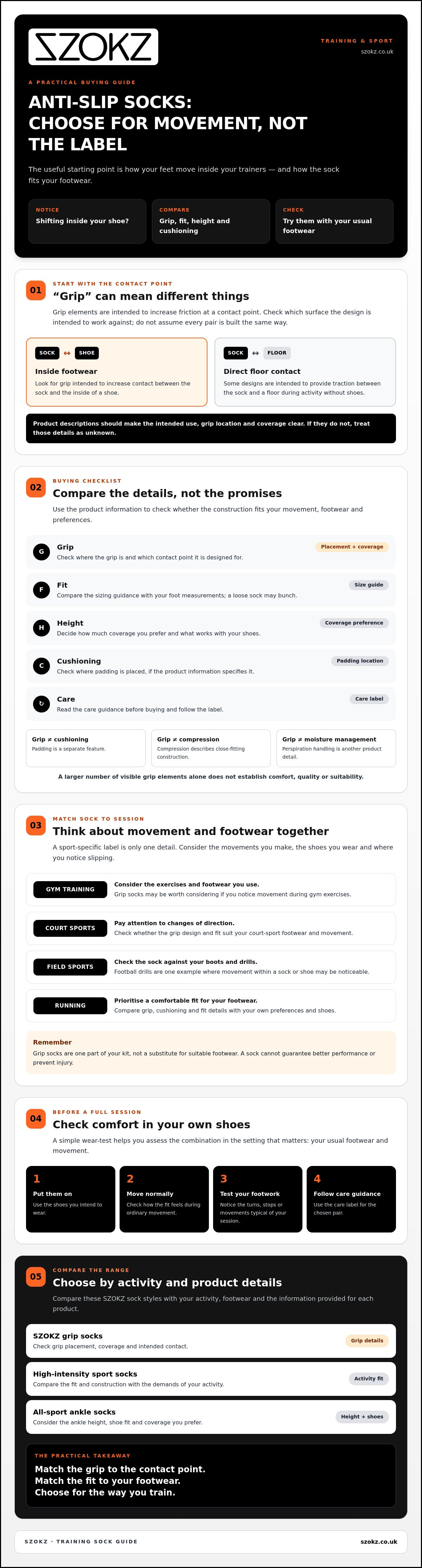
- Choose grip socks by how your feet move and how your footwear fits, not by sport label alone.
- When comparing anti slip athletic socks uk, check grip details, fit, height, cushioning and care guidance rather than relying on the number of grips or broad claims.
- Match sock features to the demands of gym training, court sports, field sports or running, and to the shoes you wear for each activity.
- Try your chosen socks with your usual footwear before a full training session, and follow the care label.
- Compare SZOKZ grip socks, high-intensity sport socks and all-sport ankle socks with your activity and the product details provided.
Why choose anti-slip athletic socks for training and sport?
A foot that shifts inside a trainer during a sharp turn or quick stop can make movement feel less controlled. Anti-slip athletic socks have grip elements intended to increase contact between the sock and the shoe, or between the sock and the floor, depending on the design. When comparing anti slip athletic socks uk, check which surface the grip is designed to work against rather than assuming every pair has the same construction. General athletic socks also serve practical functions such as absorbing sweat, but grip, cushioning and fit are separate features to assess.
Grip socks are one part of your kit, not a substitute for suitable footwear. A shoe that fits poorly can still allow movement, and a loose sock may bunch inside it. Look for a comfortable combination that suits your activity, shoes and preferences, without expecting a sock to prevent injury or guarantee better performance.
What makes an athletic sock anti-slip?
Grip elements are designed to increase friction at a contact point. That may mean contact between the sock and the inside of a shoe, or traction between the sock and a floor during activities performed without shoes. Designs vary, so look for clear details about grip location and coverage. If the description doesn’t specify these, don’t assume how the sock will behave in your footwear.
Assess grip separately from other features. Cushioning adds padding; compression describes a close-fitting construction; moisture-management claims relate to handling perspiration. One feature doesn’t confirm the presence or quality of another. Compare each detail with your needs, and check the product information rather than relying on broad performance language.
Who may find grip socks useful?
Grip socks may be worth considering if you notice your foot moving within the sock or your sock sliding inside your footwear during activity. This can be noticeable during gym exercises, court-sport changes of direction or football drills. It doesn’t mean every athlete or sport requires specialist grip socks. Footwear, movement and personal comfort all affect what feels suitable.
Assess the pair in the shoes you’ll actually wear. Start with ordinary movement, then check how the sock feels during the turns, stops or footwork typical of your session. For sport-specific examples, see this guide to grip socks for football, rugby and gym training. The rest of this guide focuses on matching activity and footwear, then comparing fit and product details before you buy.
How to assess grip, fit and construction before buying
Product descriptions can make similar socks sound very different. Compare practical details and check that the design suits both your movement and footwear. Use this checklist:
- Grip: Look for confirmed information about placement and coverage.
- Fit: Check the size guide and compare it with your foot measurements.
- Height: Decide how much coverage you prefer and what works with your shoes.
- Cushioning: Check where padding is placed, if this is specified.
- Care: Read the care instructions before buying and follow the label.
For broader guidance on selecting socks by activity, cushioning and fit, see REI’s guide to how to choose athletic socks. Use its general advice alongside the product details for the specific pair you’re considering.
Grip pattern, coverage and contact
Product images can show where grip elements appear, but check the written description too. Look for details about their location and coverage rather than assuming a photograph shows the full design. Consider the intended contact: a sock worn inside a trainer has a different job from one used directly against a floor. Product information should make the intended use clear.
A larger number of visible grip elements doesn’t, on its own, establish comfort, quality or suitability. Check whether the described placement matches the areas where you notice movement and whether the sock is intended for your footwear. If construction details aren’t confirmed, treat them as unknown rather than guessing.
Fit, sock height and comfort
A secure athletic sock fit feels close to the foot without bunching, slipping or creating uncomfortable pressure. Check the brand’s size guidance and compare it with your foot measurements; don’t rely on a size label alone. A poor fit can distract during exercise, even when the grip design looks suitable.
An ankle-height sock offers less leg coverage, whilst a higher-cut option covers more of the lower leg. Neither is automatically better. Consider shoe collars, clothing and your coverage preference. SZOKZ provides a guide to choosing between grip sock styles if you’re comparing heights.
For a practical comparison, browse the available sock categories and check each product’s confirmed sizing, construction and care details before ordering.
Which anti-slip athletic socks suit different sports and footwear?
The right choice depends on how you move and what you wear on your feet. A court session with repeated lateral movement has different demands from a steady run, whilst gym training can involve both planted lifts and quick transitions. Use this comparison as a starting point, not a universal performance ranking. When choosing anti slip athletic socks uk, match the sock’s confirmed grip details to your activity and footwear.
| Activity | Movement demands | Footwear | Height to consider | Feature to check |
|---|---|---|---|---|
| Gym training | Planted lifts, short bursts or mixed movements | Training shoes, or no shoes where appropriate | Ankle or higher cut, based on coverage preference | Whether grip is intended for shoe contact or floor contact |
| Court sports | Side steps, stops and changes of direction | Close-fitting court shoes | A height that sits comfortably with the shoe collar | Grip placement and a fit that doesn’t bunch during movement |
| Field sports | Accelerations, turns and changes of pace | Sports footwear suited to the playing surface | Choose for preferred leg coverage and footwear compatibility | Whether the product details suit your footwear setup |
| Running | Repeated forward strides over a sustained session | Running shoes that fit securely | Choose for comfort and coverage in your shoes | Cushioning and rubbing concerns, as well as any grip details |
Match the sock to movement and footwear
Lateral movement and repeated changes of direction can make a secure sock-and-shoe fit especially noticeable. But a grip feature is only relevant if it suits the contact point in your chosen footwear. Check the product description rather than assuming a design intended for one setup will work equally well in another. Running, gym and court sessions can also call for different preferences in cushioning, coverage and feel.
For more activity-specific context, read this guide to sports grip socks. Use it alongside the product information for the pair you’re considering.
When to consider a different sock category
If rubbing is your main concern on longer runs, prioritise fit, cushioning and construction details relevant to comfort rather than choosing on grip alone. Grip and blister concerns aren’t the same thing, and no sock feature should be treated as a guaranteed fix. For gym sessions, consider how the sock feels through the movements and in the footwear you use. Another category or fit may better match your priorities.
How to check fit, comfort and care after choosing
Before wearing a new pair of anti slip athletic socks uk for a full session, try them with the footwear you plan to wear. A short check using familiar movements can reveal whether the heel stays in place, fabric gathers inside the shoe or pressure builds in an uncomfortable spot. This is a practical way to assess comfort, not a guarantee of how the socks will feel in every session.
A simple fit check before training
Use this low-risk check at home or before a routine training session:
- Put on the socks and shoes together. Check that the heel sits in place and the fabric lies smoothly over your foot.
- Check toe room. Stand and walk around. Your toes shouldn’t feel cramped by the sock or shoe.
- Move through familiar actions. Try a few controlled steps, turns or exercises you already know. Notice whether the sock shifts or gathers inside the shoe.
- Check for pressure points. Pay attention to rubbing, tight spots or discomfort as you move.
- Reassess before a full session. If the fit feels distracting, check the size guidance and how the sock sits in your footwear. Stop wearing it if discomfort persists.
Give a new pair a chance to feel comfortable during ordinary activity before relying on it for competition. A smooth fit at rest may feel different once you start moving, so pay attention to how it behaves in your usual shoes.
Care that respects the product instructions
Care instructions vary by product. Read the garment label for washing and drying guidance, and follow it rather than relying on a general rule for all grip socks. Don’t assume a particular temperature or drying method is suitable unless the label confirms it.
Textiles can change with wear and washing, so check the socks periodically for changes in fit, fabric condition or grip. Don’t assume a particular lifespan without product-specific information. If the pair no longer feels comfortable or sits securely in your footwear, reassess whether it still suits your training.
Use the same checks whether you’re considering grip socks, high-intensity sport socks or all-sport ankle socks. Compare the available sock categories for your training needs.
Choosing SZOKZ anti-slip athletic socks in the UK
Start by matching your activity and footwear, then compare sock height, fit and the product details available. If grip is your priority, SZOKZ grip socks are the most relevant category to assess. High-intensity sport socks and all-sport ankle socks are also options to compare, depending on the coverage and feel you prefer. Check the product description rather than assuming a particular style has a feature that isn’t confirmed.
Which SZOKZ sock category should you compare?
Start with the need you’re trying to address. If you’re looking for grip, review the grip socks’ product information and consider whether the described use suits your shoes. For a different activity or preferred fit, compare high-intensity sport socks and all-sport ankle socks. Category names alone can’t tell you how a sock will feel, so check the individual product details and size guidance.
If you’re comparing anti slip athletic socks uk, keep the decision practical: identify the footwear you’ll wear, the movements you’ll make and the sock height you find comfortable. Then check whether the product information answers your questions about fit, grip and care. If a detail isn’t stated, don’t treat it as a confirmed feature.
What to check before ordering
Before choosing, review the current product description and sizing guidance. Compare the size information with your foot measurements, and consider how the sock will sit inside your usual footwear. Check the care instructions too, so you know how to wash and dry the pair. These details are more useful for judging suitability than broad promises about performance.
Check delivery information at the time of ordering, including any terms that may apply. SZOKZ socks are worn by Team GB and Olympic athletes. For your own decision, prioritise the product details that relate directly to your activity and fit.
Browse SZOKZ’s available sock categories and compare the product details to find an option that suits your training and footwear.
Choose socks that fit your next session
The best choice depends on your movement, footwear and preferred fit, not just the sport label. Check grip placement and coverage, compare size guidance, and try the socks in your usual shoes before a full session. Comfort matters too: grip alone doesn’t confirm that a pair suits your training.
If you’re comparing anti slip athletic socks uk, SZOKZ offers grip socks and high-intensity sport socks to consider alongside your activity and footwear. SZOKZ socks are worn by Team GB and Olympic athletes, and free UK delivery is available on orders over £30.
Check the product details, compare the options and choose a pair that suits your routine.
Frequently Asked Questions
What are anti-slip athletic socks?
Anti-slip athletic socks are sports socks with grip elements intended to increase contact between the sock and a shoe or floor. Grip position and coverage vary, so check the product description rather than assuming all pairs work in the same way. They’re one part of your kit, alongside well-fitting footwear. Look for clear construction details and treat any feature not confirmed by the seller as unknown.
Are grip socks suitable for every sport?
No. Grip socks aren’t essential for every sport, and one design may not suit every activity or shoe. Consider the movements involved and whether the grip is intended for contact with your footwear or a floor. Court sports, for example, involve repeated side steps, whilst running involves repeated strides. Compare product details with your sport and footwear, then try the socks during familiar movements before using them in a full session.
Can anti-slip socks help stop your feet moving in trainers?
They may help address movement between the sock and the inside of a trainer, depending on their grip design and fit. Results vary, and socks can’t correct footwear that doesn’t fit properly. Check that the product’s grip placement suits your shoes, then assess the combination in motion. If your foot still shifts or the sock bunches, review both the sock size and trainer fit rather than relying on grip alone.
How should athletic grip socks fit?
An athletic grip sock should sit smoothly against the foot, with the heel in place and no excess fabric bunching inside the shoe. It shouldn’t feel uncomfortably tight or create pressure points. Check the seller’s size guidance against your foot measurements, then wear the socks with your usual footwear. Walk and try familiar movements. If the fit causes persistent discomfort or slips during activity, stop using them and reassess the size or style.
Are anti-slip athletic socks the same as compression socks?
No. Grip and compression describe different features. Grip elements are intended to increase contact with a shoe or floor; compression refers to a close-fitting construction designed to apply pressure. Don’t assume that grip socks provide compression, or that compression socks include grip. Check product descriptions for each feature separately. If compression is your priority, look for clear, product-specific information rather than inferring it from a sock’s fit or category name.
How do you wash grip socks without damaging them?
Follow the care label on the specific pair. It gives the relevant washing and drying instructions, which can vary between products. Don’t assume a washing temperature or drying method unless the label confirms it. Wear and washing can affect textile condition over time, so check for changes in fit, fabric or grip. If the socks no longer feel comfortable or sit securely in your footwear, reassess whether they remain suitable for your activity.
Comments
No comments yet. Be the first to add one.