


Men's graduated compression socks can be a practical option for training and long days on your feet, not just something associated with medical care. They apply the greatest pressure at the ankle, then gradually ease off up the leg. Fit and compression level matter, particularly if you notice aching legs after a shift, post-workout fatigue or swelling during travel.
It’s reasonable to want support that feels comfortable and keeps its shape, rather than socks that quickly lose their stretch. This guide explains how graduated compression works and what to consider when choosing a pair for athletic recovery or everyday wear. The 20–30 mmHg range is firm compression. Speak with a healthcare professional if you’re unsure whether it’s suitable for you.
We’ll cover compression levels, sizing, materials and care, so you can assess fit and durability with confidence. You’ll also learn what to look for in product specifications, without confusing general support with medical advice.
Key Takeaways
- Learn how graduated pressure supports venous return and why fit affects how compression feels.
- Understand what the 20–30 mmHg range means and what to consider before choosing firm compression.
- Match men's graduated compression socks to your activity by comparing the demands of hiking and high-intensity sport.
- Use calf circumference, not shoe size alone, to choose a better fit. This guide explains how to measure at home.
- See how SZOKZ designs performance-focused socks worn by Team GB and Olympic athletes.
What are Men's Graduated Compression Socks?
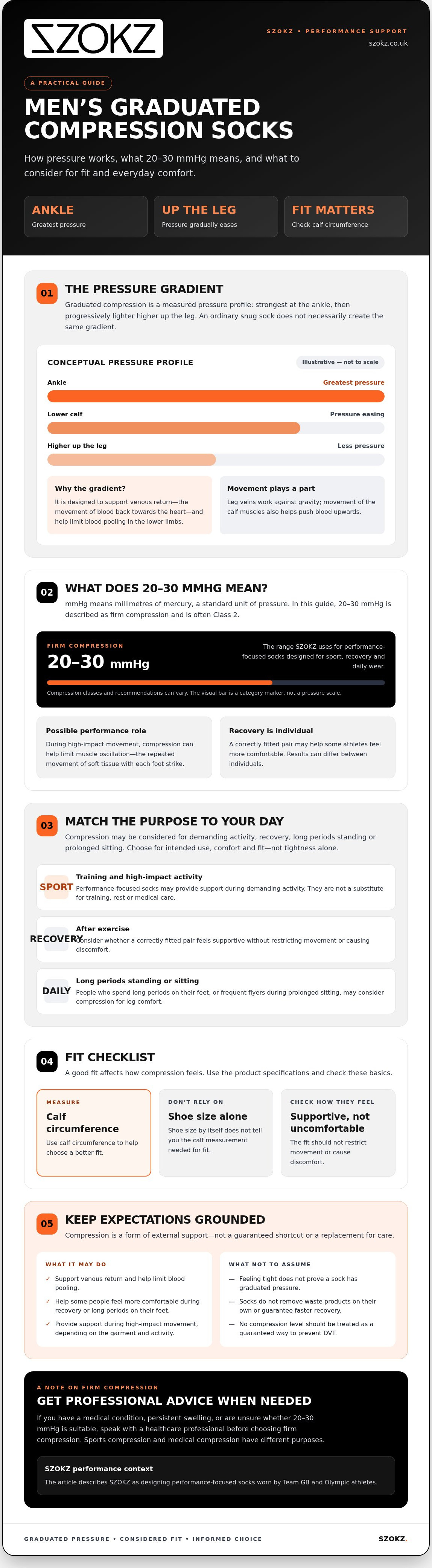
Not every snug sock provides graduated compression. Ordinary elasticated socks may feel tight, but that sensation alone doesn’t show that pressure is calibrated along the leg. Men's graduated compression socks are designed to apply a measured pressure gradient, with the greatest compression at the ankle and less pressure higher up the calf.
Graduated compression is the engineered reduction of pressure from distal areas, such as the ankle, to proximal areas higher up the leg. This design supports venous return, the movement of blood back towards the heart. Leg veins work against gravity, while movement of the calf muscles also helps push blood upwards. A graduated pressure profile provides external support that can assist this process. The aim is to limit blood pooling in the lower limbs, rather than simply make the leg feel tightly wrapped. For a general overview of how these garments work and where they’re used, see Compression stockings.
The Mechanics of the Pressure Gradient
The ankle is furthest from the heart and has to contend with gravity as blood travels upwards. Graduated compression applies its highest pressure there, then gradually eases towards the knee. This changing pressure is designed to support upward circulation. An evenly tight sock doesn’t necessarily create the same gradient. By helping to limit pooling, compression may also reduce the conditions in which metabolic by-products accumulate in the lower limbs. It doesn’t remove waste products on its own.
Performance vs Medical Graduated Compression
Compression has uses beyond managing diagnosed conditions. Athletes may choose performance-focused socks for support during demanding activity or as part of a recovery routine. During high-impact movement, compression can help limit muscle oscillation, the repeated movement of soft tissue with each foot strike. The effect depends on the garment and activity. Socks aren’t a substitute for training, rest or medical care.
The distinction is in purpose and selection. Medical compression may be recommended for a specific health need, while sports compression is chosen around activity, comfort and fit. SZOKZ offers socks with 20–30 mmHg compression for high-intensity sport and recovery. If you have a health condition, persistent swelling or uncertainty about suitable pressure, ask a healthcare professional before using firm compression.
For a closer look at choosing support for training, explore this best compression socks for sport guide. The key takeaway is simple: don’t judge a pair by tightness alone. Check that it’s designed to apply graduated pressure, then consider whether its intended use matches your activity.
Why 20-30 mmHg is the Performance Sweet Spot
Compression strength is measured in mmHg, short for millimetres of mercury, a standard unit of pressure. In this guide, 20–30 mmHg refers to firm, often Class 2, compression. It’s the range SZOKZ uses for performance-focused socks designed for sport, recovery and daily wear.
That doesn’t make it the right choice for everyone. Compression classes and recommendations can vary, and firmer pressure may not suit every wearer. In the UK, 20–30 mmHg compression is often recommended or prescribed by a healthcare professional. If you have a medical condition, persistent swelling or uncertainty about the level, seek professional advice before choosing it.
The Science of Muscle Recovery
After a demanding session, muscle soreness and temporary swelling can affect how your legs feel. Graduated compression provides external support and may help some athletes feel more comfortable during recovery. However, claims that socks clear lactic acid faster or reliably prevent inflammation go too far. Lactic acid isn’t the cause of delayed-onset muscle soreness (DOMS), and compression shouldn’t be treated as a guaranteed shortcut to recovery.
For long-distance runners, the practical question is whether a correctly fitted pair feels supportive after a run, without restricting movement or causing discomfort. Results can differ between individuals. Read more about choosing compression for post-run use in this compression socks for running recovery guide.
Circulation Benefits for Non-Athletes
Support isn’t only relevant to training. Nurses and others who spend long periods standing may consider compression for leg comfort, while frequent flyers may look for support during prolonged sitting. But no compression level should be presented as a guaranteed way to prevent deep vein thrombosis (DVT). Travel-related risk depends on personal circumstances. If you’re concerned about DVT or considering compression for a medical reason, ask a healthcare professional what’s appropriate. For practical travel considerations, see this in-flight circulation guide.
Choose men's graduated compression socks by checking the stated pressure, fit and intended use, rather than assuming a tighter-feeling sock offers better recovery. Follow the maker’s instructions for putting them on and caring for them. MedlinePlus also explains how to wear and care for compression stockings. A well-chosen pair can be a practical part of your routine, not a substitute for rest, movement or personalised medical advice.
Choosing the Right Type of Compression Socks
Choose socks for the demands of the activity, not just the pressure rating. A gym session, a long shift and a day on uneven trails place different demands on your feet and lower legs. Men's graduated compression socks should suit the intended use, feel comfortable inside your footwear and provide the coverage you want.
High-Intensity Sport vs Daily Wear
For high-intensity training, look for a secure fit, breathable zones such as mesh and reinforced areas at the heel, where repeated movement can increase wear. Moisture-wicking fibres can help manage sweat during gym sessions. Grip is separate from compression, but it matters: a sock that slips inside a shoe can distract you and affect stability during quick changes of direction. Explore more considerations in this performance grip socks guide for football, rugby and the gym.
For everyday wear, comfort takes priority. If you’re on your feet through a long shift, check that the fabric feels suitable for extended wear and that the top band doesn’t dig in. A simple, discreet design may also fit more easily into a work wardrobe. Don’t assume that more pressure means more comfort. Fit and intended use still matter.
Length changes what the sock can support. Over-the-calf styles cover the ankle and calf, allowing a graduated pressure profile along the lower leg. Ankle-length socks can support the foot and ankle, but they don’t provide compression up the calf. For an overview of garment types and uses, see this review of graduated compression stockings.
Hiking and Outdoor Compression
Trail walkers need a sock that works with their footwear over varied terrain. Prioritise a secure fit, cushioning suited to your boots and fabric that manages moisture. These details can help reduce friction and blister risk. A grip sock may help limit movement inside footwear, but it can’t replace correctly fitted boots or a well-fitting sock.
For a multi-day trek, comfort and fit become especially important as walking hours add up. Graduated compression may offer a supportive feel, but it isn’t essential for every trek and shouldn’t be treated as a guaranteed way to prevent fatigue. Compare practical trail-sock features in this guide to hiking socks with grip.
Match the sock to your activity, then check the fit in the footwear you’ll use. For options suited to training or trails, you can also explore SZOKZ sport and hiking socks.
The Buyer's Checklist: Sizing, Fit, and Material
For men's graduated compression socks, calf circumference is often more useful than shoe size when selecting a compression fit. Shoe size helps match the foot, but it doesn’t tell you how the graduated fabric will sit around your lower leg. Use the brand’s sizing chart and take the measurements it requests. If you fall between sizes, check the brand’s fit guidance rather than guessing.
How to Measure for a Better Fit
Measure both legs with a flexible tape measure, keeping it level and snug without pulling it tight. Take measurements in the morning, before a day on your feet, and use the same method for each leg.
- Ankle: Measure around the narrowest point, just above the ankle bone.
- Calf: Measure around the widest part of the calf.
- Check the chart: Compare both measurements with the specific size guide, along with shoe size if requested.
Don’t measure over clothing or let the tape angle across the leg. Measuring only one leg can also lead to a poor choice if your measurements differ. If swelling varies during the day or you’re selecting compression for a medical reason, ask a healthcare professional for advice on when and how to measure.
A suitable fit should feel supportive and smooth. Bunching or folds around the ankle can create pressure points. A top band that digs in behind the knee may indicate the sock is too long, incorrectly positioned or the wrong size. Remove it if it causes pain, numbness or unusual discomfort, and seek professional advice if symptoms persist.
Material and Care That Protect the Fit
Look for a durable synthetic blend and clear care instructions. Nylon, polyester and elastane or spandex are common performance fibres, but the blend alone doesn’t guarantee that a sock will hold its compression. Be cautious of claims that a pair will retain its fit for a set number of washes unless the maker provides evidence. Inspect socks regularly for loosened fabric, sagging or changes in support.
Follow the label for washing and drying. Avoid fabric softener, which can affect performance fibres, and don’t use high heat unless the care instructions allow it. There’s no universal six-month replacement rule for every daily wearer. Replace socks when they no longer fit securely or show signs of lost elasticity, and check the maker’s guidance. To put them on, gather the sock to the heel, position your foot, then ease the fabric up gradually. Don’t yank it by the top band or pull with your fingernails, which can snag or stretch the fibres.
Engineering Performance: The SZOKZ Approach
Compression should do a job, not just feel tight. SZOKZ designs performance-focused socks for athletes and everyday wear, with 20–30 mmHg compression. That range provides firm support, but the right choice still depends on fit, activity and individual needs. Compression socks are a functional tool, not a shortcut to recovery or a substitute for medical advice.
Trusted by Professionals
SZOKZ socks are worn by Team GB and Olympic athletes. That association can be one point of reference, but the practical details still matter to every buyer: check the stated pressure, sizing guidance, construction and care instructions. Elite sport and daily routines have different demands, so professional use shouldn’t be taken as proof that one sock or pressure level suits everyone.
The 20–30 mmHg specification gives buyers a clear figure to compare. It’s a firm compression range used in performance-focused designs, including SZOKZ socks for high-intensity sport and recovery. Choose it for its stated properties, not because a higher number automatically means better results. If you’re selecting compression for a health concern or you’re unsure whether firm pressure is suitable, speak with a healthcare professional.
The SZOKZ Difference
Good performance gear should support the work without distracting from it. SZOKZ combines a technical focus on compression with an emphasis on comfort, making socks for demanding training and everyday wear where suitable. Consider how the fit and pressure rating work for your activity before choosing a pair.
Before buying, check the published pressure rating, material details, sizing chart and care guidance. These specifics help you judge whether the sock suits your activity and routine. Free delivery is available across the UK on orders over £30. Check the current delivery terms before ordering.
Explore SZOKZ compression socks
Make Your Next Pair a More Informed Choice
The right men's graduated compression socks are about more than a firm feel. Check that the pressure gradient, intended use and fit match your needs, and use calf measurements alongside the brand’s sizing chart. The 20–30 mmHg range is firm compression, so seek professional advice if you’re unsure whether it’s suitable for you.
SZOKZ makes performance-focused compression socks for sport, recovery and everyday wear, and its socks are worn by Team GB and Olympic athletes. If you’re considering an order, check the current delivery terms, including whether free UK delivery applies to your order.
Choose with care, then let your kit support the work you put in. Explore SZOKZ sport and hiking socks.
Frequently Asked Questions
What is the difference between graduated and uniform compression?
Graduated compression is strongest at the ankle and gradually eases up the leg. Uniform compression applies a more even level of pressure throughout the garment. The pressure profile matters: a sock that simply feels tight isn’t necessarily graduated. Check the product description for a stated compression level and gradient, rather than judging by feel alone. If you’re choosing compression for a medical condition, ask a healthcare professional which type is suitable.
Can I sleep in 20-30 mmHg compression socks?
Don’t assume 20–30 mmHg socks are suitable for sleeping. They’re firm compression, and whether to wear them overnight depends on why you’re using them and your individual circumstances. Follow the advice of the healthcare professional who recommended them, if applicable, and check the maker’s instructions. If you’re wearing them for sport or general support without specific medical guidance, ask a clinician before sleeping in them, particularly if you have a health condition or discomfort.
How long should I wear compression socks after a workout?
There isn’t one evidence-based wearing time that suits every athlete or workout. Follow the sock maker’s instructions and consider comfort, fit and your recovery routine. Compression may feel supportive after training, but it doesn’t replace rest, appropriate movement or other recovery practices. Remove the socks if they cause pain, numbness or unusual discomfort. If you’re using them for a medical reason, ask a healthcare professional how long to wear them.
Are men's compression socks different from women's?
The basic purpose of compression is the same, but sizing, length and foot shape can vary between styles and brands. Some socks are designed around different anatomical fits; others may use unisex sizing. Don’t choose by the label alone. Check the brand’s size chart, including calf and ankle measurements if requested, and confirm that the foot length suits you. The fit should feel supportive without bunching or digging into your leg.
Do compression socks help with shin splints?
Compression socks aren’t a proven cure for shin splints, and they may not address the cause of your pain. Some people find a supportive feel comfortable during activity, but that shouldn’t replace adjusting training or seeking assessment when pain persists. Stop if wearing them makes symptoms worse. If shin pain is severe, recurring or affecting everyday movement, speak with a healthcare professional before relying on compression as a solution.
Why are my compression socks so hard to put on?
Firm compression socks are made to fit closely, so putting them on can take more effort than ordinary socks. Sit down, turn the sock partly inside out, then position your foot and heel before easing the fabric gradually up your leg. Avoid pulling hard on the top band or using your fingernails, which can damage fibres. If they’re painful to apply or cause numbness, check your measurements and sizing chart before wearing them.
Can I wear graduated compression socks on a long flight?
You can wear them during a flight if they fit correctly and are suitable for you, but don’t treat them as a guarantee against deep vein thrombosis (DVT). The right compression level depends on personal circumstances. Ask a healthcare professional for advice if you have a history of blood clots, a medical condition or concerns about travel-related risk. During a long journey, follow relevant medical advice and take opportunities to move when it’s safe.
How often should I wash my performance compression socks?
Wash performance compression socks after wearing them for a sweaty workout, or follow the care instructions supplied with the pair. Regular washing removes sweat and helps keep the fabric fresh, but the wrong method can affect elastic fibres. Check the label for water temperature and drying guidance. Avoid fabric softener unless the maker says it’s suitable. Inspect the socks over time and replace them if they sag, lose their supportive fit or show damage.
Comments
No comments yet. Be the first to add one.