


What if the strongest-sounding support claim isn’t the feature your feet need? Product labels for athletic socks with arch support can blur the difference between a snug midfoot fit, compression, grip and cushioning. Each serves a different purpose, and more pressure doesn’t automatically mean a better fit.
It’s reasonable to want socks that feel secure during movement without pinching, slipping or bunching. The challenge is understanding what “arch support” means in practice and whether the sock’s construction suits your feet and training. A well-chosen pair should feel comfortable in your footwear and stay in place as you move.
This guide explains how to assess arch support, fit and performance features before you buy. You’ll learn to distinguish targeted midfoot support from compression, grip and cushioning, and weigh those features against the demands of running, high-intensity training, hiking or other activities. The aim is to help you choose based on function and feel, not just label claims.
Key Takeaways
- Arch support describes how a sock fits or is constructed around the midfoot. It isn’t a medical diagnosis or treatment.
- When comparing athletic socks with arch support, assess midfoot hold, stretch, seams, breathability and cushioning together.
- Match sock priorities to your training: grip, cushioning and breathability matter differently across gym sessions, running, court sports and outdoor activity.
- Check the fit in motion, then try the socks in the footwear you’ll train in to spot pressure or bunching.
- Choose between SZOKZ sock categories by activity and preferred feel, distinguishing grip and compression from cushioning.
Athletic socks with arch support: what the feature means
In a sock, arch support describes a fit or construction feature intended to sit securely around the midfoot. It may come from the way the fabric is shaped, knitted or stretched in that area. The term alone doesn’t tell you how much pressure the sock applies, how it will feel or whether its construction suits your training. Look for clear product details rather than assuming every pair labelled supportive uses the same design.
A sock’s basic job includes absorbing sweat and adding comfort, as outlined in this overview of socks. In an athletic sock, fit and fabric placement also affect how the midfoot feels. A close, stable hold may feel supportive; fabric that shifts, digs in or feels too tight may not. Foot shape, sock size and personal preference all play a part.
Quick distinction
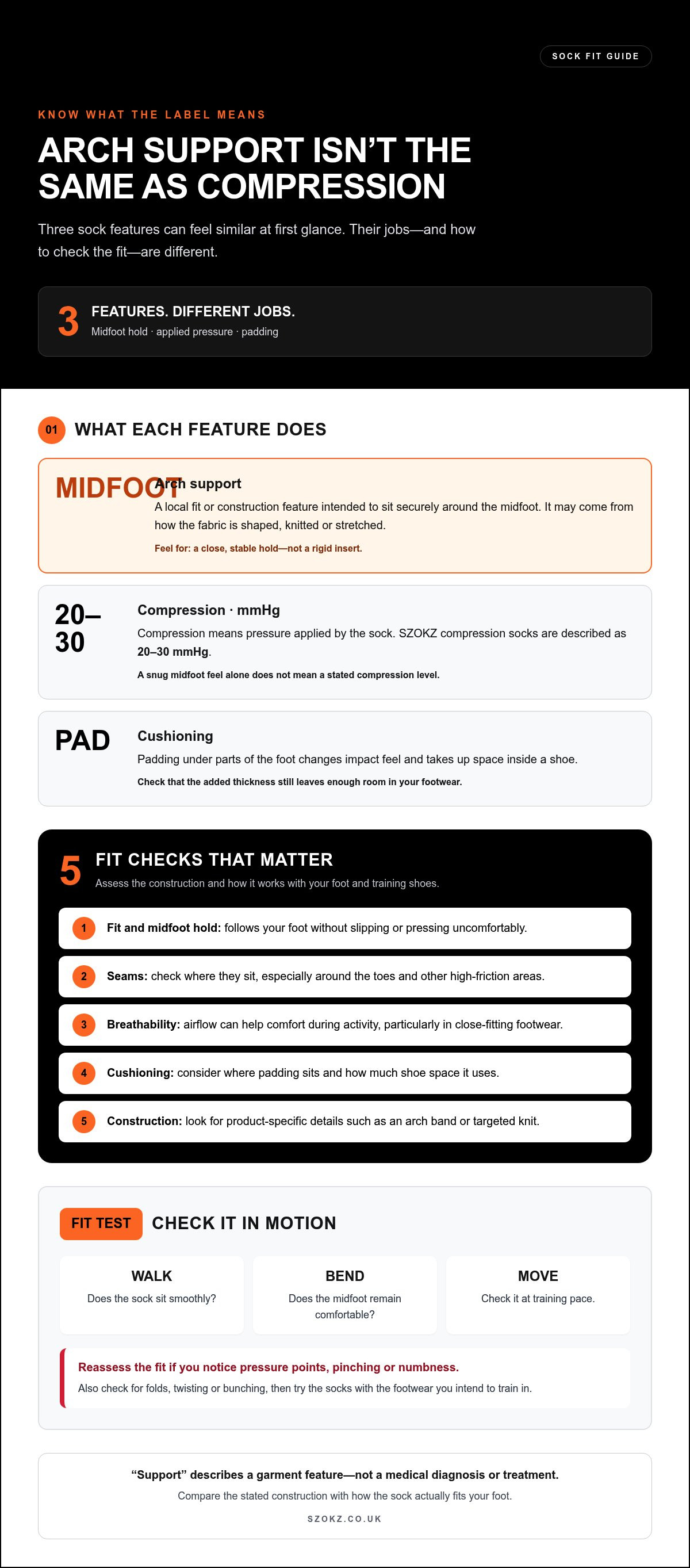
- Arch support: A local fit or construction feature around the midfoot.
- Compression: Pressure applied by the sock, sometimes described by a measurement such as mmHg. It isn’t the same as an arch-specific design.
- Cushioning: Padding under parts of the foot that changes impact feel and takes up space inside a shoe.
What does arch support in a sports sock feel like?
Expect a close, stable sensation around the midfoot, not a rigid insert or a promise of a particular result. The sock should sit smoothly and remain comfortable as you walk, bend and move at training pace. Pressure points, pinching or numbness are reasons to reassess the fit. There’s no single level of support every wearer needs; comfort depends on foot shape, sock fit and preference.
Arch support, compression and cushioning: what is different?
These features can appear together, but they do different jobs. Arch support refers to local fit or construction, and a specific design should only be assumed when product information describes it. Compression refers to applied pressure; SZOKZ compression socks are described as 20-30 mmHg. For more on that feature, see this guide to compression socks for sport. Cushioning adds padding, which can alter impact feel and make a shoe feel tighter.
A sock can feel snug at the midfoot without having a stated compression level, and cushioning alone doesn’t confirm arch-specific construction. When choosing athletic socks with arch support, compare the described design with how the sock fits your foot. Treat “support” as a garment feature, not a medical diagnosis or treatment. Socks aren’t medical orthotics, and a product label can’t tell you what your feet medically need.
Which features matter when choosing athletic socks with arch support?
A useful product description should help you picture how the sock fits and feels, rather than use “support” as a catch-all claim. Check the construction details, then consider how they work with your foot and training shoes. A secure midfoot fit can feel different depending on the sock’s stretch, thickness and seam placement.
- Fit and midfoot hold: Look for a sock that follows your foot without slipping or pressing uncomfortably across the arch.
- Seam placement: A bulky seam over the toes or another high-friction area can distract during movement. Check where the seams sit against your foot.
- Breathability: Fabric that allows airflow can help the sock feel more comfortable during activity, particularly in close-fitting footwear.
- Cushioning: Consider where padding sits and whether the extra thickness leaves enough room in your shoe.
- Construction details: Treat claims about an arch band, targeted knit or other specific support feature as product-specific. Look for the detail in the product information rather than assuming all athletic socks use the same design.
How should athletic socks fit around the arch?
The fabric should lie smoothly around the midfoot, without folds, twisting or noticeable pressure points. Excess material can bunch inside a shoe; a fit that’s too tight may feel restrictive. Check the size guide for the sock you’re considering, since sizing can vary between brands. Then try the pair with your intended sports footwear. A comfortable fit in one shoe may feel different in another.
Do materials and cushioning affect support?
Stretch fibres help a sock conform to the foot and influence how it holds its shape during wear. The fit should feel secure, not constricting or loose. Cushioning is a separate consideration: padding under the heel or forefoot can change comfort and use up some of the shoe’s internal space. There’s no single fibre or cushioning level that suits every athlete. Match the fabric and thickness to your comfort, activity and footwear.
Use the product description to distinguish stated construction from general performance language. When comparing athletic socks with arch support, prioritise fit and clearly described features over assumptions based on the label alone. You can browse SZOKZ socks by activity and compare the available categories with your training needs.
Match arch-support sock features to your sport and training
The right balance depends on what your session asks of your feet. Repeated direction changes, steady running and uneven outdoor ground place different demands on fit, ventilation and cushioning. Use the table as a starting point, then account for your footwear, session length and personal preference. No feature guarantees a particular level of support.
| Activity | Features to prioritise | What to consider |
|---|---|---|
| Gym training | Secure fit, breathability, optional grip | For lifting or floor-based work, consider whether grip inside the shoe or on the training surface suits the session. |
| Running | Stable fit, moisture management, targeted cushioning | Match thickness to your running shoes and the length of your usual session. |
| Court sports | Secure fit, breathability, cushioning and grip | Quick changes of direction may make a stable feel and suitable traction priorities. |
| Outdoor activity | Comfortable fit, breathability and cushioning | Consider time on your feet, terrain and the space available inside your footwear. |
Which sock features suit high-intensity training?
For fast, varied sessions, start with a sock that stays in place and feels comfortable inside close-fitting training shoes. Breathability and moisture management can matter as effort builds. Grip may be useful where foot movement inside footwear or on a training surface is a concern, but it isn’t arch-specific or medical support. SZOKZ high-intensity sport socks are a relevant category to compare by intended use and fit.
For traction-focused sessions, explore this guide to sports grip socks for football, rugby and gym training. Grip and cushioning have separate roles, so consider which one addresses your training preference.
When might compression socks be a better comparison?
Compression and arch-specific construction describe different features. Compression refers to pressure from the sock, while arch support concerns fit or construction around the midfoot. SZOKZ compression socks are described as 20-30 mmHg; that measurement doesn’t by itself establish an arch-support design. For a closer look at compression in sport, read this guide to compression socks for sport.
Choose athletic socks with arch support by matching your activity with the fit you prefer. A longer run, a tight-fitting court shoe and an outdoor walk may each call for a different balance of thickness, breathability, grip and midfoot feel.
How to assess fit, comfort and support before buying
A support feature doesn’t need to feel tight to be useful. Aim for a sock that sits smoothly and feels secure without distracting pressure. Use this fit check to judge the overall feel, rather than treating a snug midfoot as proof that the sock is right for you.
- 1. Confirm the size. Use the brand’s size guide and check how its sizing relates to your usual shoe size. Don’t assume every brand fits the same way.
- 2. Put the socks on carefully. Align the heel and toe, then smooth the fabric over your foot. Check that the midfoot area lies flat rather than twisted.
- 3. Move around. Walk, bend your knees and mimic a few movements from your training. Notice whether the sock slips, wrinkles or presses uncomfortably.
- 4. Reassess pressure and bunching. Check your toes, heel and midfoot. The fabric should feel secure, not restrictive, with no folds that could rub inside your shoe.
Repeat the check in the footwear you’ll use for training. A sock that feels comfortable on its own may feel different inside a close-fitting trainer or boot. Walk and move in the shoes, checking for toe crowding, rubbing or a change in midfoot pressure. This is especially useful if the sock has cushioning, which can take up space inside footwear.
What signs suggest a poor sock fit?
Slipping, wrinkles, twisted fabric, crowded toes and persistent pressure are all reasons to reassess the size, construction or how the sock sits in your shoe. These signs can have different causes, so they don’t identify a specific foot problem. If a sock causes pain, numbness or unusual discomfort, take it off and stop wearing it.
Friction is another useful clue to investigate. Fit, footwear and movement can all affect where rubbing occurs. For running-specific friction considerations, read this guide to anti-blister running socks.
Can arch-support socks replace advice for foot pain?
No. Athletic socks are apparel, not a substitute for clinical assessment, and a support label doesn’t diagnose or treat a condition. If foot pain persists or worsens, seek advice from an appropriate healthcare professional. Choose socks for their fit and stated features, not as a replacement for care.
Choose the right SZOKZ athletic socks and take the next step
Start with what your session demands, then narrow the options by fit, preferred feel and product details. Grip, compression, cushioning and arch-specific construction are different features. Don’t assume a sock includes a particular arch-support design unless its product information says so. A comfortable fit in your training footwear matters more than a label alone.
SZOKZ socks are worn by Team GB and Olympic athletes. That’s a brand proof point, not a claim that a particular sock provides arch support or is endorsed for that feature.
Which SZOKZ sock category fits your training needs?
- Grip socks: Consider these for activities where traction is a priority. Grip has a different role from midfoot support or cushioning.
- Compression socks: Compare these if compression is the feel you’re looking for. SZOKZ compression socks are described as 20-30 mmHg, a pressure measurement rather than evidence of arch-specific construction.
- High-intensity sport socks: A relevant category for demanding training sessions. Compare product details with your fit and footwear preferences.
- All Sport Ankle Socks: Consider this category if you prefer an ankle-height option for sport.
- Hiking Socks: Compare these for outdoor activity, taking account of your footwear, time on your feet and preferred thickness.
Browse athletic socks for your next session
Before choosing, revisit your priorities: where you want a secure feel, how much room your footwear allows, and whether grip or compression matters for your activity. Read the individual product details for stated construction and features. If you’re weighing up a lower-cut option with compression, this guide to ankle compression socks offers a closer comparison.
Free UK delivery is available on orders over £30.
Choose socks that fit your next session
Choose athletic socks with arch support by matching the fit and stated features to your activity, footwear and preferred feel. A secure midfoot should feel comfortable, not simply tight. Grip, compression and cushioning serve different purposes, so look beyond broad support claims and compare the product details that matter to your training.
SZOKZ offers grip, compression, high-intensity sport, ankle and hiking socks for different activities and preferences. Its socks are worn by Team GB and Olympic athletes. This reflects the brand’s athletic use, not a claim that every sock has arch-specific construction. Free UK delivery is available on orders over £30.
Find the fit and function that suit your routine, then get ready for your next session with confidence.
Frequently Asked Questions
Do athletic socks with arch support really help?
They can provide a closer, more stable feel around the midfoot, depending on the sock’s construction and how it fits your foot. That may suit your preferred feel during training, but comfort varies with foot shape, sizing and personal preference. Check the product details for a stated arch-specific feature rather than relying on a general support claim. Socks are apparel, not medical treatment, so don’t rely on them to diagnose or resolve foot pain.
How should arch-support sports socks fit?
They should sit smoothly around your foot, with an even, secure feel at the midfoot. The heel and toe should align correctly, without wrinkles, twisting or excess fabric that could bunch inside your shoe. A supportive feel shouldn’t mean tightness: persistent pressure or pinching are signs to reassess the fit. Check the brand’s size guide, then try the socks with the footwear you plan to wear for training.
Are compression socks the same as arch-support socks?
No. Arch support refers to a local fit or construction feature around the midfoot. Compression describes pressure applied by the sock and may be stated in millimetres of mercury (mmHg). One feature doesn’t automatically mean the other is present. SZOKZ compression socks are described as 20-30 mmHg; that pressure measurement doesn’t, by itself, confirm arch-specific construction. Compare product details according to the feel and features you’re seeking.
Can I wear athletic socks with arch support for running?
Yes, if the sock feels comfortable and fits your running shoes without slipping, bunching or crowding your toes. Consider breathability and cushioning that suit your footwear and the length of your run. Check that any stated arch feature matches what you’re looking for, and try the socks on a short run before relying on them for a longer session. If they cause pain or unusual discomfort, stop wearing them.
Are grip socks better than arch-support socks for sport?
Neither is automatically better; each serves a different purpose. Grip socks are designed for traction, which may matter for activities where slipping between the foot and footwear or training surface is a concern. Arch-support socks focus on fit or construction around the midfoot. A sock may have more than one feature, but don’t assume grip provides arch support. Choose according to your sport, footwear and preferred feel.
How do I choose the right size athletic socks?
Start with the sock brand’s size guide and use the measurements or shoe-size range it provides. Once on, check that the heel and toe sit in the right places and that the fabric lies smoothly over your foot. Walk and move in the socks, then assess them inside your training shoes. They should feel secure without tight pressure, toe crowding, slipping or folds that bunch as you move.
Comments
No comments yet. Be the first to add one.